
BYD's Denza Z9S Launches at RMB 255,800, Cuts Pre-Sale Price 20%
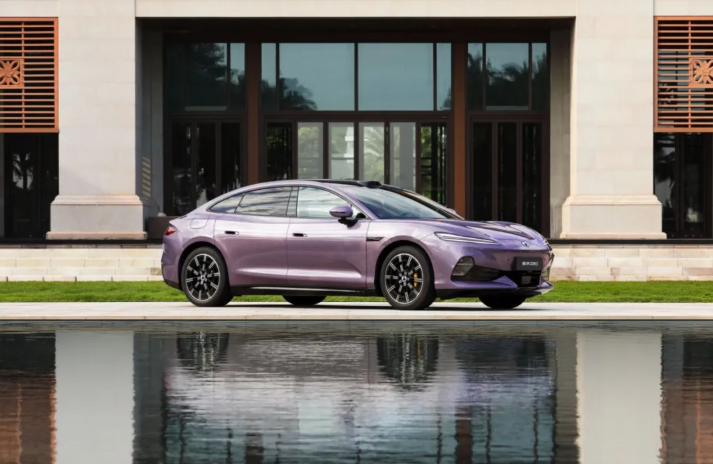
BYD-backed Denza launched the Z9S sports sedan on September 23, 2026 at a starting price of RMB 255,800 (US$35,500) — as much as RMB 64,000 (US$8,900) below its August pre-sale guidance — a move that redraws the competitive boundary of China's RMB 250,000–350,000 premium electric vehicle segment.
The aggressive repricing is not a margin concession born of weak demand signals; it is a calculated market-entry tactic. By anchoring pre-sale expectations at RMB 319,800–389,800 (US$44,400–US$54,100) and then delivering a fully-specced vehicle at a materially lower price point, Denza executed what the industry is already calling a "table-flip" launch — a strategy designed to generate maximum conversion momentum at the moment of purchase decision. The full price range at launch spans RMB 255,800 to RMB 325,800 (US$35,500–US$45,300).
Market observers note the discount magnitude exceeded precedent within the Denza lineup itself: the N8L dropped RMB 50,200 from pre-sale to launch, and the second-generation D9 fell by RMB 30,000. The Z9S's RMB 64,000 reduction on the mid-trim — the steepest in the brand's history — signals that BYD's premium sub-brand is willing to absorb short-term pricing pressure to capture volume in a segment currently contested by Xiaomi SU7, Huawei-backed Luxeed S7, and Li Auto.
Specs Remain Uncompromised, Raising the Bar for Competitors
Despite the price reduction, Denza made no cuts to the Z9S's hardware stack — a critical distinction that amplifies the competitive threat. All trims ship standard with BYD's second-generation Blade Battery paired with ultra-fast charging technology, the Yunian-A intelligent air suspension system with dual-chamber air springs and CDC damping, rear-wheel steering, and the DiPilot Tianshenzhi Eye 5.0 advanced driver-assistance system.
The flagship "Flash Charge" variant delivers a CLTC-rated range of 1,100 kilometers — a figure Denza claims sets a new global production EV record, surpassing the 1,036km benchmark set by its sibling model, the Z9 GT, at launch in March 2026. On charging performance, the company states a 10%-to-97% charge completes in nine minutes under standard conditions and 12 minutes at -30°C — metrics that, if independently verified, would represent a meaningful inflection point in cold-weather EV usability.
The top-tier "Yi San Fang" tri-motor all-wheel-drive configuration produces a combined output of 890 kilowatts, enabling a 0–100 km/h sprint of 2.68 seconds and a minimum turning radius of 4.75 meters. The vehicle measures 5,090mm in length with a 3,025mm wheelbase, positioning it squarely in the large sports sedan class.
Z9 Family Matrix Takes Shape, But Sales Execution Remains the Open Question
The Z9S launch completes a three-body product architecture within Denza's Z9 platform: the Z9 executive sedan, the Z9 GT shooting brake, and the Z9S sports coupe-sedan. The differentiation logic is coherent on paper. The Z9 GT targets buyers seeking a dual-powertrain option (plug-in hybrid and pure electric) and a distinctive wagon-coupe silhouette in the RMB 300,000–400,000 band. The Z9S, by contrast, is a pure-electric-only proposition that undercuts the Z9 GT on price while exceeding it on range and peak power output.
The internal pricing arbitrage is notable: the Z9 GT's pure-electric flagship is listed at RMB 299,800 (US$41,600) with 1,036km of CLTC range, while the Z9S Flash Charge variant retails at RMB 275,800 (US$38,300) with 1,100km of range — RMB 24,000 cheaper for 64 additional kilometers of rated range. This "smaller footprint, higher specification, lower price" configuration is a deliberate cannibalization strategy, designed to draw conquest buyers from external brands rather than simply redistribute demand within the Denza portfolio.
However, execution risk is real. The Z9 GT has not met internal sales targets since its March 2026 debut, according to industry observers — a data point that tempers enthusiasm around the Z9S's launch momentum. Whether a more competitive entry price is sufficient to unlock volume in a segment where brand prestige and dealer network depth remain differentiating factors is a question the next two sales quarters will answer.
Pricing Aggression Forces Competitors to Reassess Brand Premium
The Z9S's launch price compresses the value proposition of several established competitors. At RMB 255,800, Denza is delivering air suspension, rear-wheel steering, tri-motor availability, and a 1,100km range claim into a price tier that rivals have historically defended with vehicles offering fewer standard features. Xiaomi SU7, Huawei Luxeed S7, and other domestic premium EV sedans in the RMB 250,000–350,000 range now face a recalibrated benchmark for hardware-per-yuan.
From a supply chain perspective, BYD's vertical integration — controlling Blade Battery production, the Yunian chassis system, and the DiPilot ADAS stack in-house — provides a structural cost advantage that external brands cannot replicate through supplier negotiation alone. The Z9S pricing is, in effect, a demonstration of what full-stack vertical integration enables at scale.
For investors tracking BYD's premium brand strategy, the Z9S launch represents a deliberate downward price migration into the RMB 250,000 threshold — a segment large enough to drive meaningful volume, yet aspirational enough to protect brand positioning. The risk, as with any aggressive launch pricing, lies in whether the market reads the discount as confidence or desperation. Given the specification sheet, the former interpretation appears more defensible.