
The Quiet Disruptor: How DeepSeek's Liang Wenfeng Turned Restraint Into a Weapon — and Learned Its Cost
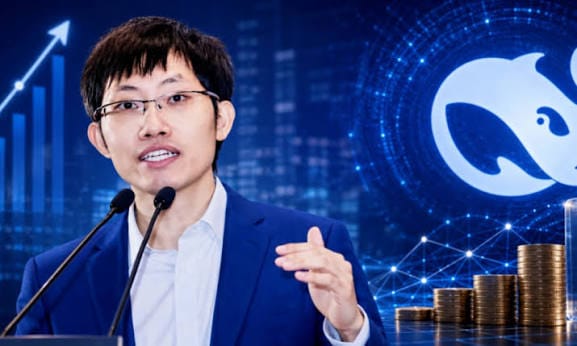
For three years, DeepSeek's reclusive founder built the world's most talked-about AI lab by doing almost nothing the industry expected of him. Now, with a $7.4 billion fundraise and a talent exodus forcing his hand, the era of pure idealism may be over.
An Australian AI developer sat at his desk sometime last summer, scrolling through the latest release notes from a Chinese startup he had been quietly following for months. No press conference. No countdown timer. No breathless founder on stage promising to change the world. Just a model — DeepSeek-V4-Flash — that had appeared, almost without warning, and was outperforming products that cost multiples more to run.
He typed out a post that would circulate widely across developer forums and social media feeds: "I love what DeepSeek does. They don't hype things up, they don't make wild promises every other week. They disappear for months, do the work, and come back with something that rivals the best products at a fraction of the price."
The comment captured something that analysts, investors, and rivals had been struggling to articulate about the Hangzhou-based company and its founder, Liang Wenfeng: that in an industry defined by noise, DeepSeek had built its competitive advantage almost entirely out of silence.
The Man Who Vanished
Since DeepSeek's R1 model sent shockwaves through the global AI industry in early 2025 — briefly wiping nearly $600 billion from Nvidia's market capitalization in a single trading session — Liang has granted no media interviews. He maintains no public social media presence. The company's official website, for the longest time, listed a single contact: a general-purpose email address.
While Sam Altman jets between Davos and Capitol Hill, while Anthropic's Dario Amodei publishes sweeping essays on AI safety, and while Chinese rivals like Baidu's Robin Li and ByteDance's Zhang Yiming court investors and regulators with practiced fluency, Liang has been conspicuously, almost defiantly, absent.
He is 39 years old. He was the top-scoring college entrance exam student in Wuchuan, Guangdong, in 2002, achieving a near-perfect 806 points. He built Hundsun Technologies-backed High-Flyer Quantitative — one of China's most secretive and successful quantitative hedge funds — before pivoting into AI research. And yet, for a man who has arguably done more to reshape the global artificial intelligence landscape than almost anyone outside of OpenAI, he remains almost entirely unknown to the general public.
That deliberate invisibility, it turns out, was not accidental. It was strategy.
"Restraint Is a Strategy"
Earlier this year, a transcript of an internal exchange between Liang and a group of investors began circulating on Chinese social media. It was one of the rare windows into how he thinks — and what he said was striking in its directness.
He used one word repeatedly: restraint.
"Restraint is a strategy," he told the investors, according to the transcript. The philosophy ran through every major decision DeepSeek had made. Open-source over closed. Research over product. Reasonable margins over profit maximization. A deliberate refusal to chase the consumer app market, even when DeepSeek's daily active users surpassed 20 million within a week of R1's launch — a moment when most startup founders would have pivoted aggressively toward monetization.
"We never thought about making DeepSeek the next super app," Liang reportedly said. "Because there are watermelons ahead. What's in front might all be sesame seeds."
This is a man who, in the middle of China's fiercest AI talent war, declined to raise external capital for three years. Who priced his models at rates that left competitors scrambling to explain the gap. Who, when his team debated setting a higher price for a new model release, ultimately lowered it — because, he said, members of his own team cheered when the price came down. "They felt that what they built was actually being used by more people," he explained, "not just made to earn money."
It is a philosophy that sits uneasily alongside the logic of venture capital — and for years, Liang made sure the two never had to meet.
Building the Machine
To understand DeepSeek, it helps to understand what it is not.
It is not a startup in the conventional sense. It was spun out of High-Flyer Quantitative in 2023, giving it access to a parent company with stable, substantial cash flows — and, crucially, to computing infrastructure that Liang had been quietly assembling for years before the generative AI boom made such foresight look prescient.
Around 2020, High-Flyer invested nearly 200 million yuan building a deep learning training platform called Firefly-1. Two years later, it spent approximately 1 billion yuan on Firefly-2, equipped with roughly 10,000 Nvidia A100 GPUs. At the time, few Chinese companies outside the major internet platforms had assembled that scale of AI computing capacity.
Liang later explained the decision with characteristic understatement: it was curiosity, he said, about the limits of what AI could do. For most of the world, ChatGPT's arrival in late 2022 was the inflection point. For Liang, the signal had come a decade earlier, when AlexNet's victory at the ImageNet competition in 2012 demonstrated that scale — data plus compute — could produce results that felt almost like magic. He had been preparing ever since.
The organizational culture he built around that infrastructure was equally unconventional. Chi Yu, a doctoral student who joined DeepSeek as a research intern in July 2023, recalls his first impression of Liang as one of genuine humility. Chi's specialty was reinforcement learning — a field DeepSeek had not yet explored. "Liang told me, 'Teach me reinforcement learning,'" Chi recalled.
He was given near-complete autonomy. As an intern, he led the early construction of DeepSeek's large language model reinforcement learning infrastructure. There were no KPIs. No formal management hierarchy. Weekly meetings were intense — Liang drilled into technical details with forensic precision — but day-to-day, researchers were largely left to follow their own instincts.
"It was genuinely idealistic," Chi told China News Weekly. "There were few people, and each person had access to enormous computing resources."
The hiring logic was equally unconventional. Liang has said explicitly that he values raw ability, creativity, curiosity, and passion over credentials and experience. The team, he has noted, contains no mythologized geniuses — just top graduates, doctoral students who haven't yet finished their degrees, and young researchers a few years out of school. The compensation, however, was anything but modest. By early 2025, media reports indicated that core research roles at DeepSeek commanded annual salaries of up to one million yuan, with AGI-track interns earning between 500 and 1,000 yuan per day.
The result was a culture Chi describes as frictionless. "Everyone was moving toward AGI. Collaboration was seamless. Wherever there was a gap, someone would fill it."
The Price of Purity
For a while, it worked almost perfectly.
DeepSeek-R1's release in January 2025 was a global event. Developers from San Francisco to Singapore downloaded and tested it. American policymakers debated its implications. Nvidia's stock dropped. The phrase "DeepSeek moment" entered the technology lexicon as shorthand for a competitive disruption no one had fully anticipated.
And then Liang did something that confounded almost everyone: he did not capitalize on it.
While Tencent, ByteDance, and Alibaba were locked in a furious battle for AI application dominance — competing for the consumer-facing entry points that could define the next generation of digital platforms — DeepSeek stayed in its lane. No super app. No aggressive user retention campaigns. No pivot to commercialization.
"The team was always focused on AGI," Chi recalled. "So things like building products — we weren't that focused on them."
But restraint, it turns out, has a cost. And by 2026, that cost had become impossible to ignore.
Over the past year, DeepSeek has become one of the most significant sources of AI talent in China — which also means it has become one of the most significant targets for poaching. After R1's explosive success, major tech companies launched aggressive recruitment campaigns. Xiaomi reportedly offered researcher Luo Fuli a compensation package worth tens of millions of yuan annually. Guo Daya, a core contributor to DeepSeek V3 and R1, joined ByteDance's Seed team. Wang Bingxuan, a principal author of DeepSeek's first-generation large language model, joined Tencent's Hunyuan division. ByteDance, Tencent, and Alibaba began advertising AI roles with slogans like "no ceiling on compensation" and "unlimited package."
In his internal investor exchange, Liang was uncharacteristically blunt about the vulnerability this created. "The biggest risk to DeepSeek is team stability," he said. "As long as I can maintain team stability, I will definitely achieve AGI."
For a company with no external investors, no public listing, and no clear liquidity mechanism for employee equity, that was a structural problem. Idealism could sustain a small team of true believers. It was harder to sustain against a million-yuan counter-offer from a well-funded rival.
Opening the Door
In June 2026, DeepSeek completed its first-ever external fundraising round — raising more than 50 billion yuan, approximately $7.4 billion, in what became the largest single fundraising round in the history of China's AI large model sector.
The news surprised an industry that had come to regard DeepSeek's independence as almost definitional. But those who had followed Liang closely were not entirely shocked. He had always said his reluctance was not about the money itself, but about what money typically demanded in return. Early conversations with venture capital firms had foundered, he explained, because investors wanted products and commercial timelines. They had exit horizons. DeepSeek had a research agenda.
This time, the terms were different — and unmistakably Liang's.
He personally contributed approximately 20 billion yuan to the round, representing roughly 40 percent of the total and making him the largest single investor. Tencent, CATL, JD.com, and NetEase participated, but none received voting rights. Their shares are subject to a five-year lock-up period.
In other words: the door opened, but Liang held the key.
What the capital will fund, however, signals a shift. In late June, DeepSeek launched its largest-ever recruitment drive, explicitly targeting a doubling of headcount across all departments — including, for the first time at scale, product and operations roles. The company that built its reputation on pure research is beginning, carefully, to build the infrastructure of a company.
"In the past, Liang could put almost all his energy into research," said one large model industry insider who spoke on condition of anonymity. "But once the fundraising is complete, the company needs to face much clearer commercial expectations. You can't indefinitely defer the question of products, services, and monetization. It's unavoidable at this stage."
A Different Kind of Founder
In Silicon Valley, the archetype of the AI founder is well established: the visionary who raises billions, builds a cult of personality, and treats every product launch as a cultural moment. In China, the template has been similar — the founder as storyteller, pitching to capital markets and state actors simultaneously.
Liang Wenfeng fits neither mold.
"What's most worth learning from Liang Wenfeng," said Liu Zhiyuan, a computer science professor at Tsinghua University and an AI entrepreneur himself, "is not which specific technical path he chose, and it doesn't mean every judgment he makes is correct. It's that he can maintain independent judgment — and persist in what he believes is right, even when others don't see it."
Liu's observation points to something broader about the Chinese AI ecosystem. Since OpenAI's success, a pattern has emerged: a breakthrough happens, and a cohort of Chinese startups rushes to replicate the model. When Anthropic gained attention, companies modeled themselves on its approach. When DeepSeek went viral, imitators followed. The industry, as one founder put it, tends toward "absolute deference to the strong" — copying what has already been validated rather than risking original exploration.
DeepSeek's genuine innovation — in model architecture, in training efficiency, in the willingness to open-source work that competitors would have monetized — came precisely because Liang refused that logic.
The Reckoning Ahead
The question now is whether the company that Liang built can survive its own success.
The cultural alchemy that produced DeepSeek's breakthroughs — small teams, radical autonomy, shared mission, minimal hierarchy — is notoriously difficult to preserve at scale. A headhunter who works with DeepSeek told China News Weekly that the company remains highly selective, turning away far more candidates than it accepts. But the organizational dynamics of a 50-person research team and a 500-person company with product managers, operations staff, and investor relations obligations are fundamentally different things.
"The culture formed in the small-team period," the headhunter said, "tends to face real tests as the organization grows."
Liang has spent three years building a company in his own image: patient, precise, allergic to hype, and oriented toward a horizon — AGI — that most of his contemporaries treat as a distant abstraction rather than an operational goal. The fundraise buys him time and talent. But it also brings expectations, timelines, and the slow gravitational pull of institutional logic.
He has always known this. In his internal exchange with investors, he acknowledged the tension explicitly. The question is whether the same discipline that made DeepSeek remarkable can survive contact with the very forces it spent three years avoiding.
For now, Liang Wenfeng remains largely out of sight — no interviews, no stage appearances, no carefully managed social media presence. Somewhere between Hangzhou and Beijing, in offices where researchers still talk about AGI as though it is a matter of when rather than if, the work continues.
The watermelons, he insists, are still ahead.
Whether he can keep his team together long enough to reach them may be the most consequential question in artificial intelligence today.
Related Coverage:
DeepSeek Posts 10x Revenue Surge, 82.9% API Margin as Valuation Nears $70B