
BYD’s Tesla Overtake Signals a China-Led EV Era—But the Crown Comes With New Risks
BYD has surpassed Tesla in full-year pure electric vehicle (EV) sales for 2025, marking a historic structural shift in the global automotive hierarchy. This milestone, confirmed by data released by both automakers this week, underscores the maturation of China’s manufacturing capabilities and the diverging growth trajectories of the world’s two largest EV producers.
According to delivery figures released on Jan. 1 and Jan. 2, 2026, the Shenzhen-based automaker delivered 2.25 million battery-electric vehicles (BEVs) globally in 2025, eclipsing Tesla’s 1.636 million. While BYD’s total volume—including plug-in hybrids—reached a record 4.6 million units, its lead in the pure electric segment represents the first time the Chinese company has secured the annual crown, signaling the end of Tesla’s long-standing dominance in the sector.
The reversal reflects a sharp contrast in momentum between the two giants. Tesla reported double-digit year-on-year declines in global deliveries, revenue, and net profit for 2025, weighed down by the expiration of U.S. federal tax incentives and an aging product portfolio. Conversely, BYD capitalized on aggressive overseas expansion and vertical supply chain integration to capture market share, particularly in Europe, despite rising trade protectionism.
Morgan Stanley has characterized this development as the onset of a "China-led era" in the global EV market. The data indicates a fundamental reshaping of the industry, where Chinese automakers are leveraging cost advantages and technological scale to challenge legacy incumbents. This shift is further evidenced by traditional giants like Volkswagen and Toyota seeking technological partnerships with Chinese firms, reversing the historical flow of automotive expertise.
Diverging Growth Trajectories
The sales figures reveal that BYD’s ascendancy was driven by tangible volume growth rather than mere cumulative statistics. In 2025, BYD sold approximately 500,000 more pure electric vehicles than its US rival.
Tesla’s performance in 2025 was hampered by significant headwinds in its core markets. In the United States, demand for Tesla vehicles weakened following the early termination of the $7,500 federal tax credit in September 2025 under new legislation. This policy shift eroded Tesla's price competitiveness, leading to a severe contraction in fourth-quarter sales. Furthermore, the company’s market share in China dropped from 15% in 2020 to 7.6% in the first half of 2025, as local consumers increasingly favored domestic models offering advanced smart cockpit features and luxury interiors.
Tesla also faced internal challenges, including production bottlenecks with the Cybertruck and consumer fatigue regarding its volume sellers, the Model 3 and Model Y, which accounted for over 90% of deliveries. Additionally, market analysts note that CEO Elon Musk’s political alignments and involvement in government efficiency initiatives may have impacted the brand’s standing with its core consumer base.
In contrast, BYD’s growth was fueled by a 145% surge in overseas sales, which reached 1.05 million units in 2025. The company achieved exponential registration growth in key European markets, including Germany, Spain, and Italy. In terms of product competitiveness, BYD has leveraged its proprietary technologies, such as the Blade Battery and DM-i hybrid systems, to offer vehicles that arguably surpass Tesla in price-to-performance ratios. For a budget of RMB 250,000 yuan (approx. US$34,500), BYD models currently offer superior specifications in range, acceleration, and interior configuration compared to Tesla's entry-level offerings.
Strategic Pivot and Future Bets
While ceding the volume crown, Tesla is executing a strategic pivot away from pure automotive manufacturing toward artificial intelligence and energy infrastructure. The company’s 2025 filings show a substantial resource reallocation toward high-value-add sectors. Tesla’s energy storage installation capacity grew 48.7% to 46.7 GWh, with the new Megapack 3 factory expected to ramp up production in 2026.
Furthermore, Tesla is doubling down on autonomous capabilities. The company plans to initiate driverless testing for its Robotaxi fleet in late 2025, with mass production of the "Cybercab" slated for April 2026. The Optimus humanoid robot is also entering the installation phase for production lines. This suggests Tesla is repositioning itself as an "AI + Sustainable Energy" technology firm rather than a traditional automaker.
BYD remains focused on consolidating its position as a comprehensive energy and transportation conglomerate. While it continues to hold a significant cost advantage through supply chain control, the company faces the challenge of elevating its brand premium globally. Although its high-end sub-brands like Yangwang are gaining traction, BYD must navigate complex regulatory environments in the US and EU while proving its prowess in autonomous driving software—an area where it is still playing catch-up to Tesla.
Structural Shift in Global Auto Industry
The 2025 sales rankings highlight a broader systemic advantage for the Chinese automotive sector. As of April 2025, the Chinese market accounted for over 60% of global pure electric vehicle sales. Chinese enterprises now hold 52% of global patents related to new energy core technologies, with BYD alone contributing 20%.
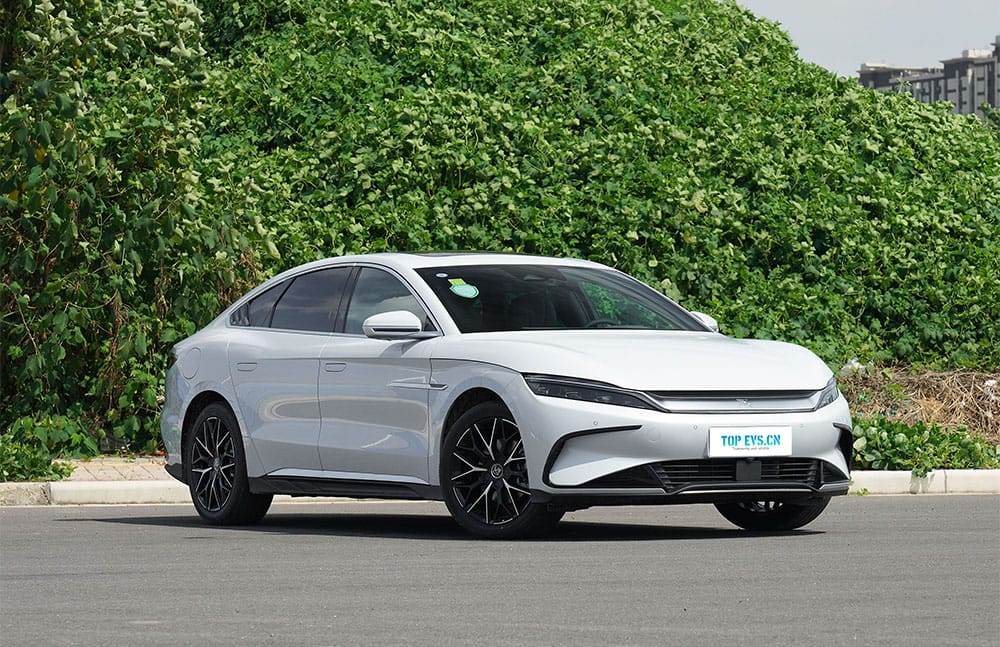
This technological leadership is reshaping industry alliances. Volkswagen has invested €1 billion to procure BYD’s battery technology and establish joint R&D centers, while Toyota has partnered with BYD to develop small electric vehicles. Notably, BYD has managed to command pricing power abroad; its flagship Han EV sells at a premium over the Tesla Model 3 in European markets, indicating that its competitive edge has evolved beyond low pricing to include technological value.
However, the path to sustained global leadership remains complex. With trade barriers rising in Western markets and BYD notably absent from the US market—Tesla’s second-largest stronghold—the Chinese automaker’s ability to maintain its lead will depend on navigating geopolitical headwinds and managing a slowing global growth rate for EV adoption.