
Agibot Taps MiniMax for Voice AI as Sector Pivots to Hardware Integration
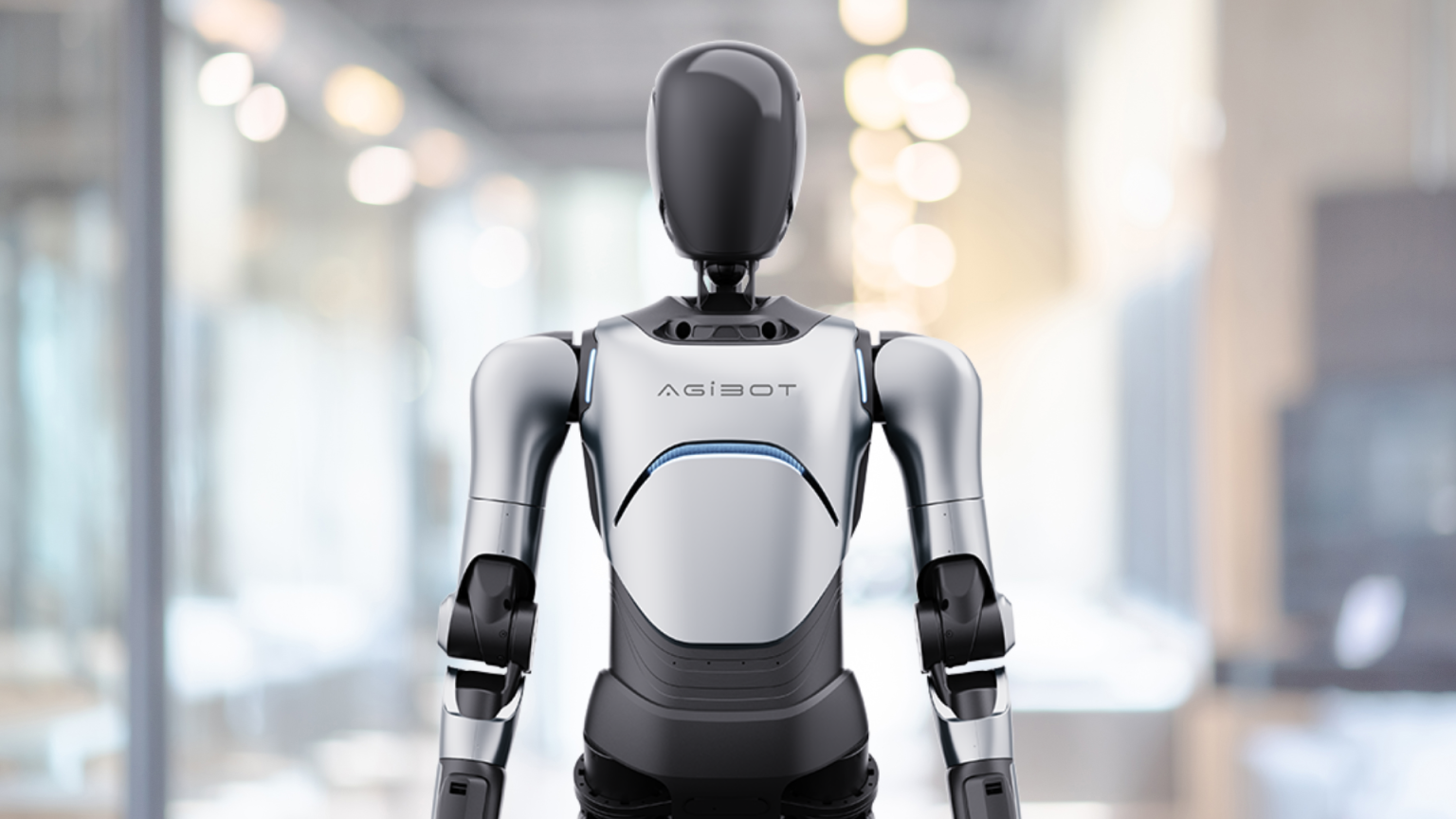
Agibot has entered a strategic partnership with Chinese AI startup MiniMax to integrate generative AI voice capabilities into humanoid robots, marking a significant shift in the artificial intelligence sector toward the convergence of software algorithms and physical hardware.
According to a report by Daily Economic News released on January 5, the collaboration will see MiniMax provide full-process text-to-speech (TTS) AI technical support to Agibot. The partnership is designed to establish a customized "persona system" tailored to the specific product positioning of Agibot’s hardware, aiming to significantly optimize the voice interaction experience between users and robots.
Under the agreement, MiniMax will utilize its proprietary models to construct customized prompt strategies, enabling the generation of exclusive voice tones for users. This technology allows for highly personalized voice synthesis—described as "1,000 faces for 1,000 people"—to meet diverse interactive needs. Additionally, MiniMax will deploy its self-developed music generation models to expand the entertainment scenarios available on Agibot’s platforms.
This alliance underscores a critical evolution in the AI market for 2026, where competition is transitioning from a singular focus on algorithms and computing power to a test of comprehensive capabilities in "soft-hard" integration. As the industry enters a period of deep consolidation, the ability to merge virtual large models with physical entities is becoming the primary determinant for market leadership.
Customized Interaction and Persona Building
The core of the collaboration addresses the growing need for sophisticated user interaction in embodied AI. By leveraging MiniMax’s generative capabilities, Agibot aims to move beyond standard mechanical responses. The integration involves creating a dedicated persona architecture that allows the hardware to exhibit distinct character traits through voice and language.
The partnership also extends functionality beyond basic communication. The inclusion of music generation models indicates a strategy to broaden the utility of humanoid robots into entertainment sectors, enhancing their commercial viability in consumer markets.
The Convergence of Software and Hardware
The agreement highlights a structural shift in the technology sector. Historically, the AI landscape was bifurcated: companies possessing data and algorithms focused on "soft products" like Large Language Models (LLMs) and agents, while manufacturers of humanoid robots and autonomous vehicles focused on "hard products."
However, as the AI track becomes increasingly crowded, players limited to a single domain face growing constraints. The collaboration between Agibot and MiniMax represents a model of complementary development, where distinct types of players combine forces to enhance overall competitiveness. This "soft-hard" complement provides a pathway for companies to break through development bottlenecks and adapt to the industry's demand for integrated solutions.
Evolving Demands for "Deep Thinking"
The partnership is also a response to the rapid maturation of user expectations. In the early stages of AI, demand was characterized by simple, programmatic tasks satisfied by basic algorithmic optimization. As utility rates increase, the market is demanding AI that possesses "deep thinking" capabilities—a trend exemplified by the emergence of technologies like deepseek.
With the deployment of humanoid robots in increasingly complex scenarios, user requirements have shifted from mechanical execution to personalized, human-like interaction. Standalone online models or offline hardware can no longer independently satisfy these professional and diverse needs. The integration of MiniMax’s generative tech with Agibot’s hardware is a direct attempt to bridge this gap, utilizing digital-physical fusion to maintain relevance in a new industry cycle.
A Unified Industrial Landscape
The deal reflects a broader macroeconomic trend where the traditional binary distinction between the virtual economy and the real economy is dissolving. The industry is moving toward a unified state of deep integration, where digital intelligence and physical manufacturing are inseparable.
In this context, the definition of the "real economy" is expanding to include entities linked with digital intelligence, such as humanoid robots and autonomous vehicles. The fusion of AI technology with AI hardware is emerging as the defining characteristic of this new industrial phase. For market participants, the capacity to execute this "virtual-real resonance" is now critical for survival and growth in the evolving economic landscape.