
Sanhua Intelligent Controls Pivots from ACs to EVs, Securing Key Role in Tesla Supply Chain
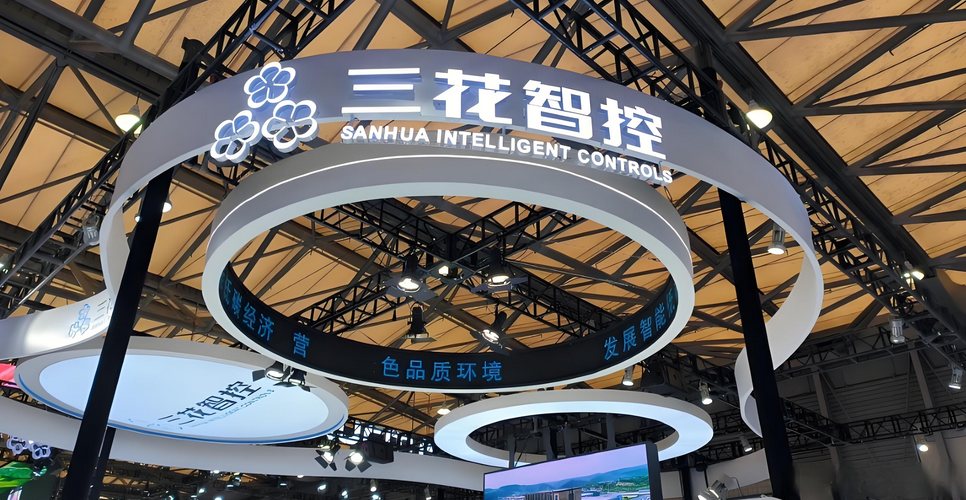
Sanhua Intelligent Controls, a Zhejiang-based manufacturer, has successfully transitioned from a traditional home appliance parts maker to a critical player in the global electric vehicle (EV) and emerging humanoid robot supply chains. By leveraging decades of expertise in thermal control valves, the company has secured a dominant position as a key supplier for industry giants including Tesla Inc. and BYD, effectively breaking the monopoly of traditional foreign Tier 1 suppliers.
The company’s strategic shift is underscored by its deepening integration with Tesla, particularly regarding the rigorous thermal management requirements of EVs and the anticipated mass production of the Tesla Optimus robot. As market expectations for the robotics sector accelerate in 2025, Sanhua’s dual foothold in EVs and future hardware has driven significant capital market attention, leading to upward valuations in both its A-share and H-share listings since mid-2024, despite recent stock price divergence.
Sanhua’s evolution highlights a broader trend in advanced manufacturing: moving from cost-based competition to technical leadership in niche, high-barrier components. The company has evolved from a supplier of individual parts to a provider of integrated systems, bypassing traditional automotive supply hierarchies to work directly with OEMs on complex architectures like Tesla’s "Octovalve" technology.
This transition comes as the economic value of thermal management systems in EVs swells to approximately 2-3 times that of internal combustion engine vehicles. With the rising complexity of battery cooling, the adoption of energy-efficient heat pumps, and the demand for integrated modules to reduce weight, Sanhua’s mastery of fluid control components places it at the center of the industry's push for greater vehicle range and efficiency.
From Rural Workshop to Global Valve Dominance
Tracing its roots to a rural farm machinery repair shop in 1979, Sanhua identified the booming demand for refrigerators in China as its initial growth vector. Under the leadership of founder Zhang Daocai, the company pivoted to refrigeration components, collaborating with Shanghai Jiao Tong University in 1987 to develop solenoid valves that broke the market stranglehold of Japanese competitors.
The company’s strategy relied on identifying high-demand, high-barrier components—specifically valves—where it could leverage cost advantages against international rivals. By 1995, Sanhua had developed four-way reversing valves, a core component for air conditioners, disrupting US dominance. Through persistent R&D and strategic acquisitions, including the 2007 purchase of US-based Ranco (the inventor of the four-way valve), Sanhua achieved a global market share of roughly 50% for this component by 2006, supplying brands from Gree to Samsung and LG.
The Strategic Pivot to EVs
While Sanhua entered the automotive sector in 2006, its breakthrough occurred with the rise of new energy vehicles (NEVs). Unlike the traditional combustion engine market, which was locked down by established foreign Tier 1 suppliers like Denso and Valeo, the EV shift opened a window for new entrants. In 2017, Sanhua established its New Energy Vehicle Thermal Management Division.
A pivotal development was Tesla’s decision to bypass traditional Tier 1 suppliers and work directly with component manufacturers. Sanhua capitalized on this by upgrading its offering from single valves to integrated modules combining valves, pumps, and heat exchangers. In 2022, Sanhua was the first to mass-produce the "Octovalve" solution for Tesla. This highly integrated eight-way valve manages coolant flow across multiple thermal circuits, significantly improving system reliability and efficiency while reducing weight. By 2023, automotive parts accounted for over 40% of the listed company's total revenue.
Surging Value in Thermal Management
The shift to electrification has fundamentally altered the economics of vehicle thermal management. In traditional cars, cooling serves the engine and cabin. In EVs, the system must manage temperatures for the battery, electric motor, and power electronics, often under strict parameters to prevent safety hazards like thermal runaway.
Consequently, the industry is moving toward complex, integrated architectures such as heat pumps, which Sanhua supplies. Unlike resistive heaters (PTC) which drain battery life, heat pumps recycle waste heat from motors and electronics to warm the cabin and battery. Tesla’s fourth-generation system, for example, utilizes the Octovalve to dynamically route heat where needed, eliminating the need for inefficient PTC heaters entirely.
Future Outlook and Technology Integration
Looking ahead, the market for thermal management faces further expansion driven by performance upgrades. Trends include the use of higher voltage fast-charging platforms and higher energy density batteries, both of which generate significant heat and require advanced cooling solutions like double-sided water cooling. Additionally, the integration of high-performance AI chips in intelligent vehicles introduces new cooling demands previously seen only in data centers.
Sanhua maintains a capability to produce nearly all critical components in these systems, excluding compressors and refrigerants. By mastering the transition from "cost leadership" to "technical leadership," the company is positioned to capitalize not only on the growing EV penetration but also on adjacent thermal management markets such as energy storage and computing centers.