
Xiaomi Founder Lei Jun Defends YU7 Quality in Live Teardown as 2025 Deliveries Beat Targets
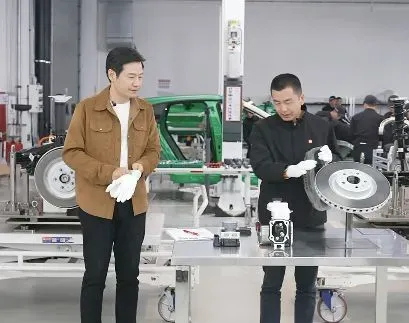
Xiaomi founder Lei Jun conducted a live public dismantling of the company’s YU7 SUV to address quality concerns, directly countering recent online criticism while simultaneously announcing that the electric vehicle maker significantly outperformed its delivery targets for 2025.
During the broadcast on Saturday, Lei and Xiaomi engineers disassembled a YU7 unit to demonstrate the vehicle’s structural integrity and safety features, specifically responding to controversies regarding door handle mechanisms and wheel displacement during collisions. Lei urged market observers and influencers to provide "fair" assessments rather than engaging in malicious traffic-seeking behavior, stating that "integrity cannot be compromised for content."
The event served as a backdrop for strong operational data, with Lei revealing that Xiaomi Auto delivered over 410,000 vehicles in 2025, surpassing its revised annual target of 350,000 units. The company also reported December deliveries exceeding 50,000 units, a record that positions Xiaomi competitively against domestic rivals and established players like Tesla.
The strategic move to transparently display engineering details aims to bolster consumer confidence following what Lei described as months of "overwhelming doubts," signaling Xiaomi's aggressive stance on brand reputation management as it scales production in 2026.
Engineering Defense and Safety Protocols
The core of the broadcast focused on the technical deconstruction of the Xiaomi YU7, the company's second vehicle model. Engineers disassembled the vehicle in four stages, removing doors, interior trim, chassis components, and electrical systems to reveal the "white body" structure. This transparency was intended to rebut skepticism regarding the vehicle's material quality.
A focal point of the presentation was the vehicle's performance in collision scenarios, particularly the "wheel detachment" issue observed in 25% offset crash tests. Xiaomi engineers clarified that the wheel separation is a deliberate safety design described as a strategy to "sacrifice the wheel to save the car." The chassis geometry is engineered to force the wheel to rotate outward upon impact, deflecting force away from the passenger compartment and A-pillar, thereby enhancing occupant safety.
Additionally, the team addressed concerns regarding the electric door handles. Xiaomi Auto Vice President Li Xiaoshuang demonstrated that the system includes mechanical cable redundancy and a dedicated backup power supply to ensure functionality even in the event of total battery failure during a collision. Lei emphasized that the "long hood" design of the YU7—often a point of aesthetic debate—was chosen to maximize the collision buffer zone and frontal trunk space, adhering to luxury automotive design standards.
Marketing Compliance and Brand Protection
Lei Jun used the platform to address broader industry practices, specifically criticizing the use of "small print" in marketing materials. He acknowledged that while such annotations are industry standard for legal compliance, they often mislead consumers. Lei pledged that Xiaomi would immediately reform its marketing materials to eliminate obscure disclaimers, despite potential risks of being flagged for over-marketing.
The chairman also took a hard line against "malicious" online attacks. Lei stated that while legitimate criticism is welcome and aids product improvement, the company will actively support vehicle owners in filing legal complaints against fabricated claims and paid smear campaigns. He noted that the company has faced significant pressure from "black water armies"—organized groups of paid internet trolls—over the past six months.
Delivery Surge and Market Competition
The live stream confirmed Xiaomi's rapid ascent in the EV sector. The YU7, which launched in late June 2025, achieved cumulative deliveries of over 150,000 units within six months. This figure represents 2.3 times the volume of the Xiaomi SU7 sedan during its comparable launch period. The YU7 is positioned as a direct competitor to Tesla’s Model Y, with a starting price of RMB 253,500 (US$35,100), undercutting its American rival.
For the full year of 2025, Xiaomi Auto reported deliveries of over 410,000 vehicles, significantly above its initial target of 300,000 and the subsequent adjustment to 350,000. December alone saw deliveries top 50,000 units, placing Xiaomi second among China's major manufacturing newcomers, ahead of Nio Inc., Li Auto Inc., and Xpeng Inc.
Financial Incentives and Network Expansion
Looking ahead to 2026, Xiaomi Auto announced new financial incentives to sustain momentum. Effective January 1, customers purchasing the YU7 can access a three-year, 0% interest financing plan. The offer requires a down payment starting at RMB 74,900 (US$10,709) with monthly payments as low as RMB 4,961 (US$709). The company is also aggressively expanding its physical footprint. As of December 31, 2025, Xiaomi Auto operated 477 sales stores across 138 cities and 264 service centers covering 151 cities. The expansion plan continues into January 2026, with new stores slated to open to support the growing delivery volume.