
Global Automakers Pivot to Localized Tech to Reignite China EV Share in 2026
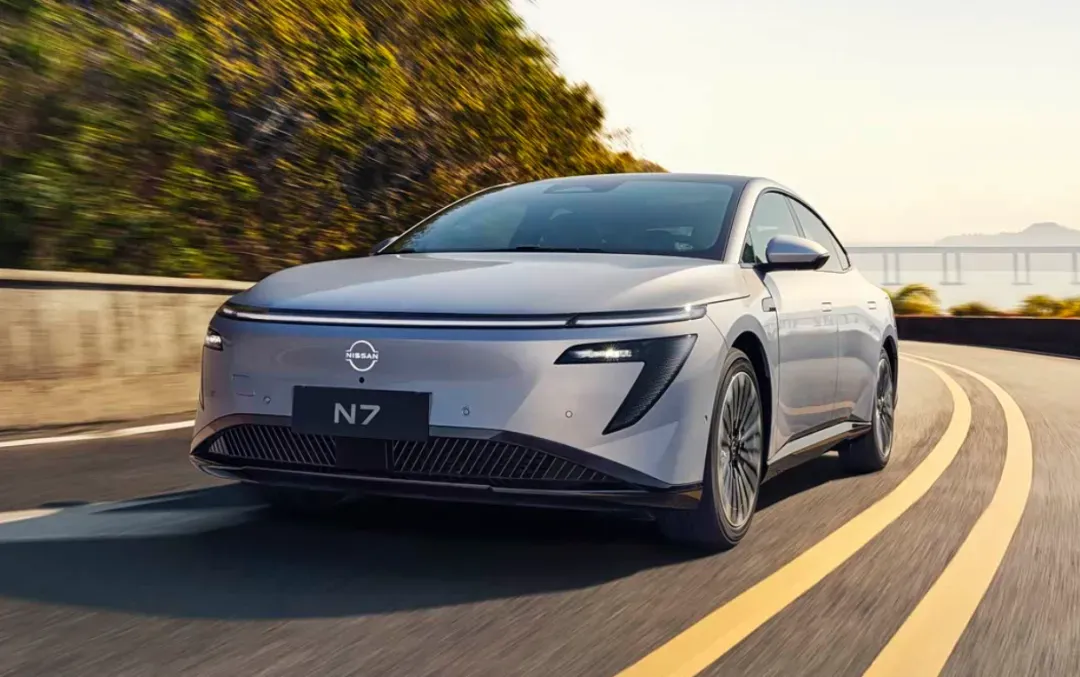
International automakers operating in China are undergoing a strategic pivot toward a "Joint Venture 2.0" model, deeply integrating local technology and supply chains to reverse a multi-year decline in market share. After a period of stagnation between 2024 and 2025, legacy brands are projecting 2026 as a breakout year, driven by a wave of new product launches that align specifically with Chinese consumer preferences in connectivity and powertrain diversity.
Data from November 2025 indicates that while domestic Chinese brands continue to dominate with nearly 90% of the New Energy Vehicle (NEV) market, legacy joint ventures (JVs) are showing signs of a structural rebound. The penetration rate of NEVs within joint venture portfolios hit a historic high of 9.1% in November, up from 6.9% a year prior. This resurgence is fueled by a shift away from global platforms toward vehicles co-developed with Chinese partners, offering competitive pricing and advanced localized specifications.
The emerging strategy marks a departure from the pure electric vehicle (BEV) focus of previous years. Major players, including entities affiliated with Volkswagen AG and Toyota Motor Corp., are aggressively expanding into the Extended Range Electric Vehicle (EREV) segment—a category previously ignored by foreign brands but popularized by Chinese startups. This shift represents a pragmatic response to market demands for range flexibility and reflects a new willingness to utilize Chinese architectures to accelerate development cycles.
The Emergence of the "JV NEV 2.0" Era
The market is currently witnessing a transition from the "1.0 era"—characterized by adapted global models like the Volkswagen ID. series or Toyota bZ4X—to a "2.0 era." The earlier generation suffered from brand premiums that were difficult to justify against local competitors, often featuring higher prices, lower configurations, and lagging smart cabin technologies.
In contrast, the "2.0 era" is defined by deep collaboration with Chinese tech giants and local automotive partners. By November 2025, the total NEV penetration in China approached 60%, with 1.22 million units sold. While traditional foreign brands (excluding Tesla Inc.) accounted for only 54,700 units—or roughly 4.5% of the total NEV market—the growth momentum within this segment is accelerating.
The integration of Chinese battery technology, smart driving software, and platform architectures has allowed JVs to close the competitive gap. Models launched in late 2025, such as the Nissan N7 and Toyota Bozhi 3X, are widely considered the vanguard of this new operational model.
Early Adopters Reap Market Rewards
Automakers that moved quickly to adopt localized standards are already seeing improved metrics. In the luxury segment, Volvo Car AB has seen significant success with the XC70, which has become a sales pillar and pushed the brand’s NEV penetration rate to 36.6% in November. Similarly, the Nissan N7, produced by Dongfeng Motor Company, recorded strong insurance registrations in preceding months, validating the demand for localized Japanese branded EVs.
In terms of volume, Toyota and Buick have overtaken early leaders like Volkswagen to top the joint venture NEV sales charts as of November 2025. Buick and Mazda have achieved high internal penetration rates of 29.6% and 41.4% respectively, though these figures are aided by smaller overall sales bases. Conversely, brands that have been slower to transition, such as Honda, Hyundai, and Ford, remain at the bottom of the rankings with negligible market impact.
Among premium German brands, Mercedes-Benz Group AG and BMW AG continue to lead in volume, aided significantly by the electrification of their sub-brands, Smart and MINI. Audi, despite launching the E5 Sportback under its new collaboration with SAIC Motor Corp., has yet to see a major volume spike, recording a penetration rate of just 4.2%.
The 2026 Pipeline: Betting on Range Extenders
The product roadmap for 2026 suggests a significant diversification in powertrain strategy. While pure electric vehicles currently account for 67.5% of JV NEV sales, the Extended Range (EREV) segment—currently at just 9.5%—is poised for explosive growth.
- Volkswagen: SAIC Volkswagen is preparing to launch a large six-seater SUV utilizing an EREV system with a projected pure electric range of 350 kilometers. Additionally, the brand will release the ID. Unyx 08, a BEV with updated styling on an 800V high-voltage platform.
- Toyota: The Japanese giant plans to launch the Bozhi 7, a C+ class pure electric sedan developed with Guangzhou Automobile Group, in Q1 2026. Crucially, the next generation of the Highlander and Sienna models will feature EREV systems developed primarily by Chinese R&D teams.
- Nissan: Following the N7 and N6, the Dongfeng Nissan joint venture has registered the NX8, a large SUV, with regulators. Its launch in early 2026 will make Nissan one of the few legacy brands to offer a full suite of BEV, PHEV, and EREV options.
- Premium Sector: BMW is preparing its "Neue Klasse" platform models, the iX3 and i3, while also laying the groundwork for China-exclusive EREV products for 2026-2027. Audi will look to the E7 X, a pure electric crossover from its SAIC partnership, to gain traction where the E5 has stalled.
While joint venture brands are unlikely to overtake top-tier Chinese manufacturers in total sales volume in the near term, the internal transformation of their sales structures is undeniable. With a pipeline of vehicles designed and built with Chinese technology, 2026 is positioned to be the year these legacy players stop conceding ground and begin to stabilize their market presence.