
ByteDance, Alibaba Pull AI Agents as Regulation Reshapes China’s AI Market
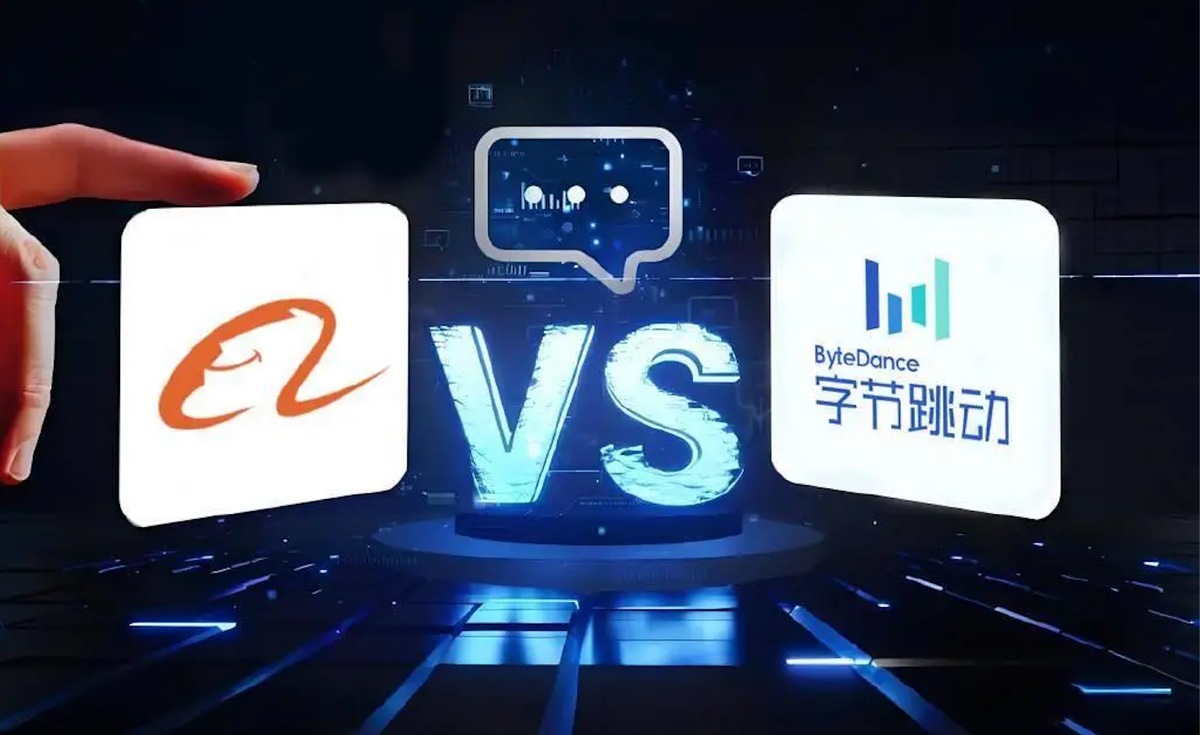
China's two largest AI consumer platforms are dismantling their user-generated agent ecosystems on the same day a landmark regulation takes effect, marking the end of the country's freewheeling AI agent land-grab and the start of a compliance-first competitive era.
ByteDance's Doubao and Alibaba's Qwen — known in Chinese as Tongyi Qianwen — separately notified users on July 4, 2026 that all AI agent functionality will be permanently discontinued on July 15. The synchronized timing is not coincidental: July 15 is the precise date China's Interim Measures for the Administration of Anthropomorphic Interactive Services for Artificial Intelligence enters into force. Industry observers are reading the move as a calculated compliance maneuver rather than a product failure, but the downstream consequences for user acquisition strategy and monetization models are far-reaching.
Markets have absorbed the announcement as a sector-wide inflection signal. The coordinated withdrawal by two of China's most-downloaded AI applications effectively validates a regulatory trajectory that smaller platforms can no longer sidestep.
Regulation Forces the Industry's Hand on a Single Date
The Interim Measures, set to take effect July 15, impose sweeping obligations on providers of AI systems capable of human-like emotional interaction. The rules mandate anti-addiction mechanisms, identity verification for minors, and robust content moderation — requirements that sit in direct tension with the open-ended, user-customizable nature of consumer AI agents, which allow individuals to define an AI persona's personality, memory, and behavioral rules without platform-level guardrails.
Enforcement has already begun. On June 26, 2026, the Shanghai Cyberspace Administration disclosed the first-phase results of its "Qinglang · Rectifying AI Application Chaos" campaign, reporting the removal of more than 14,000 non-compliant agents. Among the targeted violations were agents operated under MiniMax's platform, including tools marketed for generating explicit imagery. The Shanghai regulator has since conducted compliance briefings with nearly 100 major platforms.
Against that enforcement backdrop, Doubao and Qwen choosing July 15 as their shutdown date carries an unambiguous message: proactive alignment with the regulatory calendar is now a reputational and legal necessity for platforms with national-scale user bases.
Doubao Redirects Traffic; Qwen Leaves Users Without a Migration Path
The two platforms are handling the transition differently, a divergence that reveals contrasting strategic priorities.
Doubao has designated ByteDance's standalone app Maobox as the receiving platform for users who wish to continue creating and interacting with AI agents. Users have until October 15, 2026 to retrieve their agent configurations and conversation histories from Doubao before the data is processed in accordance with the platform's privacy policy and rendered permanently inaccessible. ByteDance is effectively using the regulatory moment to consolidate its AI agent user base within a dedicated, compliance-designed product.
Qwen, by contrast, issued a shutdown notice without announcing a consumer-facing alternative. Personified interactive agents and user-built agents on the platform will go dark on July 10 — five days ahead of the full July 15 cutoff — with all agent configurations and chat records becoming inaccessible thereafter. The absence of a migration destination suggests Alibaba is accelerating its pivot away from consumer agent use cases entirely, rather than housing them in a new product.
High Compute, Low Revenue: The Economics Driving the Retreat
Regulatory pressure alone does not fully explain the scale of this withdrawal. Industry analysts point to a structural monetization problem that has been building since the consumer AI agent boom of 2024–2025.
Anthropomorphic chat agents — particularly role-play characters and niche companion bots — generate high volumes of short, fragmented queries. Each interaction consumes inference compute, but the revenue yield per conversation is minimal. For platforms running large language models at scale, this creates a cost structure that analysts describe as "high-burn, low-return." UGC agent ecosystems boosted monthly active user metrics and content volume, but those figures have proven difficult to convert into direct revenue streams, whether through subscriptions, advertising, or transactional services.
The industry is now transitioning from what one Beijing-based technology analyst described to Ke Chuang Ban Daily as a "traffic land-grab phase" toward a "value verification phase," where the sustainability of compute expenditure must be justified by measurable commercial outcomes.
Qwen's B2B Pivot Signals Where Enterprise Value Is Accumulating
Alibaba's Qwen has already signaled where it intends to redeploy resources. On June 3, 2026, Qwen formally opened its Agent and Skill integration framework to third-party enterprises and developers across all industries. Early adopters in pilot testing include Luckin Coffee, KFC China, Mixue Ice Cream & Tea, and China Eastern Airlines.
The roster of pilot partners is instructive: these are high-transaction-volume consumer businesses where AI agents embedded in ordering, customer service, or loyalty workflows can generate quantifiable efficiency gains. The commercial logic — reducing labor costs or increasing conversion rates at scale — is far more legible to enterprise procurement teams than the engagement metrics that defined the consumer agent era.
ByteDance has not made equivalent B2B announcements for its agent infrastructure, but the Maobox migration strategy suggests the company is preserving optionality in the consumer segment while complying with the new regulatory framework.
Four Metrics Now Define Platform Competitiveness
Industry insiders cited by Ke Chuang Ban Daily outlined four dimensions that will determine which platforms emerge as leaders in the post-regulation AI agent market:
Compliance infrastructure — whether platforms have built content moderation pipelines, data security protocols, and minor-protection verification systems capable of meeting the Interim Measures' requirements at scale.
Vertical deployment efficacy — the ability to embed agent functionality into real enterprise workflows in sectors such as office productivity, government services, and manufacturing, generating outcomes that can be quantified in cost or revenue terms.
Commercial closure — demonstrated cost reduction or revenue generation, as opposed to user growth numbers or feature breadth, which regulators and investors are increasingly treating as insufficient proxies for business health.
Engineering depth — performance on complex multi-step tasks, tool integration, cross-system coordination, and private deployment, which separate commodity chatbot wrappers from genuinely differentiated enterprise AI infrastructure.
Strategic Implications for the Broader AI Sector
The simultaneous withdrawal of agent features by Doubao and Qwen — two platforms with a combined user base in the hundreds of millions — constitutes a structural reset for China's consumer AI market. Platforms that built differentiation around open-ended agent customization must now rebuild their value propositions around compliance-compatible use cases.
For smaller AI application developers, the regulatory timeline is equally unforgiving. The Shanghai enforcement action's removal of 14,000-plus agents in its first phase demonstrates that regulators are willing to act at volume. Platforms that lack the engineering capacity to implement the Interim Measures' verification and moderation requirements face existential compliance risk.
The net effect is a market consolidation dynamic that favors well-capitalized incumbents — precisely those with the infrastructure to absorb compliance costs while simultaneously investing in B2B go-to-market capabilities. ByteDance and Alibaba are not retreating from the AI agent market; they are repositioning within it on terms that smaller competitors may be unable to match.
Related Coverage:
Alibaba Launches HappyHorse 1.1 Ahead of ByteDance’s Seedance 2.1 in AI Video Race