
ByteDance Deny EV Manufacturing, Accelerates Push into AI Hardware Integration
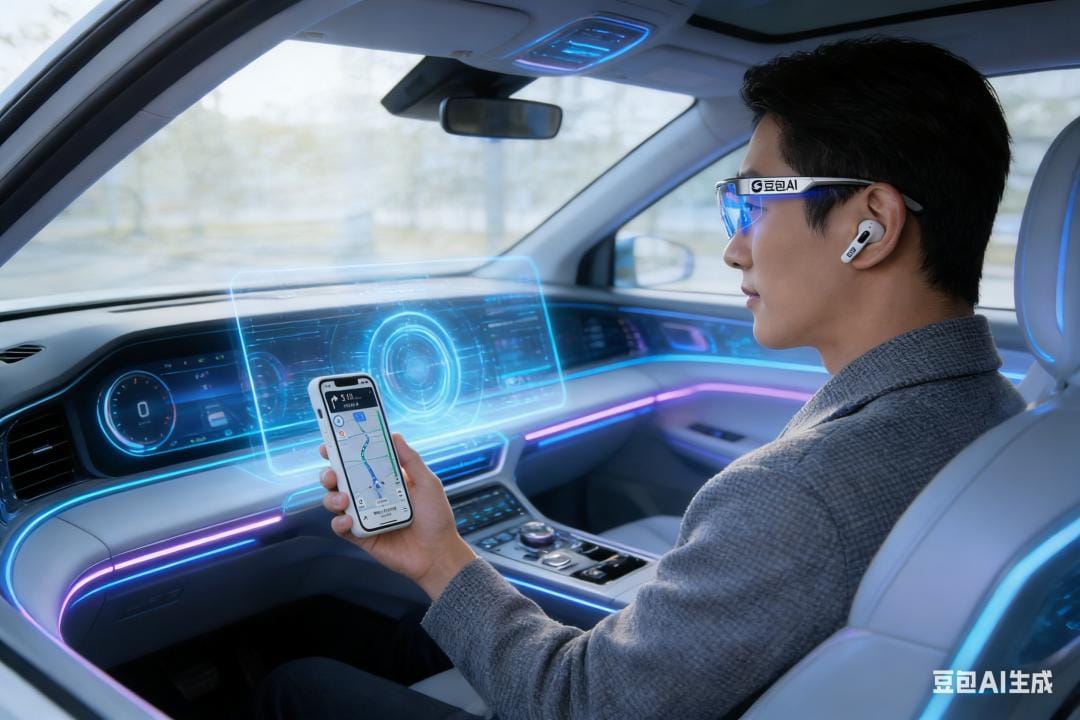
ByteDance has formally denied reports suggesting it plans to manufacture electric vehicles, clarifying its strategy to focus instead on software integration within the automotive sector while simultaneously expanding its footprint in AI-enabled consumer hardware such as smartphones, eyewear, and audio devices.
Following rumors circulating on January 7 that the Beijing-based technology giant was partnering with automakers to produce its own vehicles, a company representative stated that the speculation is untrue and affirmed there are no plans for car manufacturing. This clarification comes as the company intensifies its efforts to secure entry points for its artificial intelligence ecosystem across various hardware platforms.
Strategic Automotive Partnerships
While rejecting a manufacturing role, ByteDance has deepened its involvement in the automotive supply chain through strategic software collaborations. Its cloud computing unit, Volcano Engine, has become a key vehicle for these partnerships.
On October 9, 2025, Seres signed a framework agreement with Volcano Engine to develop "embodied intelligence" applications, focusing on the digital upgrade of the automotive industrial ecosystem. Market reaction to ByteDance’s automotive activities has been visible, with Seres shares rising a cumulative 5.8% over two recent trading sessions.
Prior to the Seres deal, ByteDance expanded its relationship with Mercedes-Benz Group AG in September 2025. The collaboration covers five key areas: smart cockpits, intelligent driving assistance, R&D, digital marketing, and customer operations. This builds upon a 2023 initiative that integrated Volcano Engine’s in-car entertainment solutions into Mercedes-Benz vehicles. These moves signal a strategy of leveraging AI, cloud, and big data capabilities to serve existing automakers rather than competing with them in manufacturing.
The "Doubao" AI Mobile Strategy
Beyond automotive software, ByteDance is aggressively pursuing direct hardware interfaces for its AI models. On December 1, 2025, the company launched the "Doubao" AI smartphone in collaboration with ZTE under the Nubia brand.
The device, marketed as an AI-native phone, integrates ByteDance’s Doubao large language model, UI-TARS visual understanding, and Cuia Agent technologies. The launch generated significant market interest, with pre-orders exceeding 50,000 and the initial batch of 30,000 units selling out in 47 minutes. Following the launch, ZTE’s A-shares hit their daily limit, pushing its market capitalization over RMB 210 billion yuan (US29billion),while its H−shares surged more than 13484, briefly traded as high as RMB 12,000 yuan (US$1,661).
Despite the success, reports suggest that producing an AI-native phone presents challenges to the established profit models of traditional handset manufacturers. Internal discussions reportedly involve founder Zhang Yiming advocating for the continuation of Smartisan development—a smartphone brand previously acquired by ByteDance—to ensure a dedicated hardware vessel for its software. Unverified market chatter suggests the Doubao phone was primarily developed by ByteDance but labeled as a collaboration to maintain relationships with other smartphone manufacturers, upon whom ByteDance relies for app distribution.
Expansion into Wearables
ByteDance’s hardware roadmap extends to wearable technology, aiming to capture user attention through "fragmented" time slots. The company is reportedly developing AI glasses equipped with cameras, following earlier forays into AI-enhanced audio headsets.
Supply chain information indicates the upcoming AI glasses will utilize Qualcomm’s AR1 chip, supported by hardware from Fortune. The device is expected to weigh under 50 grams and include a camera. Initial production is reportedly limited to 10,000 units primarily for testing purposes, with no confirmation regarding a wider public release. These glasses are designed to function within the Doubao app ecosystem, creating a cohesive hardware-software loop.
This hardware push aligns with broader industry trends where AI capabilities are reshaping consumer electronics. Competitors like Rokid are explicitly targeting smartphone users' time, viewing smart glasses as a new primary interface. Similarly, reports suggest OpenAI is exploring unexpected hardware form factors, such as a smart pen, to capture different user demographics.
For ByteDance, securing these hardware entry points is critical. As user growth for its primary mobile apps nears a plateau, the transition to AI-integrated hardware represents a defensive and offensive move to retain user engagement and data flow in an increasingly AI-driven market.