
ByteDance’s Doubao Moves Into the Smartphone OS With Nubia’s AI Flagship
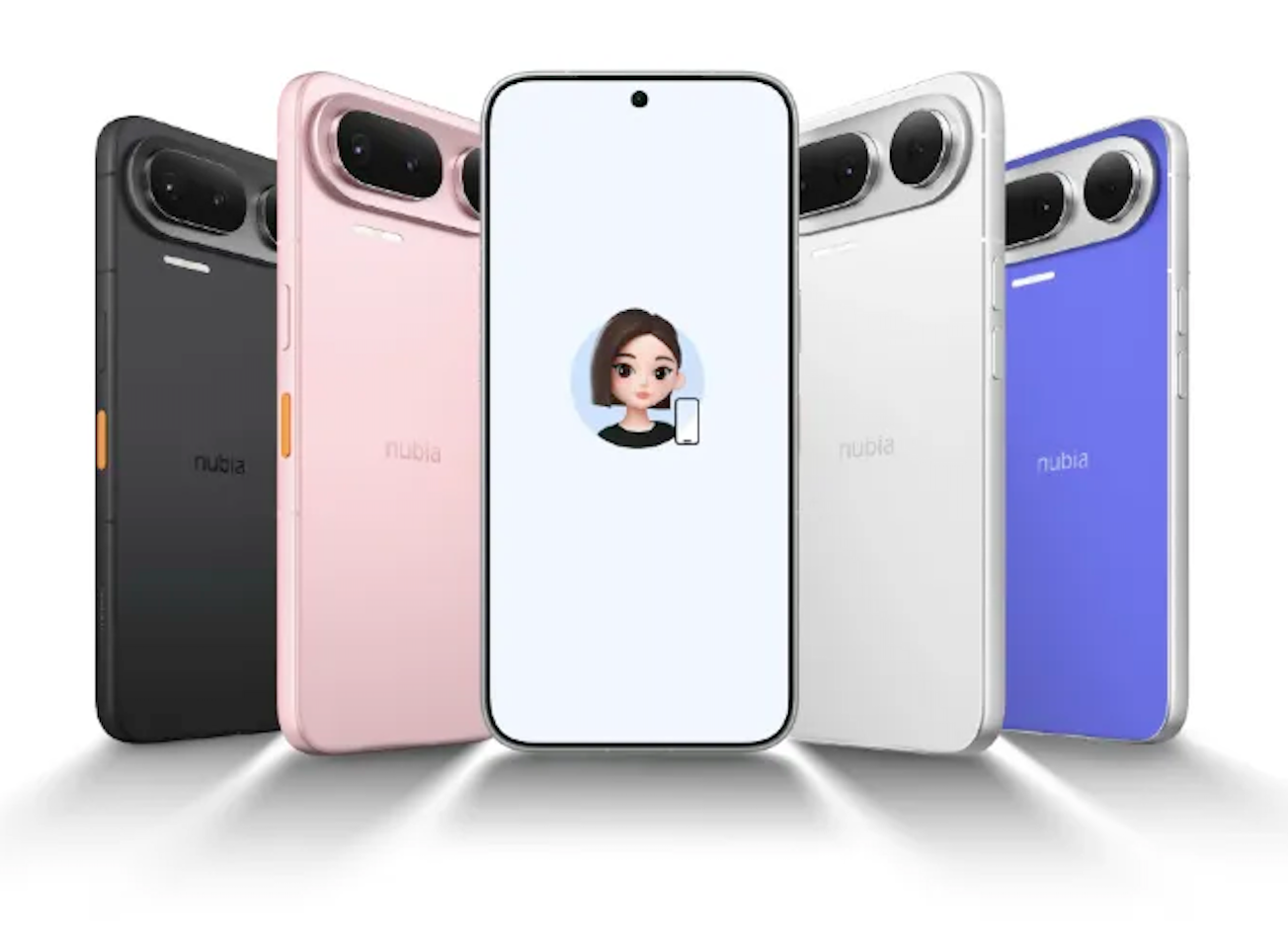
China's smartphone industry crossed a regulatory threshold on September 1, 2026, when the Nubia NaviX Ultra — co-developed by ZTE Corporation and ByteDance — received network-access approval from the Ministry of Industry and Information Technology (MIIT), clearing the final compliance hurdle before a commercial launch that Nubia President Ni Fei confirmed will occur within September.
The clearance is more than a product milestone. It marks the first time a large-scale AI-model company has embedded its inference stack directly into a handset's operating system kernel and shipped the result as a mass-market flagship — a structural departure from the "AI features bolted onto Android" approach that has defined every major OEM's roadmap through 2025.
Market analysts tracking China's handset sector note the timing is deliberately aggressive: the NaviX Ultra will compete on shelf in the same window as flagship releases from Apple, Huawei, and Xiaomi, each of which has separately completed China's Cyberspace Administration (CAC) generative-AI filing for on-device agents.
Regulatory Approvals Validate a Two-Step Compliance Strategy
The MIIT network-access license follows a generative-AI service registration — filed under the name "Nubia Doubao Phone Large Model" — that the joint venture completed with the CAC in July 2026. Together, the two filings satisfy China's dual-track compliance requirement for AI-enabled consumer devices: hardware certification and AI-service registration.
That sequencing matters for investors watching the sector. Seven on-device AI agent systems have now completed CAC registration, according to public disclosures: ByteDance's Doubao, Apple Intelligence, Huawei's Xiaoyi, OPPO's AndesGPT, vivo's Lanxin, Xiaomi's HyperAI, and Samsung's Galaxy AI. The regulatory pipeline is effectively open. The NaviX Ultra is simply the first device to convert that filing into a shipping product.
Architecture Shift Resolves the First-Generation's Fatal Flaw
The original Nubia-ByteDance collaboration — the Nubia M153 engineering prototype released in December 2025 at RMB 3,499 (approximately US$486) — sold out its 30,000-unit allotment within a single day but was subsequently hobbled when major super-apps, including WeChat, blocked its screen-reading automation layer on security grounds. That first-generation device relied on simulated touch inputs derived from real-time screen parsing, a technique that placed it in direct conflict with platform-level security policies.
The NaviX Ultra abandons that approach entirely. The second generation routes agent commands through the Model Context Protocol (MCP), which requires third-party applications to expose direct API interfaces rather than having the AI parse and simulate the display layer. All core large-model inference runs on-device; sensitive operations — payments, identity verification — require explicit manual confirmation. The architectural pivot is, in industry terms, a shift from unauthorized screen-scraping to permissioned API orchestration.
Whether third-party application developers will open MCP interfaces at the breadth required to make the agent genuinely useful remains the central commercial risk. Ecosystem coverage, not hardware, will determine the product's real-world utility at launch.
Hardware Spec Reflects the Compute Cost of Always-On Inference
Persistent on-device AI inference imposes power and memory demands that standard flagship configurations cannot absorb. The NaviX Ultra addresses this directly. The handset is built on Qualcomm's Snapdragon 8 Elite Gen 5 platform — the current top-tier mobile SoC — paired with a 7,000 mAh battery and 90W wired charging. The display is a 6.78-inch 1.5K flat panel running at 144Hz. The imaging array comprises four 50-megapixel sensors covering standard, ultrawide, and periscope telephoto focal lengths, with modules supplied by Sunny Optical Technology. Base configuration starts at 16GB of RAM.
The device is offered in four colorways — black, pink, white, and blue — with a horizontally oriented runway-style camera module that differentiates it visually from the circular module designs dominant among current flagships. A dedicated orange physical button on the device frame triggers the Doubao agent in under one second without requiring a wake word or screen unlock.
Pricing has not been officially disclosed. Industry estimates cited in Chinese technology media cluster in the RMB 5,000–7,999 range (approximately US$694–US$1,111), above the first-generation's RMB 3,499 price point, reflecting both upgraded silicon costs and a deliberate positioning as a premium AI-first device rather than a volume product.
Three Competing Models Define the Industry's Strategic Fault Lines
The NaviX Ultra's commercial architecture — an internet-platform AI stack licensed into a hardware partner's device — represents one of three distinct integration strategies now competing for dominance in China's AI handset segment.
The first is vertical integration, exemplified by Huawei and Apple, where the AI model, silicon, and device are designed and controlled by a single entity. The approach offers the deepest system-level optimization but requires capital expenditure at a scale only the largest OEMs can sustain.
The second is the partnership model the Nubia-ByteDance joint venture represents: a software company supplies the AI "brain" while a hardware manufacturer provides manufacturing, supply chain, and distribution. Speed-to-market is the primary advantage; strategic dependency is the primary risk. ByteDance retains control over the Doubao model and its associated ecosystem, creating a structural vulnerability for Nubia if ByteDance's priorities shift.
The third, and most radical, approach is being pursued by StepFun, which is developing a native Agent OS designed from the ground up to manage AI agents across Android and Linux environments. The model-first approach bypasses the retrofitting problem entirely but currently lacks the device partnerships or distribution scale to compete commercially.
Scale Gap Limits Near-Term Market Impact, But Signals Long-Term Direction
Production volumes underscore the NaviX Ultra's role as a proof-of-concept at commercial scale rather than a mainstream volume play. Confirmed shipment targets are in the hundreds of thousands of units — a significant increase from the first generation's 30,000-unit pilot but orders of magnitude below the tens of millions of units that Huawei and Xiaomi move annually through their flagship lines.
The broader market context amplifies the strategic stakes. Counterpoint Research projects that generative AI smartphones will account for 45% of global handset shipments in 2026, rising above 52% in 2027. IDC estimates China will ship 147 million next-generation AI handsets in 2026, representing 53% of the domestic market. At those volumes, the architecture that captures the AI agent interaction layer — whether vertically integrated, partnership-based, or model-native — will define the platform economics of the next hardware cycle.
The NaviX Ultra's September launch will provide the first real-world data point on whether MCP-based agent orchestration can deliver the autonomous multi-step task execution that differentiates true AI agents from the voice-assistant features that have populated marketing decks since 2023. The answer will carry implications well beyond Nubia's order book.
Related Coverage:
ByteDance Launches Doubao Work, Triggering Systemic Battle for China's AI Office Market