
Cambricon Clears the Air on Shipment Rumors as Inventory Surge Draws Scrutiny
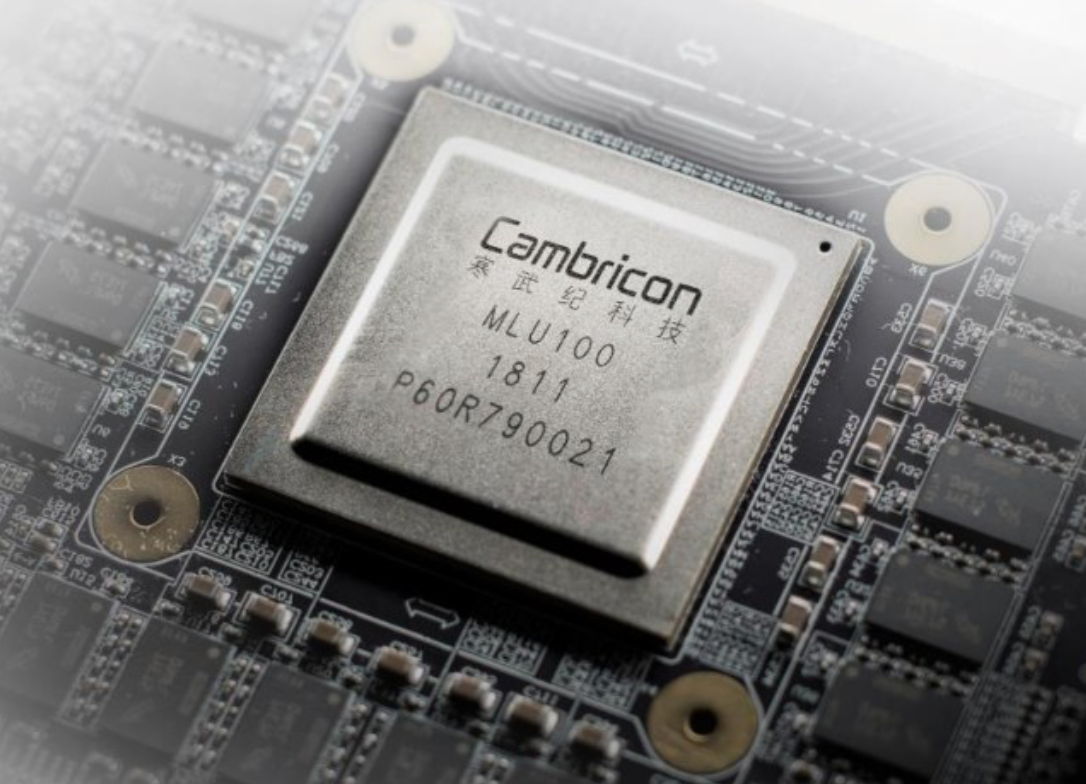
Cambricon Technologies deflects a viral shipment forecast while its RMB 11.67 billion inventory pile forces investors to confront a harder question: is strategic stockpiling a sign of demand confidence or a margin time bomb?
At its third-quarter earnings call on Oct. 26, Cambricon Technologies Chairman and CEO Chen Tianshi moved quickly to extinguish market speculation, telling investors the company had never communicated any forecast suggesting chip shipments would exceed one million units in 2027. The denial—his second on record, following an identical rebuttal in September—signals a widening gap between retail investor expectations and management's own disclosure posture, a tension that dominated the roughly two-hour session.
The backdrop makes the disambiguation critical. Cambricon's first-nine-month revenue hit RMB 9.526 billion (US$1.32 billion), up 106.76% year-on-year, while net profit attributable to shareholders surged 131.49% to RMB 3.715 billion (US$516 million). Strong numbers, yet investor attention kept gravitating toward the balance sheet's less flattering corners.
Ballooning Inventory Tests the "Strategic Stockpiling" Narrative
The single most contested data point from the call: inventories reached RMB 11.665 billion (US$1.62 billion) at end-Q3 2026, a 41.43% sequential jump of RMB 3.417 billion (US$474 million) from Q2. Prepaid accounts rose to RMB 3.044 billion (US$423 million), while notes payable climbed to RMB 4.966 billion (US$690 million)—collectively suggesting Cambricon has placed aggressive upstream bets on wafer fabrication, HBM memory, and advanced packaging capacity.
Management framed the build-up as deliberate demand-hedging. Yet the company simultaneously disclosed RMB 502 million (US$69.7 million) in inventory write-down provisions through the first three quarters, attributed to aging raw-material stock. That combination—rising stockpiles and rising impairments on existing stock—creates a logical tension management declined to fully resolve. Crucially, Chen and Board Secretary Ye Haoyin did not disclose the inventory's structural breakdown (raw materials vs. work-in-progress vs. finished goods), the proportion tied to confirmed purchase orders, or an estimated draw-down timeline.
For investors accustomed to hardware-cycle dynamics, the omission matters. GPU and AI accelerator inventory can depreciate rapidly if a next-generation architecture renders current silicon obsolete. The fact that Cambricon is simultaneously developing the Siyuan 690 and a "6-series" chip family makes the inventory's vintage composition directly relevant to impairment risk—a question management sidestepped.
A RMB 3.974 Billion Q4 Sprint Stands Between Cambricon and Its Incentive Target
Cambricon's 2026 restricted stock incentive plan sets a full-year revenue threshold of RMB 13.5 billion (US$1.875 billion). With RMB 9.526 billion booked through September, the company must generate approximately RMB 3.974 billion (US$552 million) in Q4—a 12.54% sequential increase over Q3's RMB 3.531 billion (US$490 million).
Chen's response was structurally optimistic but operationally thin: AI compute demand remains robust and revenue growth is expected to continue. He offered no order-backlog figure, no delivery schedule, and no breakdown of Q4 pipeline by customer vertical or product line. That reticence is consistent with a company navigating U.S. export-control scrutiny, where public disclosure of chip volumes and named hyperscaler customers carries regulatory risk. Still, the gap between the incentive target and disclosed forward visibility will likely keep analyst estimates wide.
One structural positive: Chen confirmed that 2026 nine-month revenue is entirely sourced from the cloud computing product line, explicitly excluding the intelligent computing cluster systems business. That segmentation implies Cambricon's core silicon-level revenue is compounding at triple-digit rates independently of systems integration—a cleaner growth story if the cloud line can maintain momentum into Q4.
Software Ecosystem Depth Emerges as the Underappreciated Moat
Beyond the inventory noise, the call surfaced a commercially underreported development: Cambricon has completed compatibility with China's de-facto leading large language model stack. Supported models now include DeepSeek, GLM, Qwen, Kimi, and MiniMax (MiniMax)—essentially the full tier-one domestic open-source roster.
Ongoing optimization work spans DeepSeek, Qwen, and Tencent's Hunyuan, with a stated focus on lifting end-to-end training throughput. For enterprise buyers evaluating domestic AI infrastructure, model-level compatibility is increasingly the decisive procurement criterion, particularly as Beijing continues to promote indigenous compute stacks. Cambricon's breadth here is a genuine competitive asset that quarterly P&L figures alone do not capture.
The company also advanced Triton-MLU, a compiler bridge enabling developers to write GPU-agnostic Triton kernels that execute natively on Cambricon's MLU architecture. In practice, this lowers porting friction for model teams already working in Triton—a tool widely used in the DeepSeek and open-source communities—potentially accelerating customer adoption without requiring silicon-level code rewrites.
Switch Chip Roadmap Signals Ambitions Beyond the Accelerator Card
Chen disclosed that Cambricon's capital raise includes R&D funding for switch chips targeting large-model multi-node interconnect—a capability that, if productized, would allow the company to offer vertically integrated multi-card compute clusters rather than selling standalone accelerators into third-party fabric. No tape-out date, volume production timeline, or sampling schedule was provided.
The strategic logic mirrors what Nvidia (NVIDIA) executed with NVLink and NVSwitch: controlling the interconnect layer dramatically increases per-cluster revenue and raises switching costs. For a Chinese AI chip vendor operating under a constrained competitive set, owning the fabric could be a higher-value wedge than competing on raw FLOPS alone. That said, switch chip development is notoriously capital-intensive and schedule-slippery; Cambricon's silence on milestones suggests the program remains early-stage.
Impact Assessment
Cambricon's core growth trajectory is difficult to dispute at 106% top-line expansion. The more nuanced investor question entering Q4 is whether a RMB 11.7 billion inventory position—built against demand signals the company declines to specify—represents disciplined supply-chain optionality or a forward margin liability waiting to crystallize. That answer will likely arrive with the full-year results.
Related Coverage:
Cambricon's H1 Revenue Miss Exposes Delivery Bottleneck at China's AI Chip Champion
Cambricon Loses $10 Billion in Half-Day Trading on Unverified Revenue Guidance Rumor