
Cambricon's H1 Revenue Miss Exposes Delivery Bottleneck at China's AI Chip Champion
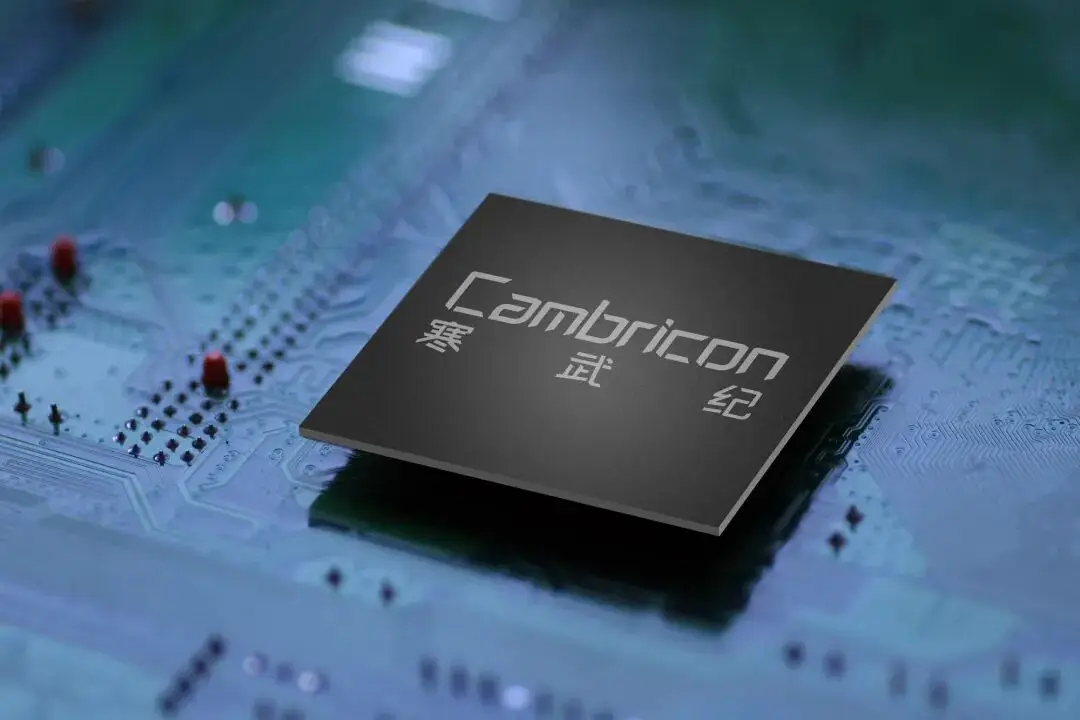
China's most closely watched domestic AI chipmaker posted first-half revenue of RMB 5.996 billion (US$833 million), doubling year-on-year — yet the headline growth masked a sharp Q2 deceleration that blindsided institutional investors and sent the stock under pressure, revealing a structural gap between order intake and actual delivery capacity.
The August 7 earnings release from Cambricon showed H1 2026 net profit attributable to shareholders of RMB 2.311 billion (US$321 million), up 122.6% year-on-year, while non-GAAP net profit reached RMB 2.166 billion (US$301 million), rising 137.3%. On the surface, the numbers represent a landmark moment for a company that spent years burning cash while chasing NVIDIA's shadow. Beneath them, however, lies a more uncomfortable story: Q2 standalone revenue came in at RMB 3.111 billion (US$432 million) — a sequential gain of just 7.8%, against the 25%–35% quarter-on-quarter growth that the sell side had penciled in. The implied revenue shortfall versus consensus was RMB 500 million–800 million (US$69 million–US$111 million).
Morgan Stanley flagged the miss in a research note, attributing the delivery shortfall to production ramp difficulties and memory component constraints — an assessment that aligns with the four structural bottlenecks dissected below.
Supply Chain Gridlock Throttles Shipments of MLU580/590
The primary drag on Q2 revenue was not demand destruction but physical delivery failure. Cambricon's next-generation MLU580 and MLU590 accelerators — the company's volume workhorses for the quarter — are manufactured on a 7-nanometer process node. That places them squarely in the queue behind NVIDIA and AMD at Taiwan Semiconductor Manufacturing (TSMC), where wafer allocation for Chinese fabless designers remains constrained by U.S. export-control measures and prioritized capacity agreements with higher-volume clients.
Industry checks suggest Cambricon's effective Q2 shipment volume fell well short of the 120,000–160,000 wafer-equivalent units that institutions had modeled. Compounding the wafer shortage, High Bandwidth Memory — the stacked DRAM that transforms a bare die into a deployable AI accelerator card — is in acute global scarcity. Global HBM output is effectively pre-committed to NVIDIA and AMD through multi-year supply agreements with SK Hynix, Samsung, and Micron, leaving Cambricon with insufficient allocation to assemble finished accelerator cards even when silicon was available.
The net result: completed silicon sat in inventory rather than converting to recognized revenue.
ByteDance's Procurement Shift Removes a Key Growth Catalyst
Cambricon's customer concentration risk crystallized in Q2. ByteDance accounts for an estimated 65%–70% of total revenue, making it not merely a key account but the structural backbone of the entire income statement. In the first quarter, ByteDance front-loaded purchases, drawing down inventory aggressively. By Q2, the company entered a natural inventory digestion cycle, compressing new purchase orders and allowing existing stock to be deployed before issuing incremental demand.
More strategically significant: ByteDance has diversified its domestic AI chip supply chain in 2026, increasing its allocation to Huawei's Ascend series and onboarding Iluvatar CoreX as a third-party supplier. This deliberate vendor diversification — a standard enterprise risk-management practice — directly compresses the addressable incremental volume available to Cambricon at its largest account. The company retains its position as ByteDance's primary vendor, but the era of near-exclusive reliance appears to be closing.
Base Effects and Competitive Intensity Compress the Growth Narrative
Q1 2026 revenue grew 159.6% year-on-year, a figure that still reflected the low-base tailwind from a period when Cambricon had minimal commercial scale. By Q2, the comparison period was already the inflection quarter of 2025's profitability breakout, eliminating the statistical amplification that had produced triple- and quadruple-digit growth rates throughout 2025. The Q2 year-on-year rate decelerated to approximately 70% — mathematically inevitable given base normalization, but psychologically jarring for a market that had priced in perpetual hypergrowth.
The competitive environment has simultaneously tightened. Huawei's Ascend 910C production ramp is redirecting government, state-owned enterprise, and cloud-vendor procurement. Biren Technology and MetaX are adding incremental domestic supply, pushing China's AI chip market toward what analysts describe as a capacity commoditization phase — a dynamic that raises customer bargaining power and compresses the pricing premium that early movers like Cambricon have historically commanded.
Revenue Recognition Mechanics Create a Profit-Revenue Divergence
A fourth factor — less visible but analytically critical — is the revenue recognition framework governing Cambricon's shift from chip sales to integrated cluster deployments. Major internet clients including ByteDance no longer purchase individual accelerator cards; they procure turnkey 128-card or 256-card compute clusters, complete with interconnect fabric, software stack, and workload validation. The acceptance testing cycle for these systems has extended from a matter of weeks to one to two months, meaning that hardware shipped in Q2 cannot be booked as revenue until Q3 customer sign-off.
This accounting timing mismatch produces the apparent paradox in the H1 report: non-GAAP net profit rose 31.9% sequentially even as revenue growth nearly stalled. Higher-margin premium products represent a growing share of the mix; fixed R&D costs are being amortized across a larger installed base; and operating expense ratios are declining. The company is, in effect, becoming more profitable per unit sold while selling fewer units per quarter than the market expected. Contract liabilities — a leading indicator of future revenue — showed limited sequential growth in Q2, suggesting the near-term order pipeline has not yet replenished to the levels required to restore the prior growth trajectory.
Equity Incentive Targets Signal Conservative Internal Guidance
On the same day as the earnings release, Cambricon disclosed a stock incentive plan granting 5 million shares to 945 employees — approximately 85% of its total headcount — at a strike price of RMB 750 per share, implying a total grant value of approximately RMB 2.25 billion (US$313 million). The embedded performance hurdles require 2027 revenue of RMB 21.6 billion–27 billion (US$3.0 billion–US$3.75 billion) and net profit of no less than RMB 9.2 billion (US$1.28 billion), scaling to RMB 47.6 billion–59.5 billion (US$6.6 billion–US$8.3 billion) in revenue by 2028.
Morgan Stanley noted that these targets fall below current market consensus estimates, interpreting them as retention-oriented benchmarks rather than bullish forward guidance. The bank's read is consistent with management signaling caution about near-term execution risk while preserving upside optionality if supply constraints ease faster than expected.
Q3 Catalysts Could Restore Momentum — If Execution Holds
Three factors could materially shift the trajectory in the second half. First, the MLU690 — Cambricon's high-end training accelerator targeting large-model pre-training workloads — is scheduled for concentrated batch delivery in Q3, which should accelerate revenue recognition for orders already in the pipeline. Second, HBM allocation is expected to improve incrementally as Samsung ramps its HBM3E production line and as some NVIDIA supply agreements roll off, freeing marginal capacity for secondary customers. Third, government and state-owned enterprise compute procurement — historically back-half weighted in China's fiscal calendar — is expected to accelerate through H2 2026, providing a demand offset to the softness at internet-sector clients.
The central question for investors is not whether demand for domestic AI compute exists — China's policy-driven buildout of sovereign AI infrastructure makes that a near-certainty — but whether Cambricon can convert that demand into recognized revenue at the pace its valuation requires. At current multiples, the stock prices in a resumption of high-velocity growth. The H1 report confirms the company's profitability inflection is real; it also confirms that the distance between a healthy order book and a healthy income statement remains uncomfortably wide.
Related Coverage:
Cambricon Crosses RMB 1 Trillion Threshold, Cementing China's Domestic AI Chip Crown