
CAS Space Eyes IPO With $21 Billion Valuation After 11 Launches
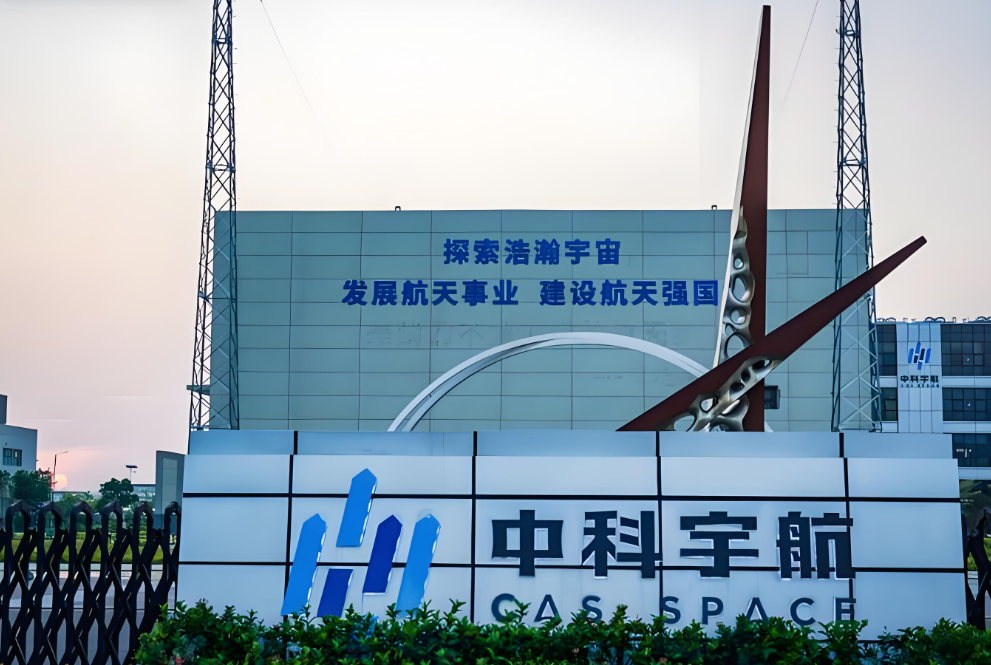
Guangzhou-based rocket maker races four rivals for China's first commercial space listing as national satellite projects fuel demand
CAS Space, China's first mixed-ownership commercial rocket company, has filed for a Sci-Tech Innovation Board IPO, positioning itself as the frontrunner among five major private space startups competing for market leadership. The Guangzhou-based unicorn, valued at approximately RMB 150 billion (US$20.8 billion), has completed 11 launches since 2022, delivering 86 satellites—more cumulative payload than any domestic peer.
Founded in 2018 by Yang Yiqiang, former chief commander of China's solid-fuel Long March 11 rocket, CAS Space leveraged institutional backing from the Chinese Academy of Sciences' Institute of Mechanics to compress development timelines. The company achieved the maiden flight of its Lijian-1 solid rocket within 3.5 years, a pace that challenges even state-owned manufacturers. Its April 2026 debut of the liquid-fueled Lijian-2 marks China's entry into high-frequency, cost-competitive launch services, with the company claiming per-flight economics rivaling SpaceX's reusable Falcon 9.
Policy Shift Unlocks RMB 280 Billion Satellite Buildout
CAS Space's IPO timing aligns with Beijing's elevation of aerospace to a "strategic pillar industry" in the 2026 Government Work Report, marking the first standalone mention of satellite internet infrastructure.
Two state-backed constellations—Guowang and Qianfan—plan to deploy 28,000 satellites between 2024 and 2035, creating sustained launch demand. Industry analysts estimate the buildout could generate RMB 100 billion (US$13.9 billion) in launch contracts, with private operators capturing 30-40% market share as state-owned launch providers prioritize deep-space missions.
The company's Guangzhou headquarters also benefits from provincial efforts to anchor aerospace supply chains in the Greater Bay Area. Nansha District constructed China's first integrated rocket production base for CAS Space in 2023, enabling annual output of 30 Lijian-1 vehicles. The facility's proximity to Hainan's Wenchang Spaceport reportedly reduces logistics costs by 20% compared with northern competitors, according to provincial transportation data.
Profitability Pressured by Front-Loaded R&D Spending
Financial disclosures reveal operational challenges common to capital-intensive space ventures. CAS Space reported revenue of RMB 5.95 million, RMB 77.72 million, RMB 244 million, and RMB 84.22 million (US$11.7 million) across various 2022-2025 reporting periods, against cumulative net losses exceeding RMB 3.8 billion (US$528 million).
A one-time RMB 1.45 billion share-based payment in 2022—tied to intellectual property transfers from the Institute of Mechanics—accounted for roughly 38% of total losses.
R&D intensity remains elevated, with approximately RMB 900 million (US$125 million) invested over 45 months to fund development of the reusable Lihong spacecraft series targeting space tourism and microgravity manufacturing.
The company holds nearly 300 patents, but faces margin pressure as Lijian-2's US$15-20 million list price undercuts international competitors by 30-50%. Achieving profitability will likely depend on scaling to more than 20 annual launches—roughly double the projected 2025 cadence—while successfully recovering first-stage boosters to reduce recurring launch costs.
State Capital Dominates Pre-IPO Shareholder Base
Guangzhou municipal investment vehicles control approximately 18% of pre-IPO equity through Guangzhou Industrial Investment and Yuexiu Industrial Fund, reflecting local government priorities to retain aerospace manufacturing capacity and high-value employment.
National entities, including China Securities Co. and SDIC, hold another 12%, while founder Yang Yiqiang retains 34.71% voting control through a tiered ownership structure.
The Institute of Mechanics' subsidiary, Zhongke Lisen, owns a 20% stake now valued at approximately RMB 30 billion (US$4.2 billion), representing one of China's largest-ever technology transfer monetizations from a state research institution.
The company also secured RMB 1.02 billion (US$142 million) across two 2024 funding rounds led by Haitong Innovation Capital and the Sichuan Provincial Fund, earmarking proceeds for Lihong program development milestones.
Investor documents cite contracts worth RMB 3.6 billion (US$500 million) from domestic satellite operators including Changguang Satellite and Weina Xingkong, alongside undisclosed international orders from Southeast Asia and the Middle East—regions where geopolitical restrictions increasingly limit access to U.S. launch providers.
Intensifying Race for Commercial Space Dominance
CAS Space's IPO filing intensifies competition among China's "Big Five" private rocket companies—iSpace, LandSpace, Space Pioneer, and Galactic Energy—all of which are pursuing listings within the next 18 months.
LandSpace's methane-fueled Zhuque-2 achieved orbit in 2023, while Space Pioneer's Tianlong-3 aims for a 2026 debut with a 17-ton payload capacity exceeding Lijian-2. The rivalry increasingly resembles the early SpaceX-Blue Origin dynamic, with Chinese startups racing to establish reusable rocket operations before industry consolidation narrows the field to a handful of survivors.
Regulatory analysts note that the Shanghai Stock Exchange has prioritized hard-tech IPOs since 2024, approving roughly 60% of Sci-Tech Board applicants in strategic sectors versus an overall acceptance rate closer to 32%.
CAS Space's state backing and operational launch record position it favorably, though final valuations may compress if multiple peer filings compete simultaneously for investor capital.
The outcome will test whether China's capital markets can sustain multiple commercial space champions—or whether only state-aligned firms secure sufficient financing to challenge SpaceX's dominance in the global launch market.