
CATL Launches Mass-Produced Sodium-Ion Battery Vehicle, Ushering in Dual-Track Era for EV Power Systems
Contemporary Amperex Technology (CATL), the world's largest battery manufacturer, has unveiled the first mass-produced passenger vehicle equipped with sodium-ion batteries, marking a strategic pivot that could reshape the electric vehicle supply chain as lithium carbonate prices surge toward recent highs.
CATL jointly presented the vehicle with Changan Automobile Group on February 5 in Yakeshi, Inner Mongolia, demonstrating a technology the company has refined over five years since its initial sodium-ion announcement in 2021. The move comes as lithium carbonate futures reached 165,660 yuan ($23,000) per ton on January 30, 2026, intensifying cost pressures across the EV industry.
The deployment signals CATL's dual strategy of maintaining lithium-ion dominance while establishing sodium-ion as a buffer against resource volatility and a solution for previously underserved cold-climate markets. Multiple Changan brands including Avatr, Deepal, Qiyuan, and Neta will adopt CATL's sodium batteries, though specific models remain undisclosed.
The technology breakthrough addresses critical gaps in China's resource security and market coverage. While sodium-ion batteries won't replace lithium-ion in high-end applications, they offer cost advantages and performance characteristics that could unlock new market segments, particularly in northern regions where conventional EV batteries struggle.
Technical Specifications Target Mid-Range Market
CATL's sodium-ion battery achieves an energy density of 175 Wh/kg at the cell level when integrated with the company's third-generation Cell-to-Pack system, enabling pure electric range exceeding 400 kilometers. The company projects future iterations could reach 500-600 kilometers for battery electric vehicles and 300-400 kilometers for plug-in hybrids, potentially covering over 50% of new energy vehicle range requirements.
The battery's standout feature is extreme cold-weather performance. At -30°C, vehicles equipped with CATL's sodium battery deliver nearly three times the discharge power of comparable lithium iron phosphate systems. Capacity retention exceeds 90% at -40°C, with stable discharge maintained even at -50°C—addressing a fundamental barrier to EV adoption in China's northeastern and northwestern provinces.
Safety testing demonstrates resilience under severe conditions. Fully charged cells withstand multi-directional crushing, drill penetration, and complete sawing without smoke, fire, or explosion, with sawn cells continuing to discharge normally. These characteristics directly address consumer concerns about lithium-ion battery safety incidents.
Strategic Implications Span Three Dimensions
The mass production deployment carries significance across resource security, market expansion, and industry structure. China's lithium resource position—650 million tons of proven reserves representing 16.55% of global supply—still requires 58% of lithium ore imports as of 2025. Sodium, abundant at 400 times lithium's crustal concentration and extractable from seawater and salt lakes, positions China as entirely self-sufficient in raw materials for battery production.
The technology opens previously marginal markets. Traditional lithium batteries show marked performance degradation at -20°C, limiting EV penetration in cold regions. CATL's sodium-ion solution transforms China's northeast and northwest into viable growth territories, expanding the addressable market.
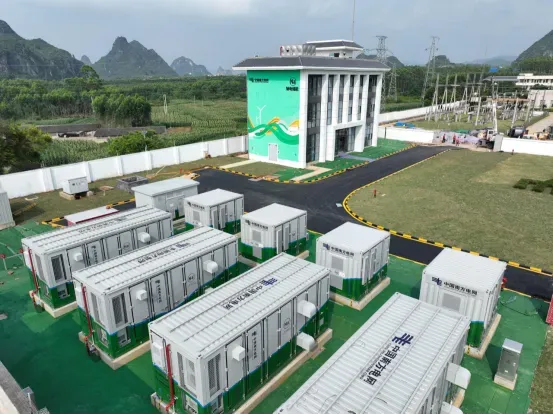
In energy storage applications, sodium-ion systems are gaining traction. According to China Energy Storage Alliance statistics, domestic sodium battery storage projects added 123.1 MW/292.97 MWh of operational capacity between 2024 and 2025, with 250 MW/1,000 MWh under construction. As technology matures, sodium batteries position as cost-effective solutions for grid-scale storage and solar integration projects.
The market structure shifts toward what CATL terms a "dual-star era." Lithium-ion maintains advantages in high-energy-density applications—premium passenger vehicles and long-haul commercial transport—while sodium-ion targets entry-level passenger cars, cold-climate commercial vehicles, and stationary storage based on cost, temperature tolerance, and safety profiles.
Three Barriers to Widespread Commercialization
Despite production milestones, sodium-ion technology faces challenges in energy density, cost economics, and supply chain maturity. The 175 Wh/kg density, while representing progress, trails mainstream lithium iron phosphate and ternary lithium systems, limiting application in mid-to-premium passenger vehicles requiring 500-kilometer-plus range. CATL's roadmap targets lithium iron phosphate parity within three years, contingent on breakthroughs in cathode and anode materials.
Cost dynamics present a paradox. Theoretical material costs run 40% below lithium-ion equivalents, but limited scale undermines advantages. Global sodium-ion shipments reached only 9 GWh in 2025, with average cell manufacturing costs around 0.5 yuan per Wh versus 0.3 yuan per Wh for mature lithium systems. Equipment compatibility stands at approximately 90% with lithium production lines, but current collector modifications, electrolyte preparation systems, and process parameter adjustments increase initial capital requirements.
According to projections from China Science and Technology Sodium, cost advantages materialize only after capacity exceeds 100 GWh with full supply chain scaling, potentially delivering 30-40% price reductions versus lithium iron phosphate. Supply chain coordination remains incomplete. Hard carbon anode materials, critical to sodium-ion performance, previously depended 80% on Japanese imports, creating price volatility and supply uncertainty.
Decade-Long Development Addresses Market Timing
CATL's sodium-ion program, initiated in 2016 with a research team exceeding 300 members including over 20 doctoral-level scientists, predated mainstream recognition of lithium supply risks. The company invested nearly 10 billion yuan over the development cycle, testing approximately 300,000 cells and completing over 30,000 material-level analyses to advance polyanionic fast-insertion, composite anti-freeze electrolytes, and high-safety electrolyte formulations.
The 2021 first-generation announcement coincided with lithium carbonate's surge from 50,000 yuan per ton in 2020 to 600,000 yuan in 2021, though initial specifications—160 Wh/kg energy density and 3,000-cycle life—fell short of passenger vehicle requirements. The disclosure catalyzed global sodium-ion research while positioning an alternative to lithium dependence.
In 2025, CATL launched the "Sodium New" brand and introduced the industry's first light commercial sodium-ion battery, the "Tianxing II Light Commercial Low-Temperature Edition." The current passenger vehicle debut aligns with renewed lithium price pressure, as carbonate contracts climbed through late 2025, with the 2603 contract closing at 151,820 yuan per ton on February 4, 2026.
Sodium-ion production capacity diversifies demand away from lithium resources, moderating supply-demand imbalances and price volatility. The 2021-2022 spike to 600,000 yuan per ton partly reflected excessive scarcity concerns; demonstrating viable alternatives through commercial deployment tempers speculative accumulation and guides pricing toward fundamentals-based levels.
The ten-year progression from laboratory research to production vehicles represents more than technological achievement. It establishes a framework for resource security, expands market coverage into previously constrained geographies, and introduces cost discipline through competitive pressure. For the global EV industry, sodium-ion mass production marks transition from single-pathway expansion to multi-technology optimization, delivering a more resilient and sustainable approach to energy transformation.