
CATL Makes First Nuclear Fusion Bet, Leading Seed Round in Beijing-Based Beta Fusion
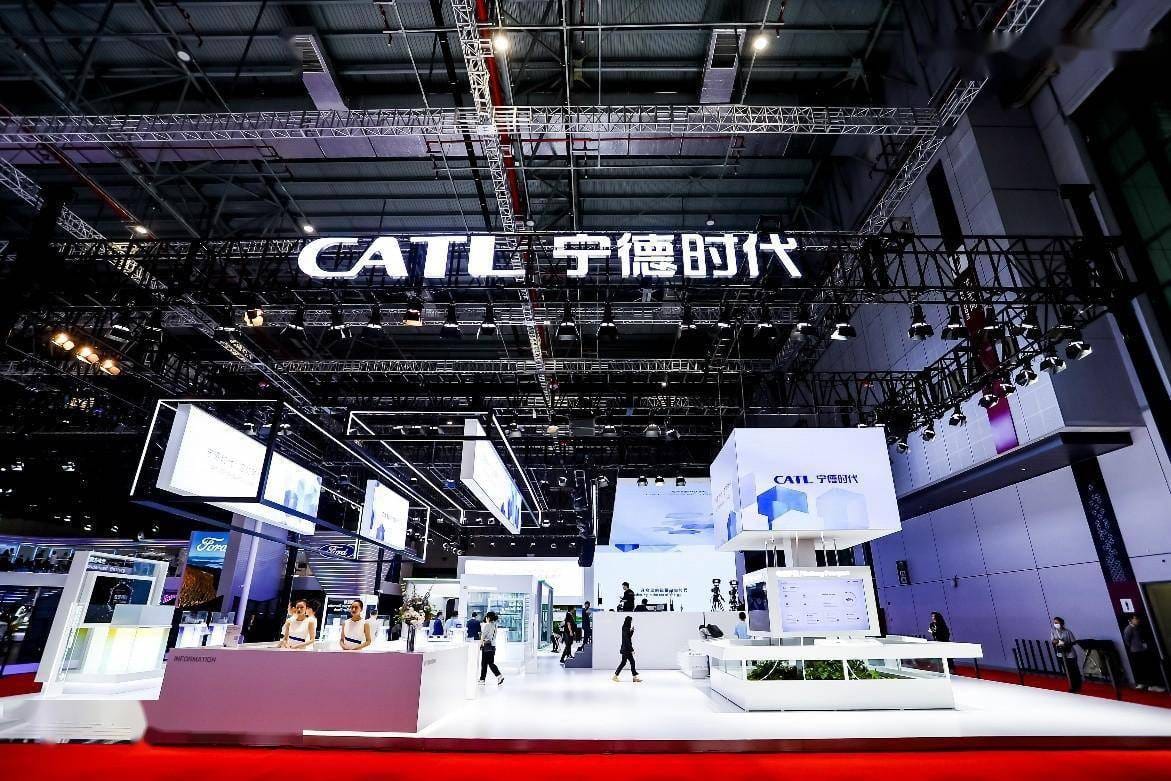
Contemporary Amperex Technology (CATL), the world's largest EV battery manufacturer by installed capacity, has placed its first bet on nuclear fusion, leading a seed-round investment of several hundred million yuan in Beijing-based Beta Fusion (Beta Fusion), according to sources familiar with the matter — a strategic pivot that signals CATL's accelerating push beyond batteries toward becoming a vertically integrated clean energy supplier.
The deal, exclusively reported by Sci-Tech Innovation Board Daily on June 11, 2026, marks a notable inflection point: CATL founder Robin Zeng stated as early as 2024 that the company's zero-carbon grid business could ultimately be ten times larger than its EV battery segment. The Beta Fusion investment is the clearest capital commitment yet to that ambition. Financial terms beyond the “several hundred million yuan” range were not disclosed.
The move arrives as China's private nuclear fusion sector reports cumulative disclosed financing exceeding RMB 20 billion (approximately US$2.78 billion), with deal velocity accelerating sharply in 2025–2026 on the back of surging AI-driven data center power demand and Beijing's formal inclusion of nuclear fusion in the 15th Five-Year Plan as one of six future pillar industries.
Betting on the Riskiest Fusion Pathway
Beta Fusion was incorporated on December 29, 2025 — less than six months before the seed round closed — with registered capital of RMB 1 million (approximately US$139,000). Its founder, legal representative, and controlling shareholder is Cao Zhiping, a young scientist identified as one of China's earliest systematic researchers on the pulsed Field-Reversed Configuration (FRC) fusion pathway.
The FRC route is the technical cornerstone of Beta Fusion's commercial thesis. Within the broader taxonomy of magnetic confinement fusion — including tokamak, stellarator, and magnetic mirror configurations — FRC is widely regarded by industry insiders as the “most aggressive, fastest, and highest-risk” approach.
The core trade-off is that FRC's natural confinement time is shorter than tokamak designs, but rapid magnetic compression can dramatically increase plasma density, substituting density for time to achieve fusion gain metrics at materially lower engineering cost.
The pulsed operating mode — where each “ignition” lasts only milliseconds — allows engineers to bypass several extreme engineering challenges inherent in long-pulse operation and compress the R&D iteration cycle. Beta Fusion targets grid connection of a 50–100 MW demonstration plant within six to eight years.
A critical caveat flagged by industry observers: FRC's Q-value — the ratio of energy output to input — has yet to receive credible third-party validation, making it the least physically verified of the commercially pursued fusion pathways.
Mirroring Helion, but in a Different Regulatory Landscape
Beta Fusion's FRC approach directly parallels that of U.S.-based Helion Energy, which in 2023 signed a landmark power purchase agreement with Microsoft (NASDAQ: MSFT) targeting 50 MW of fusion-generated electricity by 2028 from its Orion plant.
In February 2026, Helion announced its seventh-generation prototype Polaris had heated plasma to 150 million degrees Celsius — approximately three-quarters of the threshold required for commercial fusion power generation.
The parallel is commercially instructive. Helion's Microsoft deal demonstrated hyperscaler willingness to sign long-dated offtake agreements for fusion power. For CATL, whose founder has explicitly targeted large-scale independent energy systems capable of powering major data centers or entire cities, a domestic FRC champion with a credible team and a six-to-eight-year commercialization roadmap fits squarely within that strategic blueprint.
China’s Fusion Landscape Fractures Along Technology Lines
CATL's entry reshapes capital formation in a sector already crowded with major investors. The competitive map is fragmenting by technical pathway:
- Tokamak (mainstream): Fusion New Energy, China Fusion Energy, Xinghuan Fusion, Energy Singularity
- FRC pathway: Hanhai Fusion, Xingneng Xuanguang, Nova Fusion, Beta Fusion
- Stellarator: Honghu Fusion
- Hydrogen-boron fusion: ENN Science & Technology
- Helium-3 fusion: Dongsheng Fusion
- Laser fusion: Zhang Jie team
The FRC sub-sector is drawing disproportionate capital from China's tech ecosystem. Alibaba has invested in Nova Fusion, while Ant Group led Xingneng Xuanguang’s round.
Globally, Alphabet (NASDAQ: GOOGL), Nvidia (NASDAQ: NVDA), and Bill Gates–backed Breakthrough Energy Ventures have also entered fusion investments.
Recent financing benchmarks illustrate accelerating momentum:
- Nova Fusion completed two rounds totaling RMB 1.2 billion (approximately US$167 million) within its first year of operation
- Xinghuan Fusion has accumulated more than RMB 2 billion (approximately US$278 million) in total funding and crossed the US$1 billion valuation threshold, entering unicorn status
- SuperMag New Energy, focused on high-temperature superconducting magnet systems, closed a multi-hundred-million yuan angel round in January 2026 led by Dingfeng Kechuang, with participation from SICC and Northern Light Venture Capital
CATL's Energy Transition Logic Sharpens
CATL's fusion investment reflects a broader strategic shift toward energy system integration. As EV battery margins face pressure, the company is repositioning toward grid-scale and system-level energy infrastructure.
Zeng’s “ten times larger” framing for the zero-carbon grid business implies a TAM far beyond transportation electrification. As AI inference workloads push data center electricity demand higher in 2026, demand for always-on clean baseload power is structurally expanding.
Fusion’s theoretical advantages — near-limitless fuel supply, zero carbon emissions, and no long-lived radioactive waste — have led Chinese industry observers to call it “hexagonal energy”, reflecting multi-dimensional superiority.
Beta Fusion’s six-to-eight-year timeline implies potential grid connection around 2031–2033, within CATL’s long-horizon infrastructure strategy.
As SICC founding partner Mi Lei noted: “Controllable nuclear fusion opens the imagination of unlimited energy. It requires policy coordination, patient capital, and public understanding to advance nuclear energy as a cornerstone of sustainable development.”
Whether CATL’s bet on the highest-risk fusion pathway pays off will ultimately depend on Beta Fusion’s ability to deliver credible Q-value validation — the key metric the FRC camp has yet to conclusively demonstrate.
Related Coverage:
CATL: Understanding the World's Largest Battery Maker and What Drives Its Dominance