
Morgan Stanley Sees NIO’s Refreshed L60 as “Positive Surprise,” Reaffirms Overweight
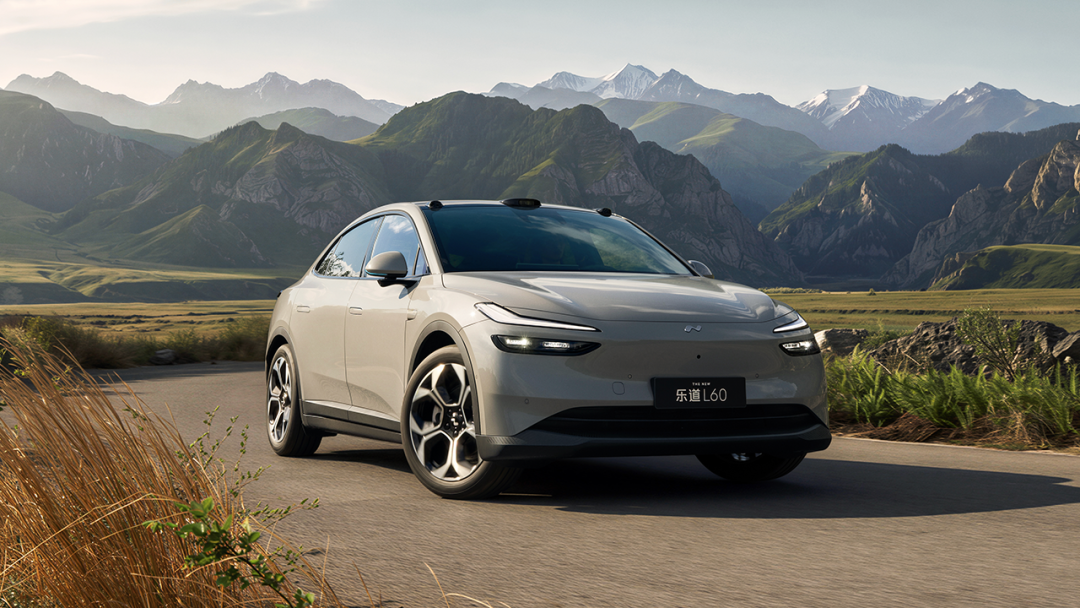
NIO delivered what Morgan Stanley calls a "genuine positive surprise" with the June 11 launch of a refreshed Onvo L60 priced 7–13% below its predecessor despite a substantive hardware upgrade — a combination that the bank's analysts argue could accelerate mix-shift toward premium trims and push second-quarter deliveries toward the upper bound of management's 110,000–115,000-unit target.
The refreshed L60 carries a sticker price of RMB 192,800–222,800 (approximately US$26,800–US$30,900), or RMB 135,800–165,800 (US$18,900–US$23,000) under the Battery-as-a-Service (BaaS) subscription model. Morgan Stanley analyst Tim Hsiao, writing from Hong Kong on June 11, 2026, maintained an Overweight rating on NIO's Hong Kong-listed shares (9866.HK) with a price target of HK$58.00 — implying roughly 39% upside.
The bank's bullish read is not simply about price cuts. The deeper investment thesis rests on a platform unification story that, with this launch, is now complete.
Hardware Leap Redefines Onvo's Competitive Positioning
The updated L60 marks the first deployment of NIO's in-house 5-nanometer automotive-grade Shenji NX9031 chip across the Onvo sub-brand lineup. Combined with a new LiDAR-equipped variant, the latest NIO World Model (NWM) neural network, and the SkyOS Tianshu vehicle operating system, the refresh completes what Morgan Stanley describes as a "platform unification cycle" spanning the L90, L80, and L60 — every Onvo model now runs identical core intelligent-driving architecture.
This matters for investors because platform standardization typically compresses per-unit software development costs while enabling faster over-the-air feature rollouts — a dynamic that supports NIO's trajectory toward profitability.
Morgan Stanley's model projects NIO swinging to a ModelWare net profit of RMB 796.5 million (US$110.6 million) in 2027 and RMB 4.33 billion (US$601 million) in 2028, after an estimated net loss of RMB 3.30 billion (US$458 million) in 2026.
Against direct competitors, the L60's pricing looks deliberately disruptive. At RMB 193,000–223,000, it undercuts Tesla Model Y (RMB 264,000–314,000) by a substantial margin and sits below XPeng G7 (RMB 196,000–206,000) on a feature-adjusted basis, given the L60 now offers an optional LiDAR unit that neither Model Y nor G7 carries. Xiaomi YU7 (RMB 234,000–390,000) and ZEEKR 7X (RMB 230,000–270,000) both carry higher base prices, while Li Auto L6 starts at RMB 250,000–280,000.
Q2 Delivery Math Points Toward Record Territory
Morgan Stanley's note frames the second-quarter delivery calculus with precision: achieving the 110,000–115,000-unit guidance requires June deliveries of approximately 43,000–48,000 units — roughly 10,000–15,000 units above the April–May monthly average of around 33,500.
The analysts view this gap as "fairly achievable with upside potential," citing three concurrent demand drivers: ramping sales of the L80, incremental volume from the ES9, and the relaunch momentum of the refreshed L60.
The critical variable the market will watch is whether L60 relaunch momentum proves durable beyond the initial launch spike. Morgan Stanley notes this as the central debate: whether pricing plus upgraded intelligent platform can sustain Onvo's trajectory into 2H 2026.
If successful, NIO's full-year revenue estimate of RMB 128.58 billion (US$17.86 billion) — compared with RMB 56.86 billion in FY2025 — would remain within reach.
Mix-Shift Dynamics Echo Broader Chinese SUV Trends
Morgan Stanley draws an explicit parallel to recent Chinese EV pricing behavior: aggressive entry pricing tends to pull buyers toward higher-spec trims, lifting ASP and margins even as headline prices fall.
For NIO, this is particularly relevant because the L60's LiDAR-equipped variant creates a high-margin upsell layer. If mix shifts toward this configuration, ASP dilution from the 7–13% price cut could be partially offset, supporting margin expansion.
NIO's EBITDA is projected to swing from a loss of RMB 8.04 billion (US$1.12 billion) in FY2025 to a positive RMB 2.62 billion (US$363 million) in 2026, with further expansion to RMB 6.00 billion (US$833 million) by 2027.
Valuation Anchored by Profitability Inflection, Not Volume Alone
Morgan Stanley's HK$58 price target is derived from a probability-weighted scenario framework applying a 17.8% WACC — reflecting a beta of 2.4 and a long-term growth rate of 3% — with 25%/50%/25% bull/base/bear weighting.
The bank expects NIO to reach net profit breakeven in 2028, implying a 19.0x P/E on 2028 consensus EPS of RMB 1.90.
Key upside risks include stronger-than-expected volume, new model introductions, and accelerating efficiency gains. Downside risks include volume disappointment, stalled cost reduction, and broader sector multiple compression amid intensifying competition from BYD and Xiaomi Automobile.
NIO's current market capitalization stands at approximately RMB 161.87 billion (US$22.48 billion), with enterprise value of RMB 153.03 billion (US$21.25 billion). Average daily trading value in Hong Kong is around HK$342 million, indicating sufficient liquidity for institutional positioning ahead of Q2 delivery results.
Related Coerage:
NIO's ONVO L80 Targets Mass-Market SUV Crown With Sub-RMB250K Price Point