
NIO's ONVO L80 Targets Mass-Market SUV Crown With Sub-RMB250K Price Point
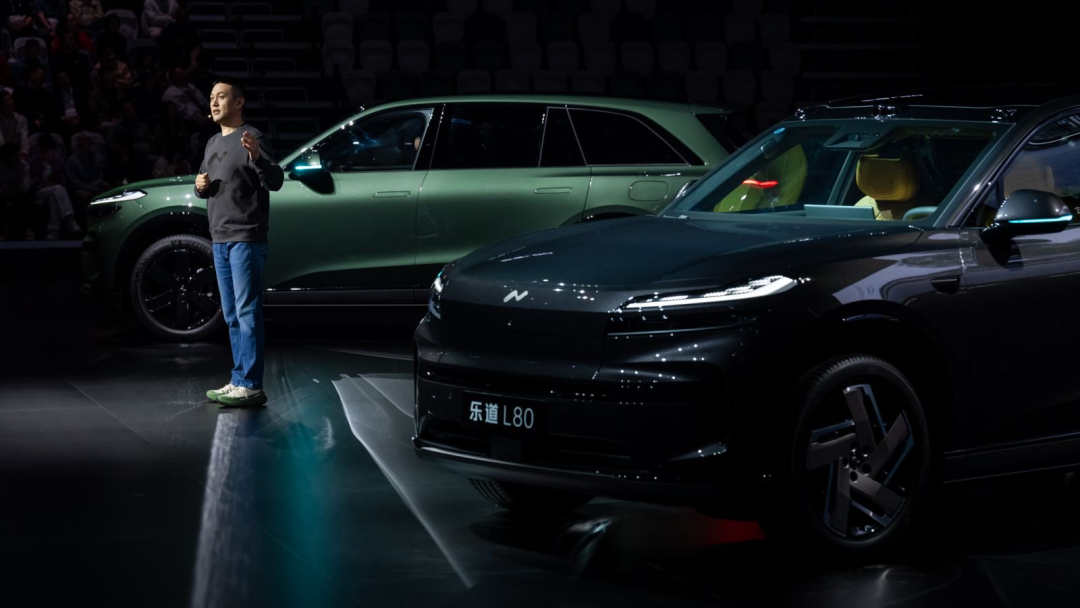
NIO's sub-brand fires directly at Xiaomi and Li Auto with a large-format pure-electric SUV priced from RMB242,800 (US$33,722), betting that space efficiency and battery-swap infrastructure can carve out defensible share in China's most contested EV segment.
NIO officially launched the ONVO L80 on May 15, 2026, a five-seater large-size battery-electric SUV that arrives at a retail price of RMB20,000–23,000 below its sibling model, the ONVO L90, depending on variant. The final sticker price came in below the pre-sale figure of RMB245,800, landing in line with — or slightly better than — BofA Global Research analyst expectations, a signal that NIO is prioritizing volume capture over near-term margin defense in a segment where monthly sales leaders like Xiaomi YU7 are averaging more than 24,000 units per month in the first quarter of 2026.
The launch positions ONVO as NIO's primary volume lever against a crowded field that now includes Leapmotor D19, XPeng GX, AITO M7, Li Auto i8, and the Xiaomi YU7 — all launched within a 14-month window ending May 2026, underscoring the ferocity of the mid-to-large SUV arms race.
Aggressive BaaS Pricing Widens the Addressable Funnel
The L80's headline price of RMB242,800–279,800 (US$33,722–US$38,861) across three trims (Pro/Max+/Ultra+) is competitive but not disruptive on its own. The more strategically significant number is the Battery-as-a-Service (BaaS) price: RMB156,800–193,800 (US$21,778–US$26,917), which strips the battery cost from the upfront purchase and pulls the entry point well below the RMB200,000 psychological threshold that historically unlocks mass-market volume in China.
This pricing architecture serves a dual purpose. First, it monetizes NIO's existing swap infrastructure — currently 3,800 battery swap stations and 5,000 charging stations nationwide — converting sunk capital expenditure into a recurring service revenue stream. Second, it creates a structural barrier for pure-charging rivals like Xiaomi YU7 and XPeng GX, which cannot replicate the swap network without multi-year investment. NIO plans to add 1,000 more swap stations in 2026 alone, widening that moat incrementally.
Spec Sheet Reveals a Calculated Space-and-Efficiency Play
A direct comparison across seven competing models reveals that NIO has made deliberate trade-offs. The L80 does not lead on driving range — its 615km CLTC figure trails the Xiaomi YU7 (up to 835km), XPeng GX (750km), and AITO M7 (up to 710km). Nor does it win on peak acceleration; the 4.5-second 0–100km/h time in the Max+ configuration matches the Li Auto i8 but lags the Leapmotor D19's 3.9-second sprint.
Where the L80 differentiates is on interior volume and energy efficiency. Its 5,145mm length, 3,110mm wheelbase, and total storage capacity of 1,440 liters — including a 240-liter front trunk — match or exceed every direct competitor. Crucially, the L80 Pro's electricity consumption of 14.3kWh/100km is the second-lowest in the peer group, behind only the Xiaomi YU7 (13.3kWh/100km) and ahead of the AITO M7 (15.7–17.4kWh/100km) and XPeng GX (16.3kWh/100km). On a total cost-of-ownership basis over a typical 200,000km vehicle life, that efficiency gap translates to meaningful savings — a selling point NIO's sales force can quantify at the dealership level.
The 900V high-voltage architecture supports DC charging to 80% in 25–30 minutes, which is slower than the Xiaomi YU7's 12-minute benchmark but consistent with the segment median. For buyers who rely primarily on swap stations, the charging speed becomes largely irrelevant.
In-House Silicon Signals Autonomy Ambitions Beyond Tier-2
The L80 Max+ and Ultra+ trims run NIO's proprietary Shenji NX9031 autonomous driving chip paired with the Coconut+ assisted driving system — the same silicon stack deployed in the NIO ET5 updated in May 2025. The perception suite comprises 30 sensors: one LiDAR, seven 8-megapixel cameras, and one 4D millimeter-wave radar, enabling what NIO markets as NWM (NIO World Model) full-scenario smart driving.
The sensor count matches the AITO M7 and exceeds the Li Auto i8 (25 sensors) and Xiaomi YU7 (25 sensors), though it falls short of the AITO M7's dual-LiDAR configuration. For the intelligent cockpit, the Qualcomm Snapdragon 8295P chip powers a four-screen environment: a 17.2-inch center touchscreen, a 35-inch AR-HUD, an 8-inch rear-row display, and a 17.3-inch ceiling-mounted entertainment screen — a configuration that directly mirrors the cabin experience NIO has established as a brand hallmark across its premium lineup.
The vertical integration of the Shenji chip is strategically significant. It reduces NIO's dependence on third-party suppliers, compresses the software-hardware iteration cycle, and — critically — provides a cost structure that can be amortized across both the premium NIO brand and the mass-market ONVO sub-brand, improving unit economics as volumes scale.
Competitive Sales Data Frames the Opportunity — and the Risk
BofA's analysis of CIRC retail sales data for mid-to-large electric SUVs illustrates both the opportunity and the execution risk facing ONVO. The Xiaomi YU7 averaged 29,016 units per month in 2025 and 24,126 units in the first three months of 2026, establishing a high-water mark for the segment. Li Auto's i6 has accelerated sharply, rising from a 2025 monthly average of 9,549 units to 19,112 in early 2026, suggesting that late-cycle launches with well-calibrated pricing can still gain significant traction.
Conversely, the AITO M7 EREV — a segment pioneer — has seen monthly volumes decline from 16,453 in 2024 to 8,346 in early 2026, a cautionary data point on how quickly incumbents can be displaced. The Li Auto L7 has followed a similar trajectory, falling from 11,281 monthly units in 2024 to just 2,055 in early 2026.
For ONVO, the L80's launch into this environment carries execution risk on two fronts: first, whether the BaaS pricing model can drive sufficient trial among cost-sensitive buyers who may be unfamiliar with subscription-style vehicle ownership; and second, whether NIO's swap network density — while the largest in China — is sufficient to eliminate range-anxiety concerns in lower-tier cities where infrastructure remains thinner.
NIO Stock Reflects Margin Pressure; Valuation Hinges on Volume Trajectory
BofA Global Research maintains a Neutral rating on NIO (NIO US / 9866 HK) with a price objective of US$6.70 per ADS (HK$52.00 per share), implying modest upside from the current US$6.16. The blended valuation — averaging a DCF-derived fair value of US$5.10 and an EV/sales-based fair value of US$5.10 and an EV/sales-based fair value of US$8.30 — reflects a 0.8x target EV/sales multiple applied to 2026 estimated revenue, set one standard deviation below NIO's historical average to account for margin compression from subsidy reductions and raw material cost pressures.
The L80 launch does not immediately alter that calculus. What it does is establish whether ONVO can generate the volume throughput needed to improve factory utilization and drive down per-unit costs — the precondition for any meaningful margin recovery. Downside risks flagged by BofA analysts include slower-than-expected production efficiency gains, intensifying pricing competition, and the possibility that financing conditions tighten before ONVO reaches breakeven scale.
The next material data point will be L80 delivery figures in June 2026. If ONVO can sustain monthly deliveries above 15,000 units — roughly the threshold at which the swap-station fixed cost base begins to generate positive contribution margin per swap — the investment thesis for NIO's mass-market pivot becomes substantially more credible.
Related Coverage: