
NIO's ONVO L80 Targets High-Volume Family SUV Market
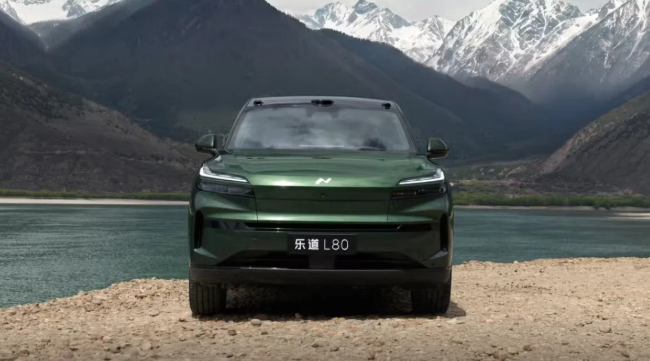
NIO Inc. officially launched the ONVO L80, a large five-seat SUV positioned between its existing L60 and L90 models, marking a strategic push into China's highest-volume family vehicle segment. The pre-sale price was set at RMB 245,800 ($34,139), or RMB 159,800 ($22,194) under the Battery-as-a-Service (BaaS) model—approximately 7% below Tesla's Model Y pricing in China.
The L80, built on NIO's NT 3.0 platform with a 900V high-voltage architecture, began accepting pre-orders on April 28, 2026, with official deliveries scheduled for May 15, 2026. Morgan Stanley analysts view the model as a critical volume driver, projecting ONVO brand sales to reach 30% of NIO's group deliveries in 2Q26, up from 16% in 1Q26.
Technology Down-Migration Anchors Profitability Path
The L80 employs dual ADAS configurations—offering both LiDAR-equipped systems and a lower-cost pure vision option powered by NIO's in-house Shenji chip. This dual-path strategy enables NIO to address price-sensitive buyers while maintaining technology differentiation, a key factor as Chinese EV makers face intensifying margin pressure.
Morgan Stanley equity analysts Tim Hsiao and Shelley Wang emphasized that component sharing between the L80 (a two-row variant of the L90) and other ONVO models should drive scale economies. The analysts maintain an Overweight rating on NIO, with a price target of $7.00—implying 10% upside from the April 28 close of $6.36.
Market Positioning Versus Incumbents
The L80 enters a segment dominated by models priced between RMB 230,000 and RMB 330,000 ($31,944 to $45,833), including Tesla's Model Y, BYD's Tang, and Li Auto's L6.
NIO's aggressive pricing—enabled by its battery-swap infrastructure and shared platform costs—reflects a volume-over-margin strategy aimed at reversing ONVO's sluggish brand momentum.
Morgan Stanley projects NIO's revenue will reach RMB 128.03 billion ($17.78 billion) in 2026, driven by the L80 and the upcoming ES9 flagship sedan. However, the firm forecasts a net loss of RMB 8.67 billion ($1.20 billion) for the year, underscoring the company's continued cash burn despite volume gains.
Execution Risk Centers on Battery-Swap Scalability
While the L80's battery-swap compatibility differentiates it from competitors, execution risk remains tied to NIO's ability to expand its swap station network profitably. As of 2026, the company operates over 2,300 stations in China, but the capital-intensive model has yet to achieve unit economics that support standalone profitability.
The broader Chinese EV market faces structural challenges, including oversupply and subsidy phase-outs. NIO's bet on the L80 hinges on whether premium buyers in tier-one and tier-two cities will prioritize space and technology over established brands like Tesla and BYD, both of which have deeper cost structures and wider service networks.
Morgan Stanley expects the L80 and ES9 to provide "capital markets the clarity they need on market demand and earnings" by 2Q26, with profitability breakeven anticipated in 2028. The firm's valuation methodology applies a 17.8% WACC, reflecting NIO's execution risk and competitive pressures in China's saturated EV landscape.
Related Coverage: