
BYD Disrupts Off-Road SUV Market With Ultra-Fast Charging Tai 7 EV
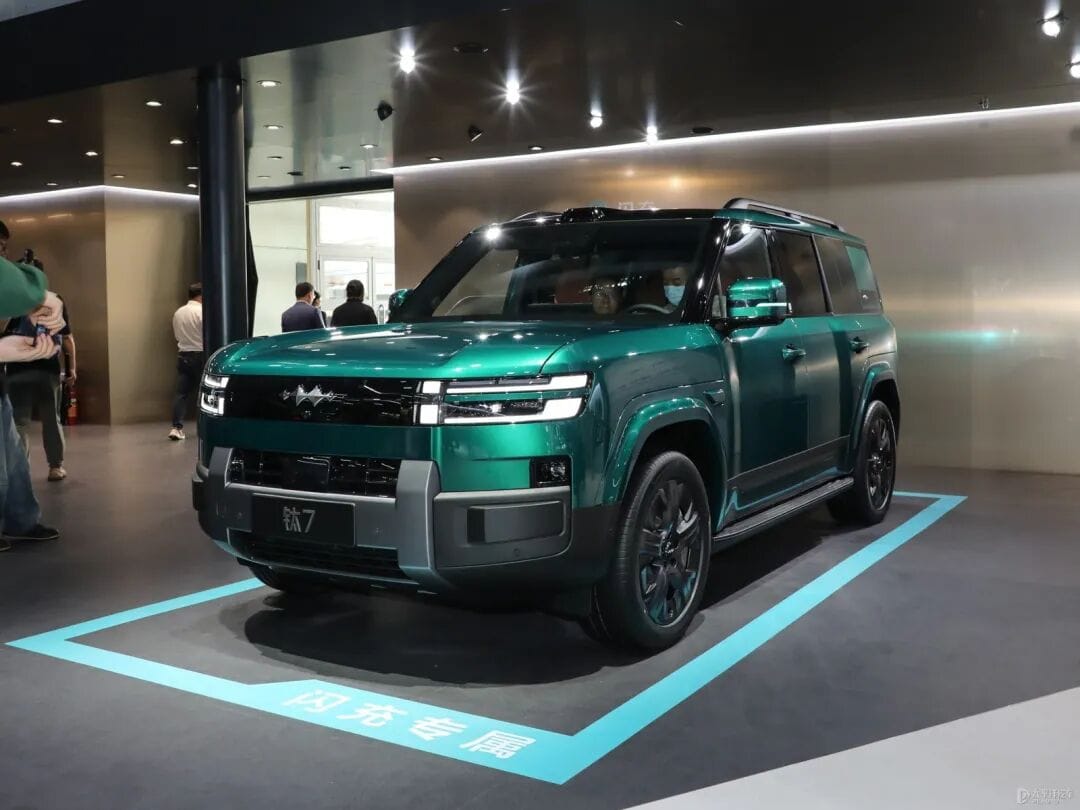
BYD has launched a new all-electric off-road SUV capable of a near-full charge in under 10 minutes, aggressively pricing the model below the RMB 200,000 (US$28,985) threshold to seize market share from traditional combustion engine rivals.
Released on April 29, 2026, the Fang Cheng Bao Tai 7 EV flash-charge edition enters the market at a starting price of RMB 199,800, significantly undercutting initial presale estimates. The pricing strategy drops a highly specified electric vehicle into the core territory of popular plug-in hybrid and internal combustion engine (ICE) models, fundamentally altering the competitive landscape in the rugged "boxy" SUV segment.
Market analysts note that the introduction of megawatt-level charging aims to eliminate the historical barriers for electric vehicles in the off-road and cold-weather markets. By bringing high-end battery and chassis technologies to the mainstream price bracket, BYD is pivoting its Fang Cheng Bao sub-brand from a plug-in hybrid leader into a comprehensive dual-powertrain threat.
Battery Tech Accelerates Market Consolidation
The technological core of the Tai 7 EV lies in BYD's second-generation Blade Battery. Achieving an energy density exceeding 200Wh/kg, the 105.8kWh pack delivers a maximum CLTC range of 755 kilometers. The system utilizes dynamic self-repairing SEI film technology, extending cycle life to over 3,000 charges while maintaining structural integrity under extreme physical stress.
Leveraging a full-domain high-voltage platform, the vehicle supports a peak charging power of 1500kW. Data provided by the company indicates a 10% to 70% charge takes just five minutes at room temperature, while a 10% to 97% charge completes in nine minutes. Notably, charging in -30℃ environments adds only three minutes to the process. This specific metric effectively neutralizes the severe winter range degradation that has historically capped EV adoption in northern regions.
Hardware Integration Lowers Off-Road Barriers
To differentiate the Tai 7 EV in a crowded RMB 200,000 segment, BYD has standardized high-end mechanical components. The chassis features a front double-wishbone and rear five-link independent suspension, paired with the DiSus-C (云辇-C) intelligent damping body control system. This setup is augmented by an intelligent torque control and all-terrain recognition suite.
On the software front, the vehicle integrates the God's Eye B advanced driver assistance system, powered by 30 high-performance sensors. The system's Version 5.0 software introduces a "narrow road multi-point U-turn" function, addressing maneuverability concerns for a vehicle measuring nearly five meters in length. This automation of complex driving tasks deliberately lowers the entry barrier for novice off-road consumers.
Infrastructure Expansion Secures Ecosystem Dominance
The commercial viability of the Tai 7 EV's ultra-fast charging capabilities relies heavily on BYD's proprietary infrastructure roll-out. As of April 2026, the automaker has deployed over 5,500 flash-charging stations across 311 Chinese cities. Management plans to expand this network to 20,000 stations by the end of the year.
This aggressive infrastructure expansion creates a closed-loop ecosystem, shifting the competitive moat from standalone vehicle specifications to comprehensive service networks. The integration of vehicle hardware with a dedicated high-speed charging grid positions Fang Cheng Bao to capture a broader demographic transitioning from traditional ICE off-roaders to electrified alternatives.
Related Coverage:
BYD Q1 Earnings Analysis: Export Surge & Charging Network Expansion