
Huawei Bypasses VLA Architecture to Accelerate World Model Integration in Autonomous Driving Race
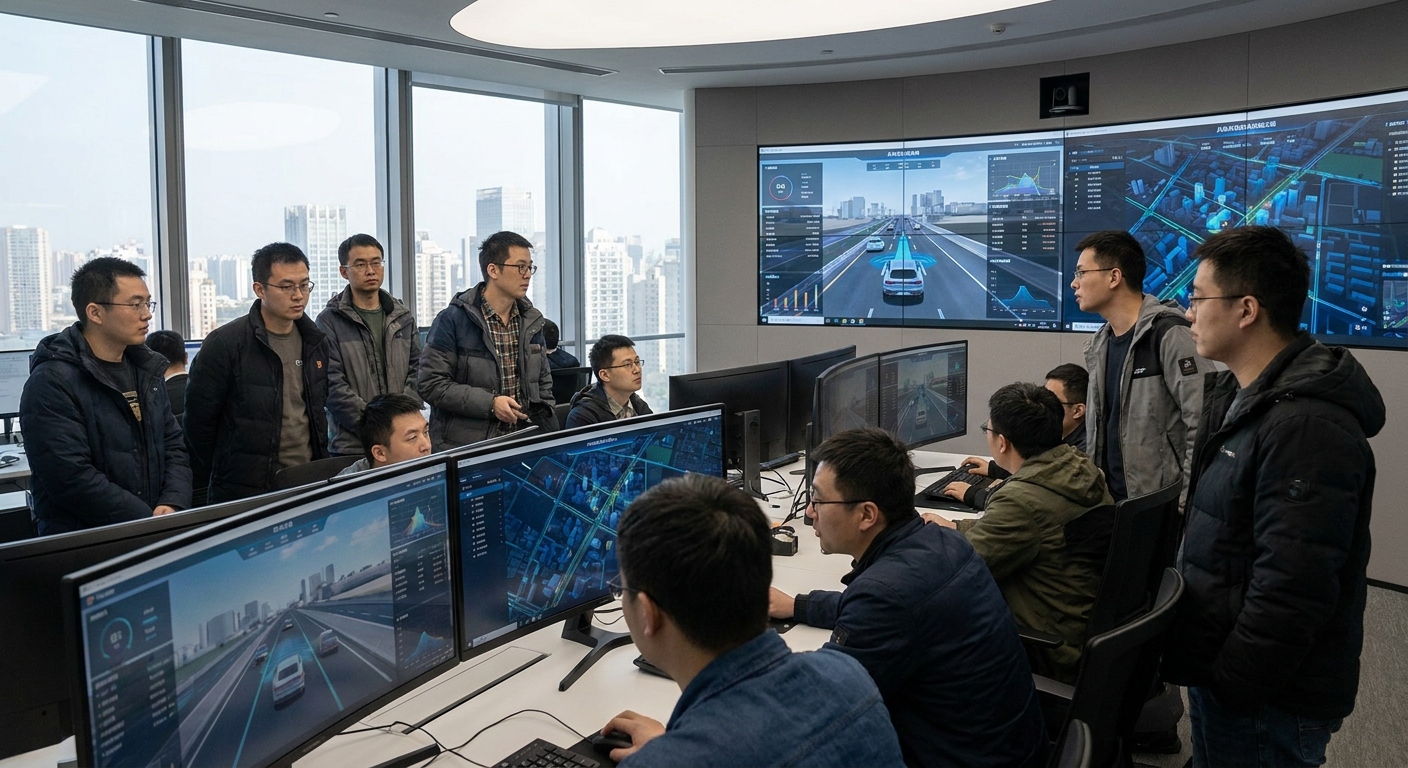
Huawei is bypassing the highly hyped Vision-Language-Action (VLA) architecture in favor of predictive "World Models" to power its next-generation autonomous driving systems.
As Chinese electric vehicle manufacturers grapple with the diminishing marginal returns of traditional end-to-end driving models, competitors like Li Auto and XPeng have aggressively integrated Large Language Models (LLMs) into their VLA pipelines. Huawei's strategic silence on VLA, however, signals a structural pivot in its ADS 4.0 architecture toward a more compute-efficient neural pathway.
The divergence highlights a critical infrastructure debate in 2026 over latency and silicon efficiency. With automakers pouring over RMB 10 billion (US$1.45 billion) annually into onboard AI compute clusters, Huawei is betting that direct environmental simulation will outscale text-based reasoning in high-speed driving scenarios.
VLA Architecture Exposes Hardware Constraints
The VLA framework operates by fusing sensor data—from cameras, LiDAR, and millimeter-wave radar—and feeding it into an LLM to generate driving commands. While traditional end-to-end models operate purely on correlation, embedding an LLM introduces causal reasoning, enabling the vehicle software to understand semantic rules such as stopping at red lights.
However, this semantic layer introduces severe architectural bottlenecks. The current VLA workflow requires four distinct phases: image recognition, LLM prefilling, LLM decoding, and trajectory rendering. Translating spatial environments into linguistic descriptions before generating a physical response creates inherent information loss and significantly drives up memory bandwidth requirements. While Li Auto and XPeng have engineered massive system optimizations to reduce this latency, the hardware ceiling remains a structural limitation for mass-market deployment.
World Models Bypass Semantic Bottlenecks
Rather than relying on language as an intermediary, Huawei’s ADS 4.0 leans into vehicle-end World Models. This architecture circumvents the LLM prefill and decode stages entirely. Instead of asking a language model how to drive based on a descriptive prompt, the World Model directly absorbs environmental data to generate a continuous, predictive simulation of the physical world.
By eliminating the linguistic translation steps, Huawei’s architecture theoretically achieves lower system latency and preserves higher fidelity of spatial data. This engineering choice reflects a broader industry realization: while LLMs excel at reasoning, spatial-temporal prediction models offer a more direct and silicon-efficient solution for autonomous navigation.