
Geely's Unit Profit Matches BYD as Cost Control Offsets Revenue Miss
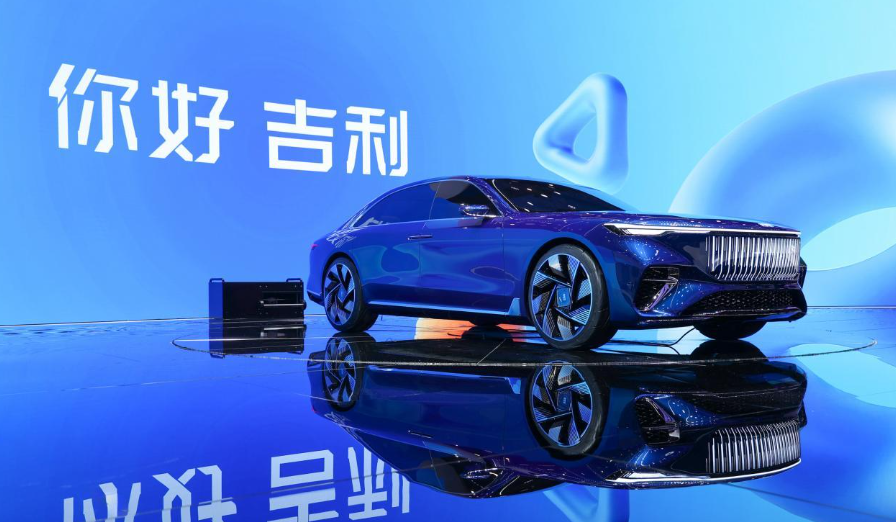
Geely Automobile Holdings reported Q1 2026 earnings on April 29 that revealed a strategic inflection point: while headline revenue and net income missed analyst expectations, the automaker's core profitability metrics surged to levels matching industry leader BYD, signaling that its "One Geely" integration strategy is beginning to deliver tangible results.
The Hangzhou-based automaker posted total revenue of RMB 83.8 billion (US$11.6 billion) for the quarter, up 15% year-over-year but below the consensus estimate of RMB 92.3 billion. However, the revenue shortfall stemmed primarily from declines in component sales and technology licensing revenue—including battery sales to Volvo—rather than weakness in core vehicle sales. Vehicle average selling prices (ASP) held steady at RMB 112,000 per unit, matching the previous quarter despite industrywide pricing pressure.
Premium Brands Drive Margin Expansion Against Headwinds
Geely's gross margin reached 17.5% in Q1, climbing 60 basis points sequentially and exceeding market expectations of 17%. This improvement came despite a 17% quarter-over-quarter decline in total deliveries to 709,000 units and rising raw material costs estimated at RMB 2,000 per vehicle from higher lithium carbonate, copper, and aluminum prices.
Three structural shifts underpinned the margin resilience. Overseas deliveries surged 130% year-over-year to 203,000 units, representing 29% of total volume compared with 13% in the year-ago period. Export vehicles carry higher margins due to premium positioning in international markets. The Zeekr premium brand delivered 77,000 units (up 34% YoY), with its flagship Zeekr 9X—priced between RMB 400,000-500,000—selling over 10,000 units in March alone. Zeekr's ASP rose to RMB 295,000-300,000 from RMB 281,000 a year earlier.
Meanwhile, the core Geely brand increased its ASP to RMB 91,000 from RMB 85,000, driven by accelerating new energy vehicle (NEV) adoption and the launch of the Galaxy M9. The Lynk & Co brand saw temporary ASP pressure from promotional discounts up to RMB 46,000 on multiple plug-in hybrid models, partially offsetting gains from premium launches like the Lynk 900.
Management indicated that Q2 gross margins should remain stable or slightly increase as the new Zeekr 8X begins customer deliveries, despite ongoing commodity headwinds. The company completed nearly 80% of its annual cost reduction targets in Q1, with full achievement expected by end of Q2.
"One Geely" Integration Delivers Operating Leverage
The most striking improvement emerged in operating expenses. Total selling, general, administrative, and R&D costs fell 31% sequentially to RMB 10.3 billion, with the expense ratio declining 170 basis points to 12.3%.
R&D spending dropped to RMB 4.56 billion from RMB 5.91 billion in Q4 2025, well below the RMB 5.08 billion analyst consensus. This reduction occurred even as Geely increased its R&D expensing ratio to 44% from 28.5% in Q1 2025, suggesting actual R&D cash outlays are moderating as core platform development reaches completion. The company's consolidated R&D structure following Zeekr's privatization in late 2025 is enabling efficiency gains across previously siloed engineering teams.
Selling expenses plunged to RMB 4.4 billion from RMB 6.7 billion quarter-over-quarter, reflecting both seasonal promotional pullbacks in Q1 and emerging synergies from unified go-to-market operations across sub-brands.
Unit Economics Reach BYD Parity
The combination of stable gross margins and compressed operating costs drove unit core operating profit to nearly RMB 6,000 per vehicle, doubling from RMB 3,300 in Q4 2025. This metric now matches BYD's Q1 2026 unit profit despite Geely's lower overseas sales mix (29% vs. BYD's 46%), demonstrating comparable execution quality.
Total core operating profit reached RMB 4.22 billion, up 49% sequentially and 56% year-over-year, with operating margin expanding 230 basis points to 5.0%.
Reported net income of RMB 4.17 billion declined 26.6% year-over-year, but this primarily reflected non-operating items including RMB 3.1 billion in higher finance costs from foreign exchange losses compared with gains in the year-ago period. The company also voluntarily increased its R&D expensing rate to adopt more conservative accounting; holding the prior-year rate constant would have lifted net income above RMB 5 billion.
NEV Penetration Accelerates as Industry Contracts
Geely sold 369,000 NEVs in Q1, up 9% year-over-year even as China's overall NEV market contracted 5% following the expiration of purchase tax subsidies. The company's NEV penetration rate reached 52%, up 4 percentage points YoY, while its domestic NEV market share climbed to 13.4% from 10.5% in Q4 2025.
The Galaxy series delivered 114,000 NEVs (down 9.5% YoY) as lower-end models faced subsidy headwinds, but higher-margin variants including the Galaxy M9 are gaining traction. Lynk & Co NEV sales surged 33.8% to 51,000 units, with NEVs comprising 62% of brand volume. Zeekr NEV deliveries jumped 85.8% to 77,000 units, led by the Zeekr 7X and 9X.
For full-year 2026, Geely targets 3.45 million total deliveries (up 14% YoY), including 2.22 million NEVs (up 32%) and 1.23 million ICE vehicles (down 8%). The NEV penetration rate is projected to reach 64%, up 8.5 percentage points from 2025. The company plans to launch approximately 10 new models across its portfolio, with the Zeekr 8X—which garnered 10,000 pre-orders in 38 minutes—expected to replicate the 9X's success in the premium large SUV segment.
Export Surge Provides Highest-Margin Growth
Overseas operations represent Geely's most profitable growth vector. The company raised its 2026 export target to 750,000 units (up 79% YoY), though Q1's annualized run rate of over 800,000 suggests this guidance may prove conservative. Management plans to expand its international dealer network beyond 2,200 locations.
Export vehicles achieved an ASP of RMB 176,500 in 2025—1.7 times the domestic level—with gross margins approximately 10 percentage points higher and unit net profit approaching RMB 10,000. As overseas NEV mix increases toward 45-50%, this high-margin channel should provide disproportionate earnings contribution.
Based on sustained momentum in premiumization, export growth, and operating efficiency gains from the "One Geely" integration, the company appears positioned to achieve unit core net profit of RMB 6,300-6,600 in 2026, representing 13% growth despite a challenging domestic competitive environment. With NEV penetration accelerating past 50% and premium brands scaling, Geely's valuation discount to pure-play NEV competitors may begin narrowing as investors recognize its transformation from traditional automaker to electrified technology platform.
Related Coverage:
Geely launches AI-driven i-HEV with 48.4% efficiency, advancing “no-charge” electrification
Geely’s “One Geely” Bet Signals a Strategic Pivot as China’s Auto War Intensifies