
Geely’s “One Geely” Bet Signals a Strategic Pivot as China’s Auto War Intensifies
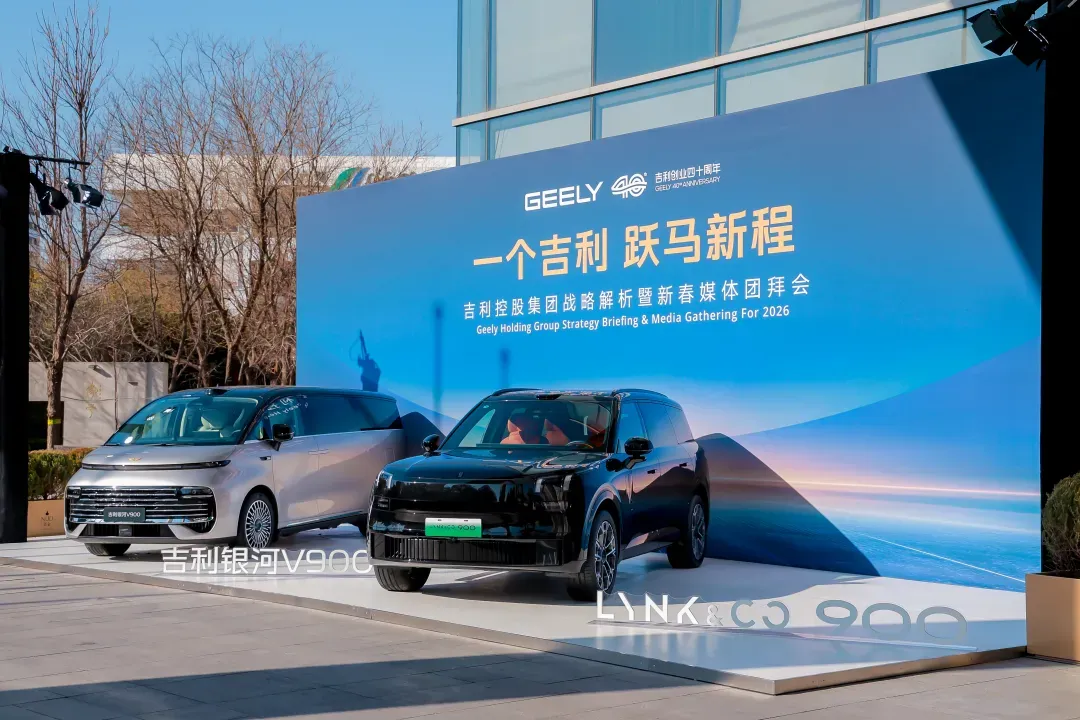
China’s auto industry is entering a harsher phase of competition, and Geely is responding with consolidation rather than expansion. At a time when rivals are fragmenting brands and flooding niches, the group has set out a “One Geely” strategy, aiming to unify resources and execution to secure long-term scale and profitability.
The strategy, framed around a 2030 vision, comes as price wars erode margins at home and global markets grow more complex. Geely is betting that tighter coordination across technology, brands and global operations will convert its growing scale into durable system-level advantages.
The move follows a year of strong performance. In 2025, Geely sold 4.116 million vehicles, up 26% year on year, with new energy vehicle sales surging 58% to 2.293 million units. New energy vehicles accounted for 56% of total sales, underscoring the group’s rapid transition even as industry-wide growth slowed.
A Strategic Shift as the Market Matures
China’s passenger car market has largely exited its high-growth phase. In 2025, industry growth slowed to 3.8%, while internal combustion engine vehicle sales fell 9%, leaving replacement demand and electrification as the main sources of growth. After two years of intense price competition, profitability across the sector has come under sustained pressure.
Against this backdrop, Geely’s leadership argues that multi-brand, multi-track expansion is becoming increasingly costly and inefficient. As competition now spans electrification, intelligent driving, cost control, supply chains and globalization, fragmented strategies risk diluting capital and execution.
The “One Geely” approach seeks to counter this by aligning previously dispersed resources. Rather than adding new brands or technology routes, the group plans to integrate existing strengths into a unified operating framework, reducing duplication and internal friction.
Turning Scale Into System Power
Geely’s scale already places it seventh globally by sales, and among the fastest-growing players in the global top ten. But management has been clear that scale alone is no longer enough.
The group’s strategy centers on converting volume into system efficiency. Unified planning is intended to allow technology, supply chains, talent and overseas operations to reinforce one another, rather than competing internally. This, Geely believes, is essential if it is to move into the global top five and sustain growth through the next cycle.
The timing is also symbolic. 2026 marks Geely’s 40th anniversary, a point the company frames as a transition from rapid expansion to more disciplined, maturity-driven growth. The “One Geely” strategy is positioned not as a rejection of past diversification, but as an optimization of it.
Building a Six-Pillar Operating Model
At the core of the strategy is what Geely describes as a “six-in-one” capability system, designed to support global operations under a single strategic umbrella.
Technology and vehicle platforms form the foundation. Geely has already invested in multiple new energy pathways, including battery electric, hybrid and methanol-based electric solutions. The next step is to integrate these into a unified global architecture covering A- to E-segment vehicles, enabling technology reuse, lower development costs and consistent product quality.
Brands and talent are positioned as long-term enablers. Geely plans to maintain differentiated brand positioning while strengthening coordination, particularly overseas. Shared channels and unified responses to trade and regulatory barriers are expected to improve efficiency. On talent, the group is emphasizing industry-academia integration and more flexible, technology-oriented organizational structures to support faster innovation cycles.
The remaining pillars focus on ecosystem development and sustainability. Geely is extending beyond vehicle manufacturing toward an integrated mobility ecosystem that links low-orbit satellites, low-altitude mobility and intelligent connected vehicles. Alongside this, low-carbon technologies and compliance-led growth are framed as necessities rather than optional initiatives, given tightening global climate and regulatory standards.
Beyond Vehicle Sales
The ambitions tied to “One Geely” extend well beyond unit volumes. According to targets outlined by An Conghui, Geely aims to reach global sales of 6.5 million vehicles by 2030, with new energy vehicles accounting for 75% and overseas markets contributing more than one-third.
The group is also targeting annual revenue above RMB 1 trillion (about US$140 billion), a level that would require new growth engines beyond traditional vehicle sales. Management has highlighted software and services as potential drivers, including over-the-air updates, intelligent cockpit features and advanced driver assistance subscriptions. Energy-related services linked to electric vehicles and charging infrastructure are also seen as longer-term revenue opportunities.
International markets remain central to this plan. As China’s auto exports shift from price-led expansion to brand- and ecosystem-led competition, Geely is pursuing a model of regional specialization combined with global coordination, tailoring products to local demand while sharing R&D and supply chain resources worldwide.
A Calculated Consolidation
As competition intensifies toward 2030, Geely’s strategy reflects a broader recalibration underway in China’s auto sector. Price wars and rapid brand proliferation are giving way to a focus on efficiency, integration and ecosystem value.
By tightening its grip on internal coordination at a moment of strength, Geely is signaling that consolidation, not fragmentation, may offer a clearer path through the industry’s next phase. Whether “One Geely” can deliver the promised system-level gains will be closely watched by investors as China’s automakers compete for a smaller number of global winners.