
Snack Retailers’ Long Game: Busy Ming’s IPO Signals a New Phase for China’s Discount Consumption Boom
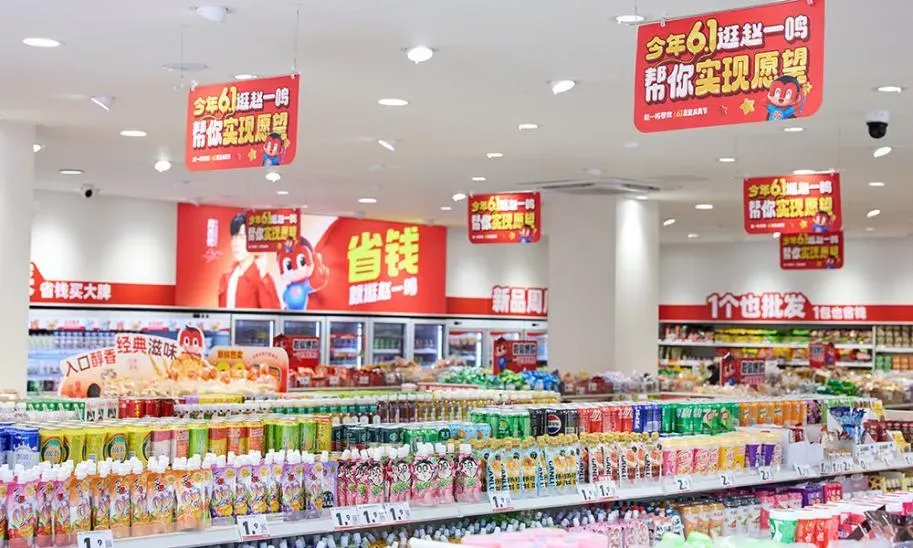
Busy Ming has made a high-profile debut in Hong Kong, crystallising how scale, efficiency and consolidation are reshaping China’s mass-market retail sector as consumer spending turns increasingly value-driven.
The company, which integrates the “Busy For You” and “Super Ming” brands, began trading on the Hong Kong Exchange on Jan. 28, 2026, surging 88% on its first day. The rally lifted its market capitalisation to about HK$95.9 billion, underscoring investor appetite for consumer platforms built on hard discounting and supply-chain control.
The listing also minted two post-1985 founders as major paper billionaires. Chairman and chief executive Yan Zhou and vice chairman Zhao Ding together control nearly 59% of the company’s voting rights, reflecting strong founder influence as Busy Ming enters public markets.
For investors, the deal offers a rare listed pure play on China’s “volume-driven” snack retail model, at a time when growth in discretionary spending is uneven but demand for low-priced, high-frequency goods remains resilient.
A Strong Market Debut Backed by Scale
Busy Ming priced its initial public offering at HK$236.6 per share, selling 14.1 million shares globally to raise about HK$3.3 billion (US$420 million). Following the opening-day jump, its valuation approached HK$95.9 billion.
Cornerstone investors subscribed for roughly US$195 million, close to 46% of the total proceeds. They included Tencent, Temasek Holdings, BlackRock, Fidelity International, Taikang Life Insurance, Bosera International, E Fund Management and Watershed Asset Management, signalling broad institutional support.
The company said the proceeds will be used primarily to strengthen supply-chain capabilities, expand logistics infrastructure and support store network optimisation.
From Rivalry to Consolidation
Busy Ming was formed in late 2023 through the merger of Busy For You and Super Ming, two fast-growing regional chains that had been locked in aggressive competition across southern China.
Before the deal, both brands were rapidly expanding through franchising, often opening stores within a few hundred metres of each other and triggering intense price wars. The competitive pressure intensified further in 2023, when Wancheng consolidated several snack brands under the unified “Haoxianglai” banner.
Faced with margin erosion and rising competitive risks, the two founders opted for a swift merger. Busy For You acquired 87.76% of Super Ming, while the remaining stake was withdrawn through capital reduction. The transaction created the country’s largest snack discount chain by store count almost overnight.
A Volume-Driven, Low-Margin Model
At the core of ’s strategy is a “hard discount” model that prioritises turnover over margins. By sourcing directly from more than 2,000 manufacturers, the company removes multiple layers of distributors that typically add mark-ups of 40% to 50% in traditional snack retail channels.
This direct-sourcing approach allows the chain to price products around 25% below conventional supermarkets. As a result, its gross margin has remained structurally low, ranging from 7.5% to 7.6% historically, rising modestly to 9.7% in the first nine months of 2025.
Profitability instead depends on speed. Inventory turnover averaged about 11.7 days in the first half of 2025, far faster than traditional retailers. A dense network of 48 regional distribution centres supports 24-hour delivery for most stores within a 300-kilometre radius.
Franchise Alignment as a Growth Engine
More than 99% of Busy Ming’s 19,517 stores are franchised. Since 2024, the company has waived franchise and management fees, deriving 99.5% of its revenue from selling goods to franchisees.
This structure tightly aligns incentives between headquarters and store operators: the company earns only when franchisees sell more products. To support this, Busy Ming provides end-to-end assistance, from data-driven site selection to standardised training and centralised operations systems.
As of September 2025, the network covered 28 provinces and 1,341 counties, with about 59% of stores located in county-level cities and townships, reflecting its deep penetration into lower-tier markets.
Rapid Growth, Intensifying Competition
The scale achieved so far is significant. Gross merchandise value reached RMB 555 billion (US$77 billion) in 2024 and rose to RMB 661 billion (US$92 billion) in the first nine months of 2025, up 74.5% year on year. Revenue totalled RMB 393 billion (US$55 billion) in 2024, with net profit of RMB 8 billion (US$1.1 billion). For the first three quarters of 2025, revenue reached RMB 464 billion (US$65 billion).
Yet competition is intensifying. According to Frost & Sullivan, China’s snack and beverage retail market grew from RMB 2.9 trillion in 2019 to RMB 3.7 trillion in 2024, and is projected to reach RMB 4.9 trillion by 2029. Despite this, the market remains fragmented: the top five chains accounted for just 6% of GMV in 2024, with Busy Ming holding about 1.5%.
As growth slows in store openings, leading players are shifting focus toward private-label products and broader assortments, including household goods and frozen foods, in a bid to improve margins and boost per-store economics.
What the IPO Signals for Investors
Busy Ming’s listing highlights a broader transition in China’s consumer sector. The easy gains from rapid store expansion are giving way to a phase where supply-chain efficiency, operational discipline and unit-level profitability matter more.
For investors, the company represents a bet on sustained demand for value retailing and on the ability of scale players to convert speed into durable system advantages. Whether that edge can be maintained as competition escalates will be the key question following its market debut.