
China Takes Lead in Space Computing Race With First On-Orbit Deployment of Universal AI Model
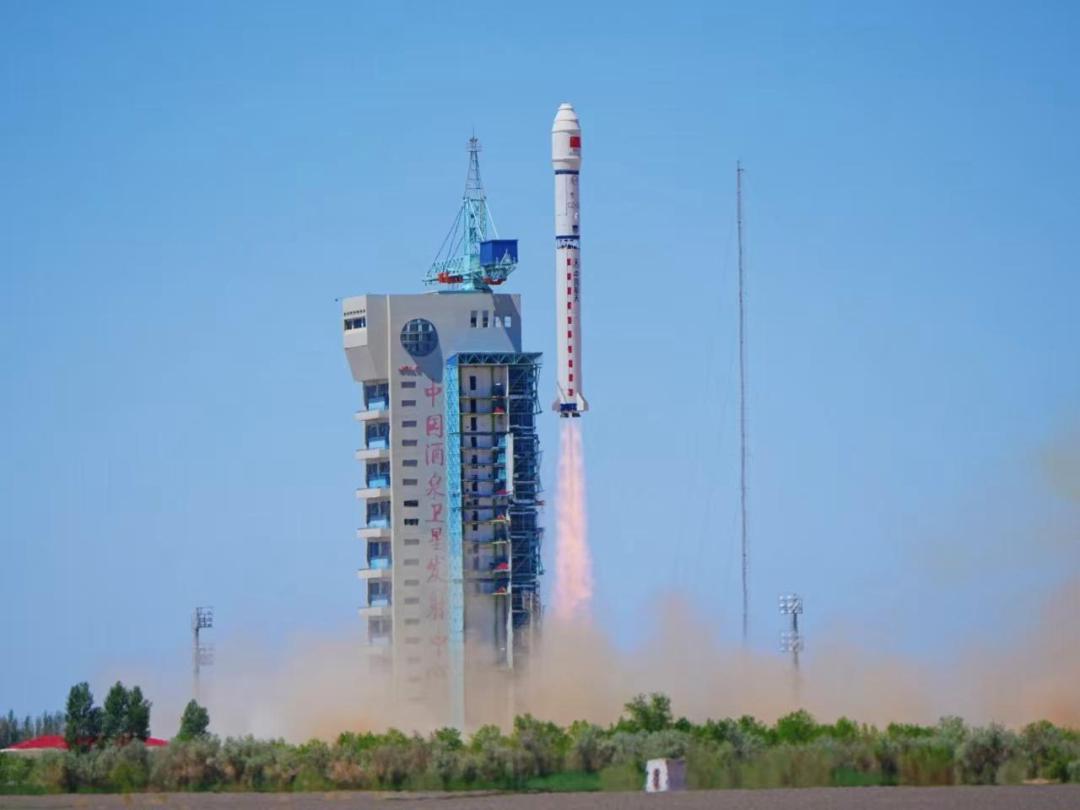
A Chinese aerospace company has deployed a universal large language model directly onto satellites in orbit, marking a significant milestone in the emerging race to establish computing infrastructure in space. The development positions China ahead of U.S. competitors in a field that could reshape how artificial intelligence services are delivered globally.
Guoxing Aerospace announced plans to launch a space computing network comprising 2,800 satellites designed to serve hundreds of millions of AI agents. The company has already demonstrated the capability to deploy models remotely to satellites already in orbit, a technical achievement that distinguishes its approach from rivals who pre-load models before launch.
The announcement comes as both Chinese and American companies accelerate investments in space-based computing infrastructure, driven by the massive power demands of AI applications and the potential cost advantages of solar-powered orbital data centers. The competition mirrors broader technological rivalry between the two nations in artificial intelligence development.
Technical Breakthrough in Orbital Deployment
Wang Jiaqian, an academician at the Chinese Academy of Engineering and director of Zhejiang Lab, revealed at a November 2025 conference that the Qwen3 model from Alibaba's Tongyi Qianwen was successfully deployed to orbit between November 13-23, 2025. The system completed multiple inference tasks the following day, validating the on-orbit deployment capability.
This represents a fundamental difference from the approach taken by Starcloud, a U.S. company backed by Nvidia. Starcloud announced it had successfully run open-source models using Nvidia H100 processors in space, but its models were deployed on the ground before launch. Guoxing Aerospace's system allows for over-the-air updates to models already in orbit, similar to how smartphones receive software updates.
The company completed what it describes as the world's first technical verification of running AI models on satellites in orbit between September 25 and October 5, 2024, establishing an early lead in the field.
Ambitious Satellite Network Plans
Guoxing Aerospace's "Xingsuan" program envisions a constellation of 2,800 satellites deployed over approximately 10 years. According to Executive Vice President Wang Yabo, 2,400 satellites will provide inference computing power totaling 100,000 petaflops, while 400 satellites dedicated to training will deliver 1 million petaflops of computing capacity.
The company launched its first space computing center in May 2025, completing critical technology validation. Groups 02 and 03 are now in production, with orbital deployment planned for 2026. The company projects achieving a thousand-satellite network and commercial operations by 2030, with ultra-large-scale training satellites validated in orbit by that date. Full network deployment is targeted for completion before 2035.
The satellites will operate in dawn-dusk orbits at altitudes of 500-1,000 kilometers, positioned to receive continuous solar power as the orbital plane aligns with Earth's terminator line.
Strategic Advantages of Space Computing
Space-based computing infrastructure offers several advantages over terrestrial data centers that are driving investment from both Chinese and U.S. companies. Land resources are conserved, while energy efficiency improves through direct solar power generation without atmospheric filtering or weather interference.
According to the International Energy Agency, global data center electricity consumption could reach 1 trillion kilowatt-hours by 2026, equivalent to the annual electricity use of 120 million people. Space-based facilities can tap solar energy continuously without drawing on Earth's power grids.
Low-latency services enabled by orbital computing could support physical AI applications including robotaxi systems and unmanned aerial vehicles. The technology also promises to revolutionize traditional industries—fishing operations, for example, could receive real-time intelligence on fish school movements, such as "tuna school passing 20 nautical miles northeast in 30 minutes."
Space computing also extends AI infrastructure to remote regions lacking terrestrial data centers, advancing AI accessibility alongside open-source model development.
Technical Challenges and Solutions
Deploying computing power in space presents systemic engineering challenges. Hardware selection must account for rapid performance improvements under Moore's Law conflicting with the long development cycles of space infrastructure. Companies must establish mechanisms for on-orbit hardware replacement or use software approaches to extend hardware lifecycles.
Operating systems must support running large models in the space environment while maintaining compatibility with mainstream architectures developed for terrestrial applications. Thermal management poses particular difficulties, as the vacuum of space eliminates air-based cooling, requiring heat dissipation through radiation alone and necessitating novel thermal management technologies.
High-energy particle bombardment threatens precision chips, potentially causing hardware damage and computational errors. Robust redundancy systems are required to maintain reliability in the harsh radiation environment.
The combination of space computing infrastructure with open-source AI models represents a distinctively Chinese approach to AI development. As open-source models enter what industry observers call "China time," space computing appears poised to follow a similar trajectory, with Chinese companies demonstrating first-mover advantages in this emerging domain of global AI competition.