
Global Investors Pivot to Fundamentals as Commercial Space Sector Diverges on IPO News
The euphoric rally in China’s commercial space sector, which saw prices surge nearly 90% since late November 2025, has begun to fracture as investors shift focus from broad thematic speculation to fundamental value. While the sector has been the top performer in the A-share market, a sharp divergence emerged on January 13, with a select group of market leaders extending gains while the majority of stocks retreated, signaling a maturing market environment.
The catalyst for this bifurcation is the accelerating capitalization of the global space industry, headlined by major IPO developments in the United States and China. Elon Musk confirmed in early December that SpaceX plans to list as early as mid-to-late 2026, targeting a valuation of approximately US1.5 trillion and acapital raise exceeding US30 billion. This represents a dramatic repricing from its primary market valuation of roughly US$400 billion in July 2025, resetting expectations for the sector's growth potential.
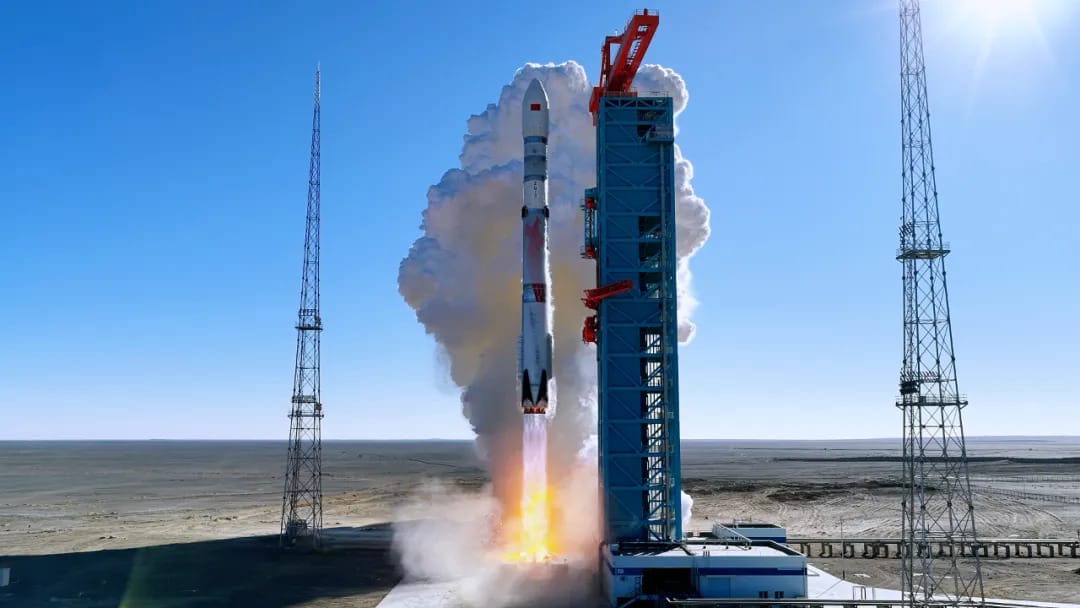
Concurrently, LandSpace Technology Corporation (LandSpace), widely regarded as the "Chinese SpaceX," had its IPO application for Shanghai’s STAR Market accepted in late December. The company aims to raise RMB 7.5 billion (US$1.04 billion), following the successful launch and orbital delivery of its Zhuque-3 carrier rocket. These dual listings underscore a pivotal shift: the commercial space race is transitioning from a conceptual phase to a period of rapid commercialization and capital market validation.
This transition is supported by significant liquidity in China’s domestic market, where daily turnover recently hit a record high of nearly RMB 3.7 trillion (US$513 billion). However, as the initial wave of liquidity-driven momentum fades, capital is increasingly concentrating on companies possessing high technical barriers and integration into the supply chains of industry "chain masters" like SpaceX and LandSpace.
Valuation Drivers and Policy Tailwinds
The recent market exuberance is underpinned by a strategic escalation in the commercial space competition between the U.S. and China. Beijing has moved from encouraging exploration to systematic promotion, explicitly including commercial spaceflight in its "15th Five-Year Plan" for strategic emerging industries. Regulatory bodies have also established dedicated agencies and streamlined listing processes for space-related enterprises, fueling expectations of accelerated industry maturation.
Despite the pullback in non-core assets, the long-term trajectory remains robust. The market size for China's commercial space sector was estimated at RMB 2.3 trillion (US$319 billion) in 2024, with a compound annual growth rate exceeding 20% since 2017. Forecasts suggest this could expand to RMB 8 trillion by 2030. However, analysts caution that until large-scale commercialization is realized, many companies remain in a conceptual stage, making the distinction between genuine technology leaders and speculative plays critical.
The High-Barrier Advantage
Value distribution within the industry chain heavily favors the upstream segment, particularly rocket manufacturing and core components. While accounting for only about 30% of the industry's total value, the upstream sector commands the highest technical barriers and profitability, with gross margins for core components and rocket manufacturing hovering around 50% and 40%, respectively.
The critical path to commercial viability lies in reusable rocket technology, which drastically lowers launch costs to support massive satellite constellations. LandSpace has distinguished itself by mastering liquid oxygen-methane engine technology, a cleaner and more efficient alternative to the liquid oxygen-kerosene mix used by some competitors. The company’s Zhuque-3, a medium-sized liquid rocket, achieved its maiden flight and orbit in December 2025, targeting a reusable first stage comparable to SpaceX’s Falcon 9. This technical route offers superior cooling performance and maintenance advantages, positioning LandSpace to capitalize on the demand for high-frequency, low-cost launches.
Emerging Supply Chain Winners
As the market bifurcates, distinct supply chains are forming around the two primary "chain masters": SpaceX and LandSpace.
In the "SpaceX Chain," several A-share companies have secured positions. Tongyu Communication Inc. (Tongyu Communication) has obtained certification for its MacroWiFi products, enabling direct ground terminal interaction with Starlink satellites. Shenzhen Sunway Communication Co., Ltd. (Sunway Communication) supplies radio frequency and antenna components, viewing satellite business as a future growth pillar. Additionally, Chongqing Zisun Technology provides high-end thermal protection materials.
The "LandSpace Chain" features domestic suppliers providing critical, high-barrier components. Shaanxi Sirui Advanced Materials Co., Ltd. (Shaanxi Sirui) serves as an exclusive supplier for LandSpace, holding a near 90% domestic market share for liquid oxygen-methane engine thrust chamber inner walls—a segment with virtually no global substitutes.Bright Laser Technologies utilizes metal 3D printing to mass-produce engine components, significantly reducing R&D cycles and costs.
While valuations for these core suppliers have risen sharply, their alignment with the industry's leaders offers a defensive moat. LandSpace has already integrated into the supply chains of major downstream clients like China Satellite Network Group Co., Ltd. (China StarNet) and Shanghai Spacecom Satellite Technology Ltd., both of which are planning megaconstellations exceeding 10,000 satellites. As the sector evolves from thematic investment to performance-based growth, companies capable of delivering on the technical demands of these massive networks are poised to capture the bulk of the industry's long-term value.