
Viral Chinese “Am I Dead?” App Rebrands as Demumu and Pushes Overseas Amid Investor Scramble
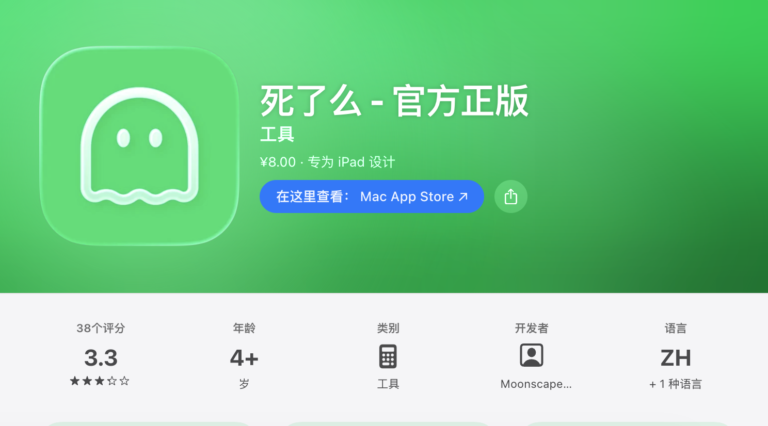
A minimalist paid iOS app that asks users to “prove they’re alive” has turned a three-day spike in downloads into an overseas push and a fast-moving funding process, underscoring how anxiety-driven consumer utilities can translate into investable momentum.
The app, initially known in China as “死了么” and priced at RMB 1 before rising to RMB 8 (about US$1.10), topped Apple’s iOS paid download chart on Jan. 10 and has held the top position for three days. Third-party estimates cited by the team showed global downloads of 2,289 on Jan. 10 and 2,279 on Jan. 11, while the founder said the app’s daily new users are now 500 times pre-viral levels.
After the surge, the product unified its domestic and international branding under the name “Demumu,” in what the team framed as a formal marker of going abroad. Early chart performance in developed markets has followed, including a ranking of No. 25 on the US iOS paid chart, though daily downloads appear to be in the hundreds.
The abrupt traction has also triggered investor interest. According to Economic Observer, the founder initially planned to sell 10% of the company for RMB 1 million (about US$140,000), implying a valuation in the tens of millions of yuan, but within three days more than 60 investors approached the team and the proposed round moved toward a nearly RMB 10 million-level raise, which the founders expect to finalize within the week.
A Paid “Proof-of-Life” Utility Built on a Simple Trigger
Launched in June 2025, the app began as a free product and later switched to paid downloads. Its core workflow is spare: users enter their name and an emergency contact email, then tap a green button daily to check in. If the user fails to check in for two consecutive days, the system sends an email to the emergency contact in the user’s name asking for help.
The founder said the team consists of three people working part-time and remotely, with development costs of about US$200—an unusually low figure that highlights how lightweight consumer software can reach mass distribution once distribution channels ignite.
Brand Switch Signals “Going Abroad,” But Product Remains Largely Unchanged
While the name “Demumu” is now used outside China, the app’s interface and features are effectively the same across markets, with the name still appearing as “死了么” under Chinese-language system settings regardless of which store it is downloaded from. The team has not yet rolled out meaningful localization beyond the naming change.
Overseas downloads appear driven largely by Chinese communities and international students who discovered the app via Xiaohongshu, rather than broad penetration among local users, based on the reported download scale and the observed spread pattern described by the team.
Loneliness and Living-Alone Risks Provide a Global Demand Narrative
The product’s resonance is tied to a wider social shift toward smaller households and rising solo living, which amplifies “safety anxiety” among people who fear an emergency could go unnoticed. China’s 2020 population census showed one-person households at 25.4%, up from 14.5% a decade earlier, according to figures cited in the source material.
The same anxiety exists in other markets, the report argued, pointing to a 2025 World Health Organization assessment that roughly one in six people globally is affected by loneliness, with 15-24 year-olds among the hardest hit. The material also cited Japan government data showing 76,000 people living alone died at home in 2024, with 21,000 discovered more than eight days later, and noted that cases included more than 1,000 people under 40.
Investor Interest Rises as Copycats Multiply and Moats Look Thin
The app’s breakout has already coincided with an influx of imitators, including “abstract” variants, reflecting a low barrier to entry for products with similar check-in and alert mechanics. The report’s central question for investors is whether early distribution advantages—driven by a memorable name and sudden viral exposure—can be converted into durable demand before more established teams ship competing products.
For now, the team’s pitch rests on speed of execution: identifying a clear use case, shipping a functioning paid product, and converting fleeting attention into revenue and fundraising leverage—while the longer-term outcome remains uncertain.