
China's Toy Collectibles Sector Accelerates Global Push Amid Intensifying Competition
Chinese toy collectible companies are rapidly expanding overseas and raising capital as the sector transitions from a niche market into a mainstream consumer category, with dozens of new players entering an increasingly crowded field that generated over 3.2 billion yuan in overseas revenue for market leader POP MART in the first half of 2025 alone.
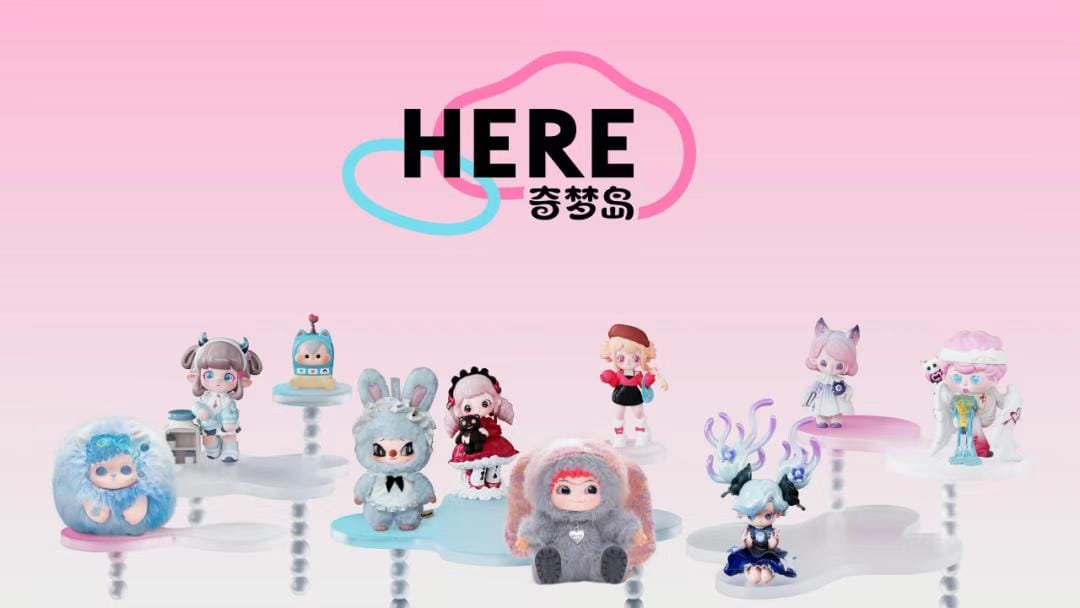
The surge comes as investors complete multiple capital events across the sector. KK TOP TOY subsidiary initiated plans for an independent IPO, while 52TOYS and SunnySide submitted listing applications to the Hong Kong Stock Exchange. In the U.S., Quantum Song Inc. completed a strategic shift from education services to toy collectibles through its acquisition of Letsvan, subsequently rebranding as QiMengDao.
The sector's profitability is attracting entertainment and technology companies seeking new revenue streams. Data from Qichacha shows China now has more than 32,000 registered toy collectible businesses, with approximately 9,000 established in 2025 alone. Over 20 financing rounds occurred during the year as companies rushed to secure intellectual property rights and expand distribution networks.
Market concentration remains high despite new entrants, with established players controlling premium retail locations and international distribution channels. The competitive intensity signals both opportunity and risk as companies navigate supply chain constraints, intellectual property disputes, and uncertain consumer preferences in untested overseas markets.
Capital Influx Transforms Competitive Landscape
The toy collectibles sector attracted significant investment from entertainment companies with celebrity resources in 2025. Le Hua Entertainment facilitated Quantum Song's acquisition of Letsvan, which operates the Youli ZIYULI and WAKUKU intellectual property. Following the restructuring, Letsvan generated nearly 90 million yuan in third-quarter revenue, while Quantum Song's stock price surged over 400% during the period.
AYOR TOYS, founded in June 2025, leveraged multi-channel network expertise to achieve 40 million yuan in first-day sales after announcing Tian Xuning as global spokesperson. Alibaba led the company's angel funding round, with participation from Huace Film & TV, Tian's management agency.
Wanda Film and China Literature jointly invested 144 million yuan (US$19.8 million) for a 7% stake in 52TOYS in May. China Literature Limited subsequently made a strategic investment in Super Genki Factory, securing a 10% ownership position. These transactions demonstrate how content companies are integrating toy collectible capabilities to commercialize intellectual property portfolios.
First-round financing for emerging brands reached substantial levels, with OHKU securing nearly 100 million yuan despite launching less than 12 months prior. HEYONE completed Series A funding exceeding 100 million yuan while maintaining an annual release pace of 1,000 stock-keeping units. TNT received investment proposals exceeding several hundred million yuan in aggregate during the first half of 2025.
Intellectual Property Competition Intensifies
Market participants accelerated intellectual property acquisition as consumer attention spans shortened. POP MART, which defines itself as an intellectual property platform, contracted over 300 designers to maintain a pipeline of new characters. The company signed emerging Chinese creators behind properties like HACIPUPU and cultivated regional talent, including Thai artist-created CRYBABY, which achieved rapid revenue growth following LABUBU.
Acquisitions became a preferred method for securing proven properties. TOP TOY's parent company acquired majority control of Guoranyouqu Culture, gaining rights to the Nommi intellectual property. QiMengDao transitioned to a platform model, offering higher revenue sharing to attract young designers. Deying Holdings, owner of the B.Duck brand, purchased HIDDEN WOOO.
Retailers deepened involvement in intellectual property operations. X11, operated by KK Group, participated directly in property acquisition, product development and online operations, securing rights to Pingu from the original Swiss clay animation. The brand launched a "Star Plan" initiative providing end-to-end support for artist properties through licensing, incubation and direct signing arrangements.
Miniso exclusively signed nearly 20 artist properties in 2025 and initiated a global "IP Genius Youth Program" offering annual compensation packages ranging from millions to tens of millions of yuan. Founder Ye Guofu stated the company would allocate 100 million yuan for intellectual property investment.
Technology companies including Dreame, Deli and iFlytek began developing or licensing properties. Mango TV's e-commerce platform Xiaomang entered the sector with proprietary intellectual property Cluebie. Ali Fish leveraged relationships with Sanrio, Chiikawa and Pokémon to dominate Tmall's Double 11 sales rankings.
Operational Strategies Diverge Across Market Segments
Companies adopted differentiated approaches based on resource capabilities. POP MART created "artist agent" positions to develop customized strategies for individual properties. LABUBU's transition to plush vinyl format opened new accessory use cases, supported by celebrity endorsements from Lisa and theme park character appearances. The property's global popularity emerged after seven years of development.
TNT introduced "large blind box" products sized 30-50% larger than standard offerings at approximately 80 yuan retail price. The company uses proprietary mini-programs for crowdfunding validation, with properties Rayan and Liita each exceeding 2 million yuan in pre-orders. Limited purchase mechanisms and targeted community management sustained secondary market premiums.
SunnySide pursued extreme value positioning through vertically integrated manufacturing. The company submitted its Hong Kong Stock Exchange application on January 8, 2026, with most intellectual property toys priced at 9.9 yuan or below. Products reach hundreds of thousands of terminal points including stationery shops and community stores. The prospectus disclosed that distributor channel revenue exceeded 70% of total sales, indicating weaker control compared to direct retail-focused competitors.
TOP TOY utilized its store network as testing infrastructure, allocating display positions and pop-up spaces to validate market response before committing resources. The company opened a 1,000-square-meter flagship location on Nanjing East Road in 2025, joining POP MART's large-format store and Miniso's 2,000-square-meter global flagship on the premium retail corridor.
AYOR TOYS concentrated on online channels, with two intellectual properties generating over 80% of revenue. Douyin contributed approximately 50% of sales through content seeding and live-streaming conversion, while Tmall accounted for over 30% as a brand retention and repeat purchase platform. Xiaohongshu supported reputation building and community expansion.
Global Expansion Becomes Core Growth Driver
Overseas markets provided significant revenue growth as LABUBU's international popularity validated Chinese intellectual property appeal (What happened to Labubu — and why Pop Mart’s boom turned into a bust). POP MART's international revenue reached 5.59 billion yuan in the first half of 2025, quadruple the prior-year period. Americas revenue totaled 2.26 billion yuan, representing 1,142% year-over-year growth.
Leading companies replicated domestic operational models internationally through owned stores, pop-up events and local distribution partnerships. This approach delivered predictable outcomes while requiring substantial organizational investment and localization expertise.
JOTOYS pursued aggressive international expansion, projecting full-year overseas gross merchandise value of 240 million yuan, up over 300% year-over-year. The United States market contributed 60-70% of international sales, with the OYO Bear intellectual property generating 75% of revenue from overseas channels.
HIDDEN WOOO participated in toy collectible exhibitions across Thailand and Singapore, using pop-up activations and celebrity exposure to build brand recognition. Properties including Cimmy, THE SLLO and diudiu baby achieved commercial conversion overseas while enhancing domestic brand perception.
OHKU, established in 2025, targeted European and American mainstream markets directly, bypassing intensely competitive Southeast Asian regions. The strategy leveraged Chinese supply chain advantages to serve underdeveloped overseas emotional consumption segments, securing nearly 100 million yuan in first-round financing.
The sector's favorable position stems from concurrent tailwinds across content industry growth, new retail channel expansion, brand internationalization momentum and young consumer demand for emotional value and aesthetic expression. However, creative output lacks monopolistic protection, while mature domestic supply chains and manufacturing capabilities enable rapid new entrant proliferation exceeding market absorption capacity. The sector remains in an upward cycle with expanding total addressable market, though easily captured opportunities are diminishing as success increasingly depends on comprehensive capabilities and strategic positioning rather than single-point advantages.