
CATL Replicates EV Supply-Chain Strategy Across AI Infrastructure
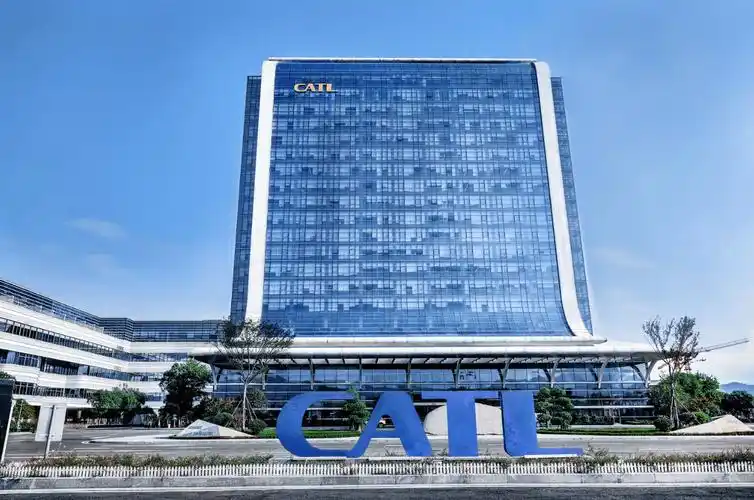
Contemporary Amperex Technology is betting that the same vertical-integration strategy that handed it roughly 70% of China's power-battery supply-chain profits can be transplanted almost intact into the AI data-center energy stack.
In the span of roughly two months, CATL has committed RMB 10.5 billion (US$1.46 billion) across two anchor investments: RMB 4.1 billion (US$569 million) to take a controlling stake in Zhongheng Electric, the domestic leader in data-center HVDC power systems, and US$942 million (approximately RMB 6.4 billion) to become the single largest shareholder of 21Vianet Group, one of China's most active colocation and hyperscale data-center operators. The moves signal a deliberate pivot from battery supplier to what the company's own positioning implies: a full-stack "computing-power energy solutions provider."
Market observers note the timing is far from coincidental. Alibaba posted RMB 26.9 billion (US$3.74 billion) in capital expenditure in the first quarter of 2026 alone; Tencent matched that pace at RMB 31.9 billion (US$4.43 billion) in the same period; ByteDance has revised its full-year AI infrastructure budget upward to RMB 200 billion (US$27.8 billion). Every renminbi of that spending eventually materializes as a data-center rack—and every rack requires power infrastructure.
Locking In Order Flow Before Competitors Can React
The most immediate return on CATL's outlay is access to two pre-qualified customer pipelines that would otherwise take years to penetrate independently.
Zhongheng Electric commands a 31% share of China's intelligent computing center HVDC market (excluding its Panama Power and UPS product lines), with procurement relationships spanning Alibaba, Tencent, Baidu, ByteDance, all three major state-owned telecoms operators, and third-party IDC operators including GDS, Data Center of China, and Chindata. Panama Power alone holds more than 90% share within Alibaba's internal procurement system for that product category.
The strategic logic is blunt: CATL's energy-storage systems and power-conversion systems (PCS) can now be bundled into Zhongheng's integrated HVDC solutions and ride existing vendor certifications directly onto customer purchase orders—no independent bidding process, no multi-year re-qualification cycle required.
21Vianet amplifies this channel. The operator currently runs more than 50 data centers across 30-plus cities, with base-type operational capacity of 889 MW and approximately 49,863 urban data-center racks serving over 1,300 enterprise clients, including ByteDance, Alibaba, and Tencent. Its 2026 capital expenditure guidance of RMB 10–12 billion (US$1.39–1.67 billion) is earmarked almost entirely for delivering 450–500 MW of incremental capacity. Founder Chen Sheng has publicly targeted a 10 GW combined data-center-and-renewable-energy asset base within ten years—a tenfold expansion of what the company built over its first 25 years of operation.
Given that electricity costs represent 50–60% of data-center operating expenses, co-located energy storage is effectively a mandatory procurement item. CATL enters that procurement conversation as a shareholder, not a vendor.
Replicating a Proven Profit-Interception Architecture
The deeper play is structural, not transactional. CATL's ascent in lithium batteries was built on a three-layer capture model: lock upstream raw materials (lithium, nickel, cobalt via equity stakes in more than 20 global mining projects), control midstream processing margins (through subsidiaries Brunp Recycling and joint ventures with Defang Nano covering precursor and LFP cathode production), and bind downstream OEM demand through joint-venture capacity agreements and long-term supply contracts with automakers including Avatr Technology, Zeekr, and Neta Auto.
The result, at peak, was CATL capturing close to 70% of total power-battery supply-chain profits while partners operated on thin or negative margins.
The data-center energy chain maps onto the same three-layer template with near-symmetrical precision. Upstream: CATL's proprietary lithium supply keeps storage-system input costs structurally below competitors, and eliminating the middleman margin by selling directly to "affiliated" entities compounds that advantage. Midstream: Zhongheng's HVDC equipment occupies the highest-value node in data-center power architecture. Downstream: 21Vianet's operator relationships lock in recurring storage deployment across an expanding asset base.
Any competitor attempting to replicate this position faces three compounding barriers CATL has effectively pre-empted: the interface barrier (Zhongheng's existing certification within hyperscaler procurement systems), the R&D barrier (HVDC development requires billions in investment and multi-year certification cycles), and the partnership barrier (late entrants negotiating with established vendors cede pricing and scheduling control from the outset).
Navigating the 800V HVDC Transition—and Its Risks
The technology landscape introduces meaningful execution risk. Nvidia is actively promoting an industry migration toward 800V HVDC power architecture for next-generation AI data centers, designed to reduce AC-DC conversion losses and improve overall power efficiency. Zhongheng's existing competitive moat is concentrated in 240V/336V HVDC systems—the prior generation—where it has deep penetration in Alibaba's infrastructure and carrier networks.
Zhongheng did achieve compatibility certification with Nvidia's DGX H100 ecosystem in 2025, placing it on the candidate list for next-generation AI power architecture. However, the 800V HVDC competitive field includes Vertiv Holdings, Delta Electronics, and Huawei—all of which are simultaneously pursuing the same architectural transition with comparable engineering resources.
CATL's acquisition thesis does not depend on Zhongheng winning the 800V standards race outright. It depends on Zhongheng retaining sufficient market presence to serve as a channel through which CATL's storage and PCS products reach hyperscaler customers during the transition period—a lower bar, but one that still requires active defense against well-capitalized incumbents.
DeepSeek Stake Would Close the Loop on AI-Model Economics
Reports circulating in the market indicate CATL is also evaluating a position in DeepSeek's first institutional funding round. If confirmed, the move would extend CATL's influence from the physical energy layer of AI infrastructure into the model-development layer itself—meaning that large-model operators would not only consume power from CATL-supplied storage systems but potentially generate financial returns that flow back to CATL as a cap-table participant.
That scenario would represent the full expression of the "computing-power energy synergy" thesis: a closed loop spanning lithium supply, storage manufacturing, data-center power equipment, colocation operations, and AI model economics.
Competitive Ceiling Is Higher This Time
The critical difference between the lithium-battery playbook and the data-center version is the quality of opposition. China's EV supply chain was populated largely by capital-constrained automakers and mid-tier component suppliers that lacked the balance-sheet depth to resist CATL's terms. The data-center energy stack is contested by Nvidia on power architecture standards, State Grid Corporation of China on grid-interconnection approvals, Huawei on integrated solutions, and hyperscalers—Alibaba Cloud, Tencent Cloud—that have both the procurement leverage and technical capability to develop alternative supply chains.
CATL's RMB 10.5 billion (US$1.46 billion) deployment buys a credible entry position. Whether it translates into the same category-defining profit concentration the company achieved in batteries will depend on whether it can establish equivalent chokepoints in a market where the counterparties are materially stronger.
Related Coverage:
CATL's Sodium-Ion Strategy: Why Morgan Stanley Says Markets Miss the 1,000 GWh Opportunity