
Chagee Grapples with ‘Big Company Disease’ as Rapid Expansion Erodes Profits
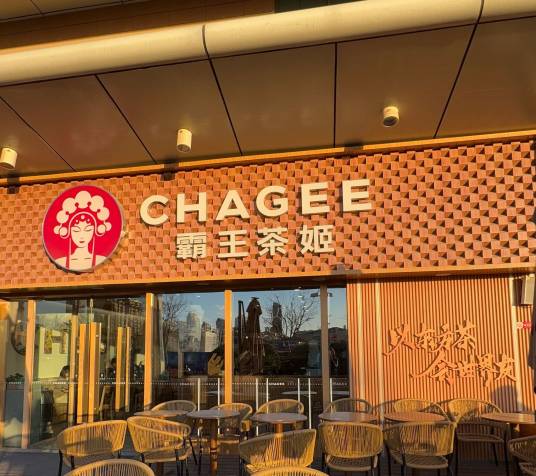
Chagee, a rapidly growing player in China’s "new-style" tea market, is facing a critical inflection point where organizational bloat is beginning to stifle business agility. While the broader consumer sector contends with cooling demand, Chagee’s struggles highlight a specific corporate challenge: transitioning from a centralized startup model to a mid-sized enterprise structure without succumbing to bureaucratic inefficiency.
Financial data for the third quarter of 2025 indicates a significant performance contraction. The company reported a total net revenue of RMB 3.21 billion (US$444 million), representing a 9.4% year-on-year decline. More crucially, same-store Gross Merchandise Value (GMV) dropped by 27.8%. The downturn was broad-based, with same-store GMV in the Chinese market (including Hong Kong) and overseas markets falling by 27.9% and 23.4%, respectively.
This reversal of fortune follows a period of aggressive internal expansion that outpaced business results. By the end of 2024, Chagee’s workforce had surged by 145% to 4,800 employees—a growth rate roughly ten times higher than its competitors. This hiring spree, heavily weighted towards headquarters and administrative functions, has increased management costs while diluting operational efficiency. The result is a sharp decline in product innovation speed and a disconnect between a swelling corporate center and frontline store performance.
Management at Chagee has acknowledged the necessity for structural reform during recent earnings communications, signaling a pivot from raw expansion to organizational optimization. The company’s trajectory serves as a case study for the sector, illustrating how the accumulation of management layers and decision-making bottlenecks can become a primary drag on profitability, potentially outweighing external market factors.
The Cost of Administrative Bloat
The core of Chagee’s current predicament lies in a misalignment between headcount growth and revenue generation. While most tea beverage brands capped personnel growth below 15% during the same period, Chagee’s workforce more than doubled in 2024. A breakdown of this expansion reveals a heavy investment in non-revenue-generating roles: approximately 25% of the staff is allocated to administrative management and headquarters support, while 53% focuses on store expansion and operations, and 16% on brand and marketing.
This rapid scaling of the corporate structure has correlated with diminishing returns at the unit level. Despite rising total revenue in 2024 due to new store openings, the single-store monthly average GMV fell by 10.8%. The data suggests that the influx of personnel has created a "diseconomy of scale," where the marginal cost of management exceeds the value added to the frontline operations.
Innovation Stalls Under Process Complexity
The most visible impact of this organizational heaviness is the drastic slowdown in product innovation, a key driver in the competitive tea market. Industry data reveals a stark contrast: since June 2025, Chagee has launched only four new products nationwide, two of which were merely variations of its core "Boya Juexian" tea. In comparison, a wider industry report notes that competing brands averaged 41.5 new product launches over a similar timeframe.
This stagnation suggests that decision-making chains have lengthened significantly. As the organization expanded, the number of stakeholders required for product approval increased, leading to a culture where process compliance prioritizes over market responsiveness. The addition of multiple review layers—intended to mitigate risk—has inadvertently raised decision costs and blurred accountability boundaries, a phenomenon classic to organizations entering the "red tape" crisis phase described by management theorist Larry E. Greiner.
Comparative Corporate Challenges
Chagee’s struggles mirror those faced by other major corporations during rapid scaling phases. The situation draws parallels to International Business Machines Corp. (IBM) in the early 1990s, where organizational complexity stifled product development until a massive restructuring prioritized agility. Domestically, Li Auto faced similar issues when a 63% increase in headcount led to management inefficiencies, prompting the automaker to cut redundant functional middle-office roles to regain its startup speed.
The theoretical framework suggests Chagee is grappling with a "crisis of autonomy." As the company moved away from the centralized decision-making that fueled its early growth, it introduced functional divisions that separated decision rights from frontline market intelligence. The result is a headquarters equipped with rules but detached from real-time changes, and a frontline closest to the customer but lacking the authority to act.
Restructuring for Organizational Agility
To reverse these trends, Chagee faces the imperative of redesigning its collaboration models. Established strategies from other large enterprises offer a roadmap. Companies like Alphabet Inc.’s Google have periodically reduced management density to prevent bureaucratization, shifting experts from rule-making roles to problem-solving support. Similarly, Haier Group decentralized its massive structure into thousands of "micro-enterprises," allowing small teams to make independent business decisions and bear their own profit and loss responsibilities.
Shein Group adopted a comparable approach in late 2024 by separating its supply chain, category operations, and global operations into independent business units with distinct financial accountability. For Chagee, the path forward likely involves flattening the hierarchy and empowering cross-functional teams to bypass the vertical silos that currently delay product launches and market responses. By reducing the number of decisions that require top-level sign-off—similar to Netflix Inc.’s "context, not control" philosophy—the company aims to restore the operational speed that characterized its early success.