
Chagee's Profit Plunge Tests Chinese Tea Chain's Expansion Model
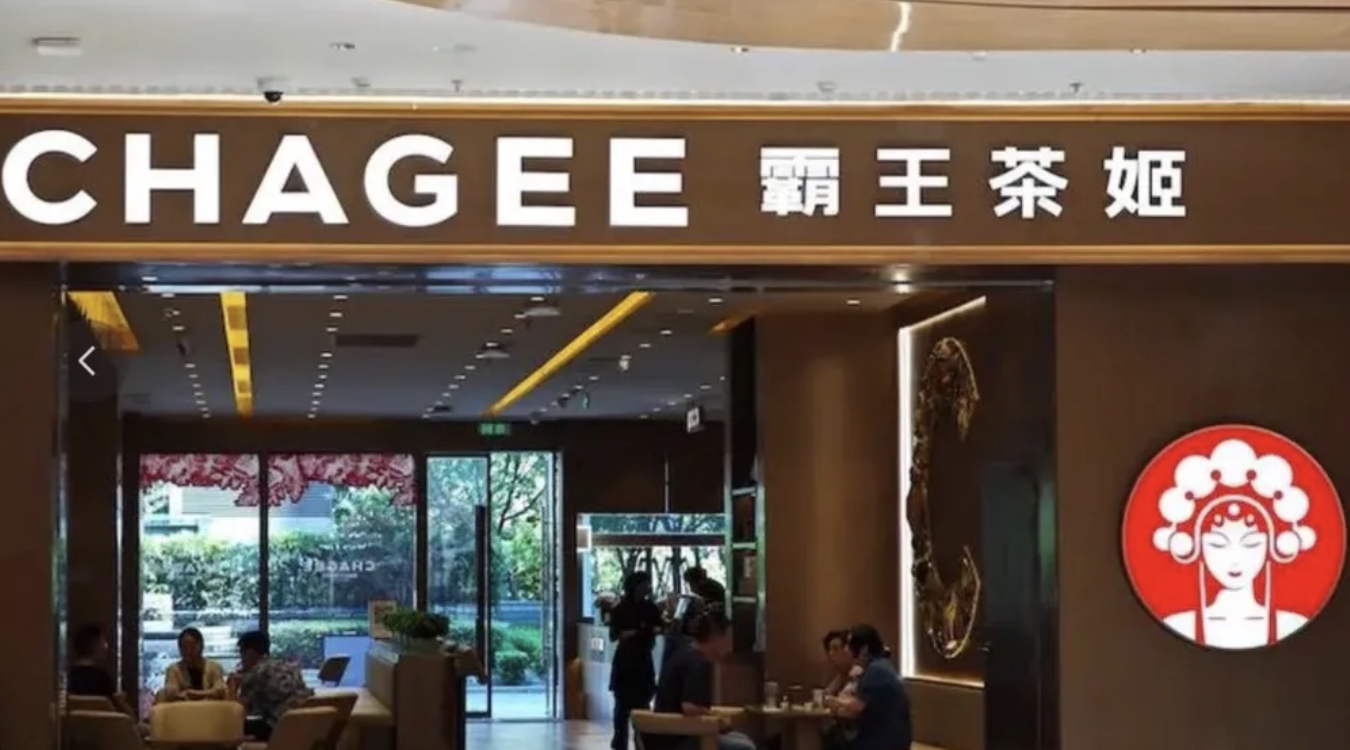
Chagee, the fast-growing Chinese tea chain that has drawn comparisons to Starbucks, reported a sharp decline in profitability for the third quarter of 2025, exposing mounting pressures beneath its aggressive global expansion. Net profit fell 38.5% year-on-year to RMB 398 million yuan ($55 million), while the net profit margin contracted to 12.4% from 18.3% a year earlier, according to its latest quarterly results.
The profit squeeze comes as the company's store network surged to 7,338 locations globally, generating quarterly gross merchandise volume of RMB 7.93 billion yuan. However, same-store sales momentum has deteriorated significantly. Average monthly GMV per store in Greater China dropped 28.3% year-on-year to RMB 378,500 yuan, marking several consecutive quarters of decline from a peak of RMB 574,000 yuan in late 2023.
Founder Zhang Junjie is responding with a strategic pivot, announcing the company's first-ever special cash dividend totaling approximately $177 million while outlining a "high-quality development" strategy focused on brand elevation, product innovation, customer experience, and international expansion. The company is also rolling out a new franchise model starting January 2026 that shifts from fixed fees to revenue-sharing arrangements, aiming to shore up profitability for its embattled franchise partners.
The deteriorating unit economics reflect broader challenges facing premium tea chains in China's increasingly saturated market, where price wars and delivery platform subsidies have eroded margins across the sector. Chagee's difficulties in replicating the success of its signature drink and maintaining franchise profitability could test investor confidence in its Starbucks-style ambitions.
Franchise Partners Face Profitability Squeeze
The pressure on individual store performance has become acute for Chagee's franchise network, despite the company reporting a closure rate of just 0.3% for three consecutive quarters—well below the industry range of 2% to 10%.
Multiple franchise partners told media outlets that payback periods have extended dramatically from months to over a year in many cases. One franchisee in Jiangsu province noted that while top-line revenue remains acceptable, profit margins after deducting labor and rent costs have compressed significantly. The franchisee attributed this partly to Chagee's decision not to participate in delivery platform subsidy wars this year, which has left its stores at a competitive disadvantage.
The proliferation of stores has intensified competition for prime locations. In some cities, three Chagee outlets now operate within a single commercial district. According to data from retail analytics firm Zhaimencanyan, Guangdong, Zhejiang, and Jiangsu provinces have the highest store concentrations nationally.
Transfer fees for existing Chagee franchise locations have plummeted in some markets, falling from over RMB 1 million yuan to RMB 500,000-600,000 yuan between the first half of 2024 and now, according to franchisees in Jiangsu. This steep decline signals weakening confidence in the brand's profit potential among prospective operators.
New Revenue-Sharing Model Aims to Stabilize Network
Chagee unveiled a restructured franchise model in late November designed to align corporate and franchisee interests more closely. Under the new arrangement launching January 1, 2026, the company will take a 10% fixed discount from GMV plus a 17% brand service fee, leaving franchisees with 73% of revenue—an improvement in net realization rates for most operators.
The revamped structure consolidates multiple fee categories previously charged separately, including management fees, trademark licensing, technology services, and logistics costs. Significantly, Chagee will absorb any promotional discounts exceeding the 10% threshold from its own 17% service fee allocation, effectively sharing the cost of price competition.
The model particularly benefits high-volume stores with lower rent burdens and heavy reliance on delivery channels, according to franchisees briefed on the changes. Initial equipment and renovation costs for new stores will also decrease by tens of thousands of yuan under the updated terms.
This shift from a landlord-tenant relationship to a partnership structure represents a fundamental change in how Chagee extracts value from its network. However, the company maintains strict operational standards, with headquarters conducting unannounced inspections of cleanliness and service protocols, including enforcement of tea freshness standards that can increase waste costs.
Innovation Struggle Beyond Signature Product
Chagee's dependence on its blockbuster "Boya Juexian" drink has become both an asset and a strategic liability. According to data from Sullivan, the beverage sold over 1.25 billion cups between January 2022 and June 2025. At an average price of RMB 16 yuan per cup, cumulative revenue from this single SKU approaches RMB 20 billion yuan. Guosheng Securities estimates the drink accounts for over 40% of total sales.
The product's elegant simplicity—combining only tea leaves, milk, and syrup—enables exceptional operational efficiency through automated preparation equipment. But replicating this success has proven elusive. Internal development efforts this year included experimental concepts that failed market testing, and a planned launch featuring Phoenix Dancong tea was scrapped after disappointing trial results.
New product launches have been notably sparse, with fewer than ten introductions in 2025 compared to 30-45 from competitors including Shushang Ayi, ChaPanda, and Good Me. The company's supply chain remains relatively asset-light, relying primarily on partnerships rather than the vertically integrated fruit orchards and tea plantations developed by some rivals.
To address the innovation gap, Chagee is testing regional limited-edition offerings across different markets. Zhejiang features a fresh milk tea called Yuanye Xiannaicha Fenghe Quyuan, while Guangdong offers Xiannaicha Chixia Yuejin, with products priced between RMB 18-22 yuan. The company has indicated that new product frequency will accelerate significantly in 2026, potentially including monthly launches and a "4.0" menu platform.
Leadership Transition Tests Organizational Culture
The operational challenges coincide with an organizational evolution as founder Zhang Junjie integrates professional management expertise. The 2024 recruitment of Huang Hongfei, former CFO of McDonald's China, marked a strategic inflection point. Huang has driven the Hong Kong listing process, implemented rigorous financial controls, and orchestrated the special dividend distribution.
Sources close to the company indicate that Zhang's pitch to Huang centered on reversing the typical expatriate executive trajectory: "You brought a foreign brand to China—have you considered bringing a Chinese brand abroad?" This global ambition requires balancing the interpersonal management style that fueled Chagee's early growth with the systematic processes needed to operate thousands of locations across multiple countries.
The company is undertaking organizational restructuring with priorities on product innovation and talent development for 2026. Zhang has instituted mandatory front-line rotations requiring all headquarters staff to work full shifts in retail locations, including hands-on beverage preparation. Strategic planning has also shifted from top-down directives to collaborative workshops, exemplified by a recent four-day strategy session focused entirely on executing the vision of becoming "one brand, multiple categories, all channels, global reach."
International expansion is accelerating, with 262 overseas stores generating GMV growth of 75.3% year-on-year in the third quarter—the second consecutive quarter exceeding 75% growth. However, the registered member base of 222 million users is concentrated in Greater China, where competitive intensity shows no signs of abating.