
How Velotric Sold 150,000 Ebikes at US$2,000 a Piece in a Nascent U.S. Market
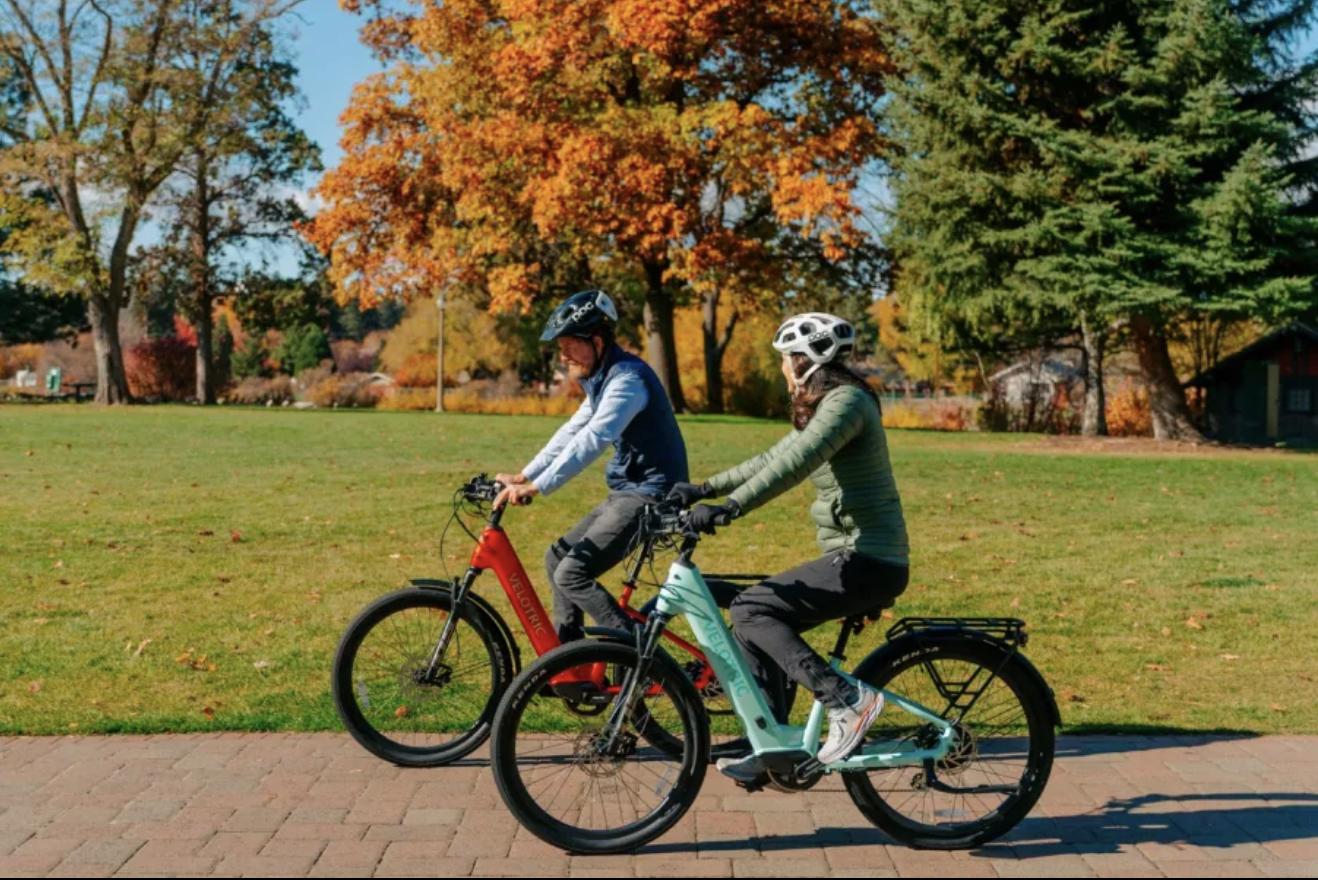
On December 11, 2025, Chinese tech media outlet LatePost published a long-form interview with Jack Zhang, founder and CEO of Velotric, a fast-growing ebike brand targeting the U.S. leisure and outdoor market. Zhang, a serial hardware entrepreneur and co‑founder and former head of hardware at micromobility company Lime, discussed how Velotric has built what he says is now the No. 2 ebike brand in the United States by unit sales, with cumulative deliveries of 150,000 electric-assist bicycles.
Founded during the COVID-19 pandemic, Velotric focuses on mid‑priced ebikes in the US$1,499–2,499 range, aimed primarily at middle‑class Americans over 40 who use the bikes for leisure, not commuting. The company says revenue has doubled every year since inception and that it has turned profitable in 2025, supported by a rapidly expanding independent bike dealer (IBD) network across the U.S. East Coast. This interview, translated and structured below in full, offers a detailed look at how a China‑based engineering and supply-chain operation is pairing with local U.S. market execution to capture share in what Zhang estimates could become a 10‑million‑unit annual market in the coming decade.
An Under-Served Market of Tens of Millions of Units
From kick scooters and hoverboards to electric two‑wheelers, the basic need to “move” keeps spawning new product categories. The latest of these is the ebike. Even DJI is now working on ebikes, simultaneously building out ebike drive systems and complete vehicles. This business is seen as an extension of DJI’s capabilities in motors and control systems.
In 2021, then 46‑year‑old Jack Zhang entered the ebike market after successfully exiting his previous startup. A year earlier, he was co‑founder and head of hardware at Lime, a shared mobility company founded in San Francisco in 2017. In 2020, Uber Technologies Inc. became Lime’s largest shareholder and subsequently merged Lime into its operations. Lime’s valuation at its peak reached US$3 billion. The white‑and‑lime‑green e‑scooters with the lemon icon commonly seen in European and American cities come from Lime.
At Lime, Zhang was mainly responsible for solving hardware problems. Over three years, he increased the service life of Lime’s scooters from six months to three years. “With the sharing model, as long as your vehicles don’t break and you can keep rolling out to more cities, you’re definitely going to make more money,” he said.
Having left Lime with substantial financial gains, Zhang decided to start a new venture because, in his words, he “can’t sit still.” Before Lime, he had already founded a company providing ebike system solutions. As a serial entrepreneur, he describes entrepreneurship as “addictive.” Despite the toll it takes mentally and physically, his greatest satisfaction comes from identifying problems, solving them and creating value.
After a year‑long break, he identified a new direction: using ebikes as an entry point to electrify and make smart the entire category of sports and recreational equipment in the United States. “This is the world’s largest consumer market, and there is no sufficiently good solution yet. How could I possibly resist starting a company to solve that?” he said.
According to foreign media reports, U.S. ebike imports reached 450,000 units in 2020 and increased to 1.1 million units by 2022, accounting for about 10% of total bicycle sales that year. Among all cyclists, nearly 20% have ridden an ebike at least once. Zhang estimates that over the next decade, the U.S. market has the potential to support annual sales of at least 10 million ebikes, enough to sustain multiple startups.
Founded during the pandemic, Velotric caught the U.S. ebike boom at the right moment. As public transit was disrupted, ebikes—with their low usage threshold, decent travel radius and ability to maintain social distancing—gained favor.
Zhang says Velotric has maintained 100% year‑on‑year growth since its founding and has sold a cumulative 150,000 electric‑assist bicycles, becoming the second‑largest ebike brand in the United States by sales. In its core offline markets on the U.S. East Coast, Velotric is now the top brand.
Velotric does not emphasize sports performance, speed or pushing physical limits. Instead, it serves light‑exercise users, including people who “haven’t ridden a bicycle in five years.” Zhang says the company’s primary target users are middle‑class Americans over 40 whose physical strength is in decline but who have money and time, and want to ride through national parks and forests. They may ride to lakes for fishing, go camping, or ride camo‑painted bikes into the mountains to hunt, then tow back a 100‑kilogram white‑tailed deer on the return trip.
Ebikes enable this kind of experience: press down on the pedals and you shoot forward as if someone gave you a push. With a light effort, you can reach 15 miles per hour—enough to ride a full lap of Beijing’s Second Ring Road in under an hour. Although the bike itself weighs nearly 30 kilograms, it is easier to ride than a lightweight traditional bicycle.
Velotric currently offers seven product lines priced between US1,499andUS1,499andUS2,499, placing it in the mid‑range segment of the U.S. ebike market. Its best‑selling line is the Discover series, priced at US$1,999, with a range of 75 miles and peak power of 1,100W. A suspension front fork improves handling on rougher terrain.
Velotric’s best‑selling Discover 2 ebike.
Beyond commercial returns, Zhang says he hopes his products will give users a sense of happiness and help them rediscover the joys of the outdoors. Ebikes are just the starting point. In the future, Velotric aims to electrify and make smart all kinds of sports equipment, providing an entire generation of middle‑class consumers with gear for leisure and entertainment.
From Shared Mobility to Selling Bicycles: Addicted to Entrepreneurship
LatePost: You earlier ran an ebike solutions company, then joined Lime as a co‑founder, and after leaving Lime you started a new venture. You’re clearly a serial entrepreneur. How has your mindset changed across these ventures?
Jack Zhang: At the ebike solutions stage, it was classic engineer‑driven entrepreneurship. I just wanted to solve a problem, with very little commercial thinking. So although we produced a technical solution, we struggled in the final stage of creating commercial value.
At Lime, I was a co‑founder but not the CEO. Lime’s business model was clear. My challenge was to use innovation to build products that didn’t yet exist in the market but were required by the business model. The challenge was big, but still in my comfort zone.
Velotric is the first time I’ve been CEO. I have to oversee everything from building the business model and setting commercial strategy to execution. My main task is to ensure delivery of business results. Most of my energy now goes into organization building, recruiting core talent, setting product direction and defining commercial targets and strategy. I actually spend the least time on the areas I know best—R&D and supply chain. My biggest realization is that a CEO cannot allocate their time based on personal interests; they have to be driven by commercial value.
LatePost: Your last startup, Lime, was acquired by Uber. It became No. 1 in its niche after just a few years. What problems did Lime successfully solve?
Zhang: Lime’s first phase was basically a straightforward “copy from China,” taking the dockless shared bike model of ofo and Mobike to the U.S. and European markets. Later we realized simple copying didn’t work and we needed to localize for those markets. So we moved from bicycles to e‑scooters. In the third phase, we found that e‑scooters could solve only a limited range of problems—they couldn’t go farther distances—so we developed shared ebikes. Before joining Lime, I had already founded one of the earliest ebike solutions companies in China.
LatePost: Competition in shared mobility was intense at the time. How did Lime build its competitive edge?
Zhang: Shared mobility has an “iron triangle”: government relations, operating capability and hardware. Government relations are critical because they determine whether you can even enter a market. Once you get in, the second thing is operations—whether you can efficiently ramp up city‑level operations. The third is hardware: you must maintain a lead in product performance and reliability. If you can continuously open new markets and improve efficiency, and your vehicles don’t break, you will definitely make money.
Our first‑generation products were complete vehicles bought directly from ODM suppliers. Those scooters only lasted a few months in the field, and our competitors’ products were about the same. By the time we deployed our last generation of self‑developed products, they could stay in service for three years. When I visited Paris in 2023, Lime was still using the final‑generation product we launched before I left.
LatePost: How did you extend product life from six months to three years?
Zhang: We essentially rebuilt the entire e‑scooter supply chain. Before Lime, nobody really saw scooters as serious transportation tools. They had shortcomings in reliability and safety.
We did two things: in‑house R&D and large‑scale supply chain transformation. For example, we required that after a scooter motor is dropped on either side 200 times, the housing must not crack. This is a typical scenario in shared mobility, but at the time no supplier could meet the requirement.
Another example is waterproofing. Scooter waterproof ratings used to be very low; we raised our products to IPX7. You have no idea what kind of abuse your products will face. Sometimes local youths dislike your scooters, think they ruin the cityscape, and deliberately throw them into lakes.
We had crane teams in every city to fish scooters out of the water, but they would be dead on arrival because their water resistance wasn’t high enough. Later, we reached the point where after a scooter was submerged and then dried out, it would still be rideable.
LatePost: Lime was taken over by Uber, and as a co‑founder you exited, presumably with a good financial outcome. Why choose to start another company?
Zhang: Entrepreneurship is addictive, even though it’s exhausting. The greatest joy is the process of discovering problems, solving them and creating value. We saw a huge problem in the world’s largest consumer market, and incumbent players didn’t have the best solution. If we could solve it perfectly, we would inevitably create significant commercial value. How could we possibly resist starting again?
U.S. Middle Class Has 1,000 Hours a Year for Leisure and Sports—The Real Question Is How Much You Can Capture
LatePost: After leaving Lime, why did you choose ebikes for your next venture?
Zhang: I took a year off to think about what to do next. First, I’m still a Lime shareholder, so it would be inappropriate for me to go back into shared mobility and compete with Lime. And Lime itself has already succeeded with that model.
If you look at the consumer market, e‑scooters are relatively simple in form and don’t have much room for breakthroughs. Ebikes still have many problems to solve. Their supply chain is more complex, which allows for differentiation.
LatePost: Why did you choose the U.S. market?
Zhang: First, there is basically no ebike market in China; small electric scooters can solve almost all mobility needs. In Europe, ebikes have been developing for 10 years. Products, brands and channels are all well established. If you enter that market, you’re basically competing on price. But cutting prices doesn’t solve any real problems, and there is no bottom to it—someone will always be cheaper. It’s “use magic to beat magic.”
The U.S. ebike market is just getting started. Whether you look at traditional manufacturers or brands that have already built some presence, everyone is facing a new set of problems and new customer demands, starting from roughly the same baseline. The contest is about who can solve problems faster, and solve them more elegantly.
LatePost: Why not choose pure electric two‑wheelers like Yadea sells in China?
Zhang: In many European countries and in a lot of U.S. states, pure electric two‑wheelers are classified as electric motorcycles. Riders are required to wear helmets, get license plates, buy insurance, hold driver’s licenses, and ride in motor vehicle lanes, not bike lanes. The advantages that electric two‑wheelers have in China completely disappear in Europe and the U.S.
LatePost: A key question is: who actually needs an ebike? What’s your main user profile?
Zhang: Our target group is middle‑aged and older, middle‑class Americans aged 40 and above. Many of our users have issues with weight management. Riding a regular bicycle is difficult for them, but the U.S. has a huge number of places that are ideal for cycling. In that context, an ebike can help them reconnect with nature and ride easily for one or two hours. It’s primarily a leisure and exercise scenario, not commuting.
The vast majority of our users are not serious cycling enthusiasts. Some haven’t ridden any type of bike in the past five years.
LatePost: How big is the U.S. ebike market? When you pitch investors, what’s their biggest concern about this space?
Zhang: Investors worry that leisure and exercise scenarios are not “must‑have” needs. Looking at it from a Chinese perspective, people are extremely busy—who has time? But in the U.S., the middle‑aged, middle‑class consumers we target devote about 1,000 hours a year to leisure and entertainment, more than 10% of their total annual time. Anything that takes up that much time is definitely a fundamental need.
In China, many activities are considered niche sports, but in the U.S. they’re mainstream. Take hunting: there are more than 10 million licensed hunters in the U.S., and tens of millions of anglers. Our Nomad product line supports towing, designed for hunting scenarios. We increased the load capacity of the Nomad series to 550 pounds (about 250 kilograms), so users can ride and tow their game home.
Velotric Nomad 2X, which can tow heavy loads, in camouflage livery.
For a startup, the most important thing is to focus on solving big problems, not to see how many problems you can address. Those 1,000 hours are already plenty for us to work on.
LatePost: How much of those 1,000 hours do you think ebikes can capture? How big can this market ultimately be?
Zhang: In the U.S., ebike sales can easily reach 10 million units a year. If we capture 20%, that’s 2 million bikes, corresponding to annual revenue of US$3–4 billion. Ebikes might initially capture about 100 hours of a user’s time per year. The next step is to increase that to 300 hours, which will require more product categories.
I think we can make all types of leisure and sports equipment that can be electrified. Ultimately, we’re solving the leisure and entertainment needs of an entire generation.
LatePost: Third‑party reports currently show annual sales of just over 1 million units, still far from 10 million. How did you arrive at the 10‑million‑unit figure?
Zhang: We derived it by looking at markets in China and Europe where two‑wheel electrification is already mature. In China, the penetration rate of electric two‑wheelers is about 40%. In Europe it’s around 30%. If we use the 30% level, then a mature U.S. market would have an ebike stock of 60–70 million units. Assuming an average replacement cycle of five years, that translates into a stable annual market of at least 10 million units.
LatePost: What’s the core difference between running a shared mobility business and a consumer‑facing brand? What did you have to learn?
Zhang: In shared mobility, reliability, safety, compatibility and standardization are most important. That inherently constrains product innovation. There are many innovations you don’t dare roll out. For consumer products, in addition to reliability and safety, riding experience is critical, so many innovation technologies that enhance the riding experience can be developed and applied.
As for consumer insights, we’ve been learning step by step, but our core beliefs haven’t changed. First, if your product is truly differentiated, you can command a price premium. Second, a brand should connect users with an aspirational lifestyle, not just sell technical specifications. Third, the essence of offline channels is building long‑term confidence among dealers. Confidence doesn’t come only from sales reps’ communication. The key is comprehensive capability—fulfillment, quality, after‑sales service and brand support for dealers.
LatePost: Once you had the concept, how did you assemble the team? What have been the main stages of development since the company was founded?
Zhang: The first stage was product development. Early on, we weren’t very confident in our products, so we sold online at relatively low prices, mainly through our own independent website. That’s the fastest way to start generating sales. In 2022, we acquired our earliest group of users.
Starting in 2023, as our products improved, we began building offline channels. We all believed that this product would ultimately be sold offline. Users need to experience the product before they buy it; only then will conversion rates rise. In 2023, half our sales came from offline channels. Today, 75% of our sales are offline. We’ve already become the top brand in terms of offline sales on the U.S. East Coast. Over the past four years, we’ve maintained 100% annual growth, and we’ve achieved profitability this year.
Designing a Bike Saddle Like Atour Designs a Pillow: Pursuing Absolute Comfort
LatePost: Ebikes are not new. For the target user group you’ve defined, what improvements have you made to the product?
Zhang: Once you decide to build offline channels, you must develop products specifically for those channels. Our starting point was: how can we increase the conversion rate during the 10‑minute test ride? We ultimately decided that comfort had to come first, because comfort is the easiest thing for users to perceive in a short time.
Comfort shows up in many details, such as the saddle. Internally, I often say we should design the bicycle saddle the way Atour Lifestyle designs pillows. We want our saddle to be like a mobile sofa. Users must believe they’ll be willing to stay on it for one or two hours. We completely redesigned the support layer, soft layer and cushioning layer of the saddle. We even registered a trademark, Comfort Max, to repeatedly reinforce this comfort positioning.
Another crucial and technically challenging feature is a low step‑through height. We make the top tube very low. Many of our users struggle with weight, and it’s difficult for them to swing a leg over a typical bike top tube. Through field research, we found that the step‑through height shouldn’t exceed the height of two U.S. stair steps.
But low step‑through design is extremely hard. A bicycle frame is a triangle structure. Once you lower the top tube, it becomes a V‑shaped structure, which is less balanced and structurally weaker. We carried out extensive enhancements in welding structure and processes.
LatePost: Do users really notice? How did you settle on this product direction?
Zhang: According to feedback from dealers, when consumers test ride our bikes against competitors’ bikes, we win in 7 out of 10 cases. The hard part isn’t whether you can build such a saddle or top tube; it’s whether you truly understand your user group—their weight, their riding posture.
LatePost: Beyond comfort, what else?
Zhang: We constantly emphasize safety. We’re the only manufacturer in the U.S. market in recent years with zero battery safety incidents. We’ve had battery failures, but never a fire. Users, especially male users, care a lot about this.
If you have to send 20 letters a year to the Consumer Product Safety Commission (CPSC), your understanding of product safety changes completely. At Lime, whenever there was an incident, we had to file a report to prove that the accident was unrelated to product quality. Sometimes a young rider was hit by a car, but we still had to write a report proving it wasn’t caused by our product.
LatePost: How did you develop these user insights?
Zhang: We gained them by being in the field. None of us are geniuses. There’s no way we could know on day one who our users were or what their scenarios looked like. Once we have data and real users, we can deepen our understanding and update our view of products and experiences.
User insight has already permeated our organizational DNA. I want everyone to have user‑centric thinking. I spend about one‑third of each year in the U.S., driving around to visit dealers and users in different states.
Zhang had just completed a dealer shop trip in October this year, visiting major dealers on the U.S. East Coast.
LatePost: Everything you’ve described sounds pretty smooth. Have you made mistakes or taken wrong turns in product development?
Zhang: The product we invested the most R&D resources in is also our biggest failure: a full‑carbon‑fiber, flat‑bar electric road bike. It had a 60‑mile range, weighed just 16 kilograms, with the battery fully integrated and no external cables. The demands it placed on molds and manufacturing processes were enormous. We were completely self‑indulgent, using all kinds of new technologies and expensive components, and we simply forgot to ask whether users needed it.
Users who are serious about sports don’t need electric assist. Users who need electric assist feel this bike is too aggressive, too sporty. It’s uncomfortable to ride and induces psychological pressure. Another mistake was blind “smartification.” Some users felt it was overly complicated.
LatePost: How do you decide between in‑house development, customization and direct procurement?
Zhang: For the “three electrics” (battery, motor, controller), we in‑house develop everything except the battery cells. For standard components like sensors, we buy off the shelf. For intermediate systems like drivetrains and transmissions, we do custom development.
There is no barrier to entry in ebikes. Any relevant university lab can build a working prototype. The hard part is squeezing each component to its limits to maximize performance and user experience—getting more range and power out of the same components than your competitors. You can only achieve that with in‑house development and top‑down system design. Right now, only we and Bosch can do this in the industry.
How to Sell More Bicycles in the U.S.
LatePost: Currently, 75% of your sales come from offline channels and dealers. For Chinese hardware companies going overseas, building channels is always a critical challenge. Can you describe how you built your channel network from scratch?
Zhang: Channels are what we’ve spent the most time on. At the end of 2022, I spent more than two months visiting dealers offline and ultimately decided to pursue an offline channel strategy. Bicycles are inherently an offline product category. Users need to experience the product in person and feel confident about after‑sales service before they buy; only then will conversion rates rise.
Most U.S. bicycle dealers are IBDs—Independent Bicycle Dealers—small, owner‑operated shops that have been in their communities for many years. You have to visit these shops one by one; it’s very inefficient. But their conversion rates are high because they have strong influence and trust in their local communities.
Distribution of Velotric dealers in the U.S.
If you keep getting the product right, your floor size—the area your products occupy in‑store—will grow. At this point, we account for 50% of floor space in most of our dealers’ stores. In other words, half the display area is occupied by our bikes. The channel has become our moat.
LatePost: What kind of experience does your sales team have? Do they come from the bicycle industry?
Zhang: Most of our salespeople are not from the bicycle industry. We want people who can endure hardship and have very strong drive. Many of them previously sold higher‑ticket items like construction machinery or medical equipment. They’re used to one‑on‑one visits and the constant rejection that comes with them, because these products never get sold in a single meeting. On average, each salesperson drives about 50,000 kilometers a year.
A channel partner in New Jersey once told me that he gets approached by sales reps every day. Why was he willing to talk to our team? He said he had never seen an American salesperson who would show up on a Saturday. We’ve recruited a group of people whose work and life are thoroughly intertwined.
LatePost: How do you convince these dealers?
Zhang: The core is building long‑term confidence in the brand. It’s not just about the product. It’s whether you can provide long‑term price protection, deliver with high efficiency, and offer sufficient marketing support to drive traffic to their stores.
In 2023, it took us about 10 days to deliver orders to dealers. Today, it takes just four days.
Over the past two years, we’ve also faced supply shortfalls. But I believe that at our current stage, the top priority is not to blow up our cash flow. Our planning has been relatively thorough—some might say conservative—because our confidence in the product was not absolute, and we worried that our team might not yet have the capability to avoid fatal mistakes. In hardware, the most important thing is not to make catastrophic errors. Most hardware companies that die, die from inventory problems.
LatePost: That’s offline channels. What have you learned about operating and marketing online channels?
Zhang: Previously, we used to promote waterproof ratings like IPX6 or IPX7, but users felt nothing. Eventually our engineering team simply put the battery in a washing machine with a scoop of detergent. After the wash, we dried it, put it back on the bike, and it still worked. That clip went viral instantly. Many influencers made videos imitating it. The essence of marketing is communicating differentiation from the user’s perspective, not just listing specifications.
LatePost: How did you arrive at your US$1,499–2,499 price range? For your target users, what is that price point equivalent to?
Zhang: In the U.S. market, ebikes below US$1,000 mainly serve low‑income commuters and food‑delivery couriers. They’re basically white‑label products sold on Amazon that can’t build enduring brands. We don’t touch that segment. At the high end, there are strong sports‑performance brands that own the hardcore cycling mindshare. We definitely can’t beat them. In the middle price band, there is no perfect solution.
Our price range is roughly equivalent to spending RMB 1,500–2,500 yuan (about US$210–350) on a small electric scooter in China. It’s not a luxury purchase. We want a broadly accessible price point, where users won’t agonize over the cost.
LatePost: Many Chinese hardware companies going overseas have done quite well. Why aren’t local companies leading in this space? What advantages do Chinese companies have?
Zhang: Over the past 20 years, the best supply chains have all been in China. This process has also produced a large pool of top‑tier engineers. To build a truly global company, you must have both Chinese supply chain capability and local market capability. You can’t afford to lose either.
At this year’s Shanghai Bicycle Fair, a co‑founder of a foreign high‑end bicycle brand told me they can’t compete with us anymore. Their engineers no longer travel to Asia. He said that when he was young, he tried to build strong relationships with Taiwanese suppliers by drinking with them all night. Now his engineers just sit in their U.S. offices and wait for Chinese suppliers to ship parts over.
He asked me: if a component has a problem and needs modification, how long is your cycle time? I said two to three weeks. He said that for them, two to three months is considered fast; usually it’s two to three quarters.
They can’t match us on cost, iteration speed or responsiveness to user needs. That forces them to focus on more innovative experiences, to become definers of product experience. If they fail to deliver, they’re finished; they can’t maintain their high‑end brand positioning. It’s lonely at the top. They have a hard time too.