
Rokid Secures Early Lead in China’s Smart Glasses Surge as Tech Giants Enter Fray
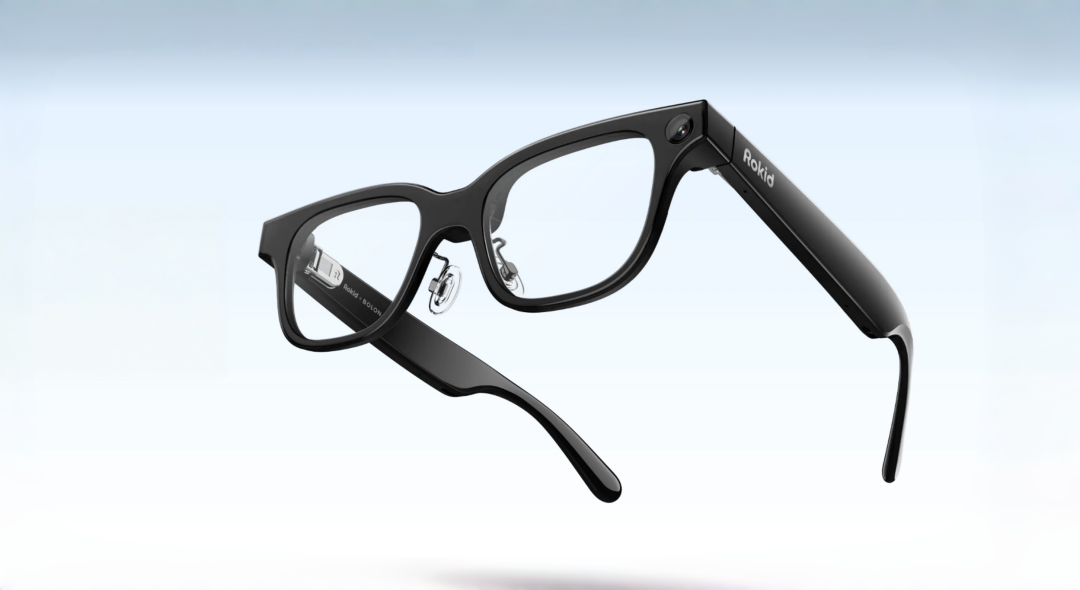
Rokid has carved a significant niche in China’s intensifying smart glasses sector, leveraging distinct product definitions and rapid deployment to secure early market dominance ahead of entrenched technology conglomerates. By prioritizing visual display utility over audio-only features, the startup has established a functional foothold in a market crowded with over 5,000 related enterprises.
In the highly competitive "Double 11" shopping festival of 2025, the Hangzhou-based company reported a 1,000% year-on-year sales surge on JD. Total platform sales exceeded RMB 50 million yuan (US$6.9 million), with an initial stock of 40,000 units selling out in five days. This performance underscores strong consumer demand for productivity-focused wearable hardware.
This momentum comes as the sector, dubbed the "Year of Smart Glasses," sees an influx of capital and products from massive players including Alibaba Group, Baidu, and Xiaomi. Despite the entry of these incumbents and automakers seeking new traffic value entry points, Rokid has effectively capitalized on its "first-mover" advantage.
The company’s ability to maintain growth amidst rising competition indicates a shift in consumer preference toward functional visual interactivity. Rokid’s strategy sets a potential benchmark for the next generation of wearable computing platforms, challenging the notion that the market belongs solely to well-capitalized tech behemoths.
Defining the Standard
Rokid’s market differentiation stems from a fundamental divergence in product philosophy compared to global peers like Meta Platforms Inc. and Google. While many competitors initially released audio-centric smart glasses, Rokid CEO Moming Zhu bet on visual display technology as essential for productivity. This approach was validated by the popularity of the device’s teleprompter function, which serves as a core utilization scenario.
To standardize the user experience, the company introduced a "Four Goods" framework, defining the device as a competent pair of glasses, headphones, camera, and digital assistant. This pragmatic set of criteria has since influenced design standards across the domestic industry.
Innovations extend to power management, a critical pain point in the sector. Rokid introduced a magnetic charging interface paired with a "charging capsule" system. This design replaces standard Type-C ports to reduce wear and eliminates the need for bulky charging cases, allowing for continuous usage in mobile scenarios. The data-enabled magnetic port also opens the hardware ecosystem to third-party developers for external modules.
Driven by User Feedback
The company maintains an aggressive iteration cycle, releasing firmware updates approximately every two weeks. Since September 2025, over 300 functional updates have been deployed, many largely driven by a community of over 100,000 active users. Data shows high engagement, with daily active wear time exceeding eight hours and cumulative interactions topping 15 million.
Feature refinements are often granular and user-led. For instance, payment voice commands were simplified from full sentences to a single confirmation word to reduce social friction. Similarly, the teleprompter feature added a "scrolling mode" with pause functionality, catering to public speakers.
To address privacy and etiquette concerns, Rokid developed a low-light leakage solution. Unlike industry norms that direct excess light downward, the device guides micro-light upward into the non-core field of view. This ensures that audiences during presentations are not distracted by lighting from the speaker’s eyewear.
Expanding Market Reach
Rokid is actively moving its brand upmarket, transitioning from early adopters to business professionals. High-profile users now include executives such as Zhou Yunjie, Chairman of Haier, and various diplomats. The device was recently designated as an "AI Gift" at the 22nd China-ASEAN Expo, signaling its acceptance in formal government and business contexts.
This professional adoption provides a buffer against the commoditization of consumer electronics. By establishing the glasses as a legitimate productivity tool rather than a novelty, Rokid creates a barrier to entry based on reliability and specialized utility.
Looking ahead, management views the current period as a critical window to build an ecosystem moat before major technology firms fully deploy their resources. Zhu maintains that Chinese manufacturers hold distinct advantages in supply chains and manufacturing, positioning companies like Rokid to compete directly with global giants in the emerging spatial computing landscape.