
Alibaba Challenge Meta and Xiaomi with Launch of Qwen-Powered AI Glasses
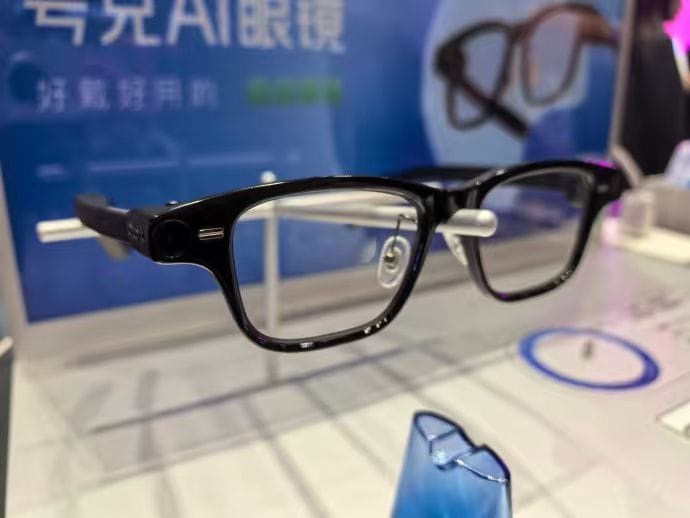
Alibaba Group Holding Ltd. has officially entered the consumer hardware market with the launch of its first AI-powered smart glasses, driven by its proprietary Qwen large language model. The release marks a significant strategic pivot for the Chinese tech giant as it seeks to extend its "AI-First" business overhaul from software into physical wearable devices, deepening the integration between its digital ecosystem and the physical world.
The new product line, branding under the name Quark, includes two models: the high-end S1 featuring a Micro-OLED display and the entry-level G1. Unveiled at a launch event on the 27th by Alibaba Vice President Wu Jia, the glasses start at RMB 1,899 yuan (US$261) and are deeply integrated with Alibaba’s core services, including Alipay for payments and Taobao for shopping. The devices are designed to function as intelligent assistants capable of handling complex interactions rather than simple chatbots.
Alibaba’s entry comes amidst intensifying competition in the smart eyewear sector, currently dominated globally by Meta Platforms Inc.’s Ray-Ban glasses and locally by players like Xiaomi Corp. The launch follows the rapid adoption of the Qwen app, which saw downloads surpass 10 million within a week of its public beta, signaling to Alibaba executives that the market is ripe for AI-native hardware. Wu Jia stated that the maturity of the Qwen model after three years of development has made a viable commercial AI assistant possible.
The move aligns with Alibaba CEO Wu Yongming’s vision that the greatest potential for AI lies not in mobile screens but in taking over the digital world and altering the physical one. The company views the glasses as a "second brain" and a primary interface for the next generation of human-computer interaction. An international rollout is planned for next year, with sales expected through global platforms such as AliExpress.
Deep Ecosystem Integration
The primary differentiator for the Quark AI glasses is their seamless connection to Alibaba’s extensive service ecosystem. Powered by the Qwen model, the glasses allow users to perform hands-free tasks such as making payments via Alipay, comparing product prices on Taobao, and navigating using Amap (Gaode Map). Travel functions are supported through integration with the Fliggy platform. Additionally, Alibaba has partnered with NetEase Inc. and Tencent Holdings Ltd. to provide music streaming services via NetEase Cloud Music and QQ Music, respectively.
In terms of visual interaction, the glasses leverage the Qwen model to identify objects and understand context in the physical environment. The flagship Quark S1 model features a semi-transparent Micro-OLED display capable of projecting contextual information directly into the user's field of view. This functionality supports high-frequency use scenarios such as real-time translation and navigation, utilizing a dual optical engine system with brightness reaching 4,000 nits to ensure visibility even in strong outdoor light.
Hardware Specifications and Pricing
The product line caters to different market segments. The premium Quark S1, priced at RMB 3,799 yuan, includes the heads-up display technology. The base model, Quark G1, which eschews the display for a purely audio-and-camera-based AI experience, retails for RMB 1,899 yuan. The S1 is currently available through major Chinese e-commerce channels including Tmall, JD.com, and Douyin, as well as in over 600 offline retail stores across 82 cities.
Technically, the glasses are equipped with dual flagship chips to ensure rapid response times for the AI model. The imaging system supports 0.6-second instant capture and can record 3K video, which can be upscaled to 4K. A proprietary "Super Raw" low-light enhancement technology brings smartphone-grade imaging to the eyewear, working with a dual stabilization system to improve performance in complex lighting environments. Audio capability is supported by a five-microphone array and bone conduction technology to filter background noise. To address battery anxiety, the device features an industry-first dual-battery design with swappable components.
Strategic Shifts in a Crowded Market
Alibaba’s hardware debut places it in direct competition with established global and domestic players. While Meta holds a dominant position internationally with its VR headsets and smart glasses, and Apple Inc. markets its high-end Vision Pro, the domestic Chinese market remains fragmented. According to IDC data, smart glass shipments in China reached 1.6 million units in the year ending September 2025, with Xiaomi Corp. holding approximately one-third of the market.
Alibaba is betting on the superior intelligence of its underlying model to gain market share. Wu Jia emphasized that effective AI assistants must compete on "intelligence and capability" rather than functioning merely as conversational bots. He noted that the Qwen model now surpasses competitors like Llama in performance benchmarks and has achieved over 700 million global downloads.
This hardware push is a critical extension of Alibaba’s reorganization into an AI-centric company. By controlling the terminal device, Alibaba aims to secure a new entry point for user traffic beyond smartphones. A spokesperson for the Quark division confirmed the company's global ambitions, stating that international versions of the glasses are slated for release next year to compete in the broader consumer electronics arena.