
China-Built Car Exports to EU Top 1 Million in 2025
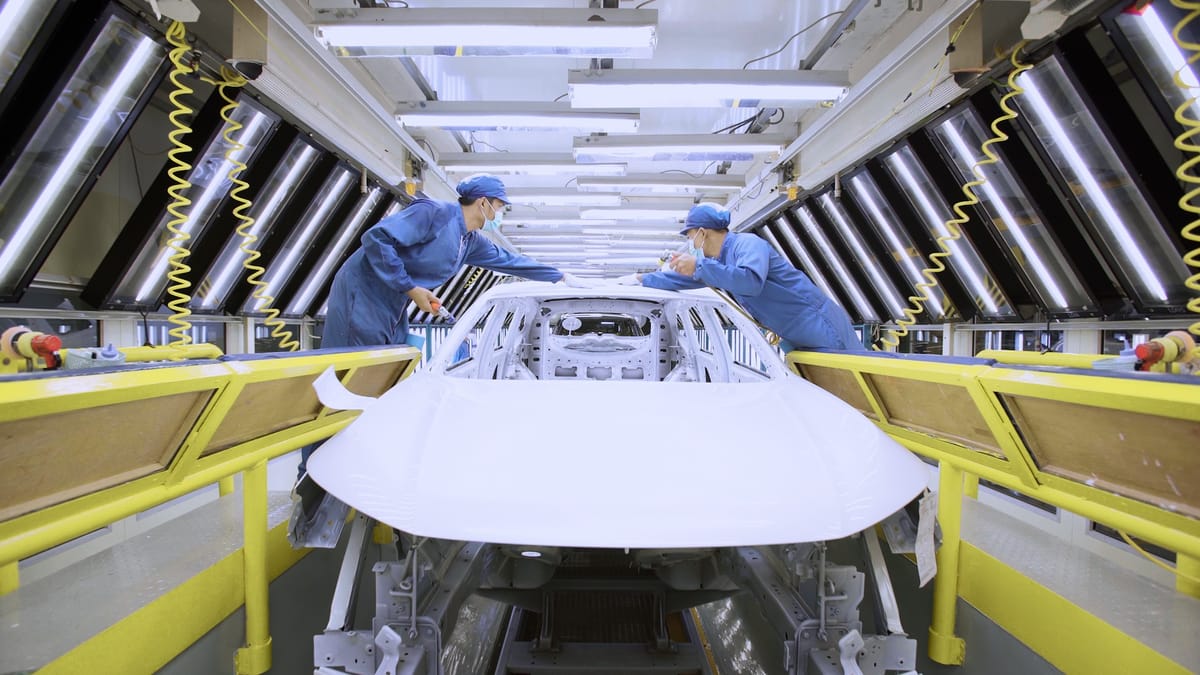
China-built vehicles are taking a bigger bite of Europe’s car market, pushing the region’s import pecking order toward a price-led electric-vehicle battle that is squeezing South Korean and Japanese brands.
Data released April 6 by the European Automobile Manufacturers’ Association (ACEA) show cars produced in China accounted for 7% of vehicles sold in the European Union in 2025, up from 5% in 2022. EU imports of cars from China jumped 30.7% last year to 1,006,188 units—the first time they have crossed 1 million—while import value reached €13.724 billion, keeping China the bloc’s largest source of imported cars.
Early 2026 sales data underline the momentum shift. Through February, BYD sold 36,069 cars in Europe, up 162.7% year-on-year, while Hyundai Motor and Kia sold a combined 143,457 units, down 8.4%, dragged by weaker deliveries of models including Ioniq 5, Kona EV, EV3 and EV6.
Share Gains Intensify Pressure on Non-European Importers
ACEA’s figures show China’s rise is no longer incremental: a two-percentage-point gain in market share since 2022 translates into meaningful volume in a mature market where incumbents often fight for tenths of a point. The immediate losers have been other import-heavy players. South Korean brands held a 3% EU market share in 2025, unchanged from the prior year, while Japan stayed at 4%.
Part of that stagnation reflects broader localization strategies—more production moved closer to end markets—yet the 2025 import step-change from China suggests the competitive baseline has moved. For investors and suppliers, the data imply that “import share” is increasingly being determined by who can deliver mass-market EVs at scale, not by legacy brand positioning.
Low-End EV Demand Pulls Strategy Toward Smaller, Cheaper Models
Europe’s EV market is expanding fastest in lower-priced segments. Cumulative European EV sales reached 379,604 units through February 2026, up 14.8% year-on-year, according to the figures cited in the source material. That growth profile matters because it rewards cost control, battery sourcing leverage and rapid model cycles—areas where China-based production has improved quickly.
The shift also reframes competition: premium differentiation carries less weight when the fastest-growing pool of demand is in compact vehicles designed to meet urban driving and affordability constraints.
Hyundai and Kia Cut Prices and Broaden Lineup to Defend Europe
Hyundai and Kia are responding by targeting the same compact segment where China-made vehicles are gaining traction. The group is rolling out small EVs tailored for Europe starting this month, including the strategic “EV2,” priced around €26,000—€390 cheaper than a comparable BYD model—explicitly positioning the product on value.
Hyundai is also set to unveil the small electric SUV “Ioniq 3” globally in Milan this month, with a commercial launch planned for the second half of 2026. The model is the first all-new addition to the Ioniq EV brand since the “Ioniq 9” debuted about 17 months earlier, signaling a renewed cadence in a market where BYD’s volume growth is accelerating.
Volkswagen and Renault Accelerate Launches as Price War Spreads
Europe’s incumbents are also moving downmarket to protect share and keep volume in-house. Volkswagen AG plans to launch two small EVs in Europe in the second half of 2026: the compact electric SUV “ID.Cross” and the small electric hatchback “ID.Polo.” Renault SA is also stepping up its small-car lineup push, reflecting a broader industry pivot toward cheaper EVs as the competitive set expands.
For the supply chain, the proliferation of compact EV launches points to rising demand for cost-optimized battery packs, power electronics and localized component sourcing—areas where margins can compress quickly if pricing becomes the primary differentiator.
Related Coverage:
The EV Juggernaut: How China Built a Car Empire to Challenge the World
China's Carmakers Are Flooding the World. The Hard Part Is Just Beginning.