
China Small EV Sales Diverge as Wuling and BYD Navigate Saturated Market
Major Chinese automakers, led by SAIC-GM-Wuling and BYD, maintained their dominance in the small new energy vehicle (NEV) sector in November 2025, claiming the top six sales positions. However, the market is showing signs of saturation, with nearly half of the top 10 best-selling models recording month-on-month declines, prompting leaders to pivot toward overseas markets and technological upgrades.
SAIC-GM-Wuling Automobile retained the top spot with its Hongguang MINIEV, despite a 7.7% sales drop to 56,756 units. The market is facing intensified fragmentation as new entrants like Zhejiang Leapmotor Technology gain traction. Leapmotor’s Lafa5 model has rapidly scaled to over 7,300 units, signaling a rising threat from emerging challengers against established incumbents.
The volatility was most pronounced for Changan Automobile, whose Lumin model saw sales plummet by nearly 43% from the previous month. The divergence in performance highlights a shift in consumer demand, driving manufacturers like BYD to offset domestic softness with aggressive export strategies, particularly for models like the Seagull and Dolphin.
While the sector remains top-heavy, pricing wars and specification upgrades continue to reshape the landscape. With legacy assemblers like Great Wall Motor preparing new launches, the window for growth in 2026 is narrowing, forcing companies to rely on aggressive discounting and new battery technologies to sustain market share.
Leaders Under Pressure
Despite a slowdown in growth momentum, the Hongguang MINIEV remains the segment's benchmark. SAIC-GM-Wuling delivered 118,729 NEV units in November, with the MINIEV family accounting for nearly half of the "Silver Badge" fleet. To sustain demand, the company launched a long-range, four-door version of the vehicle in November, priced at RMB 52,800 (US$7,260) after subsidies. While a 2026 model update has appeared in regulatory filings, a launch date remains unconfirmed.
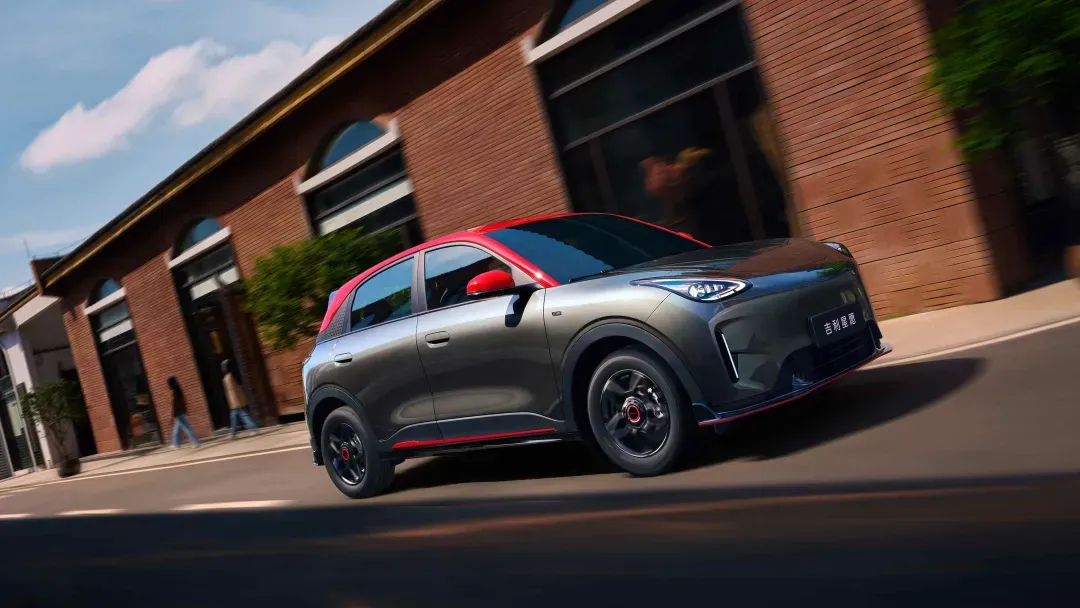
Geely Automobile Holdings faced mixed results. Its Star Wish (Xingyuan) model ranked second with 42,038 units, representing a 4.9% decline—its second consecutive monthly drop. Analysts attribute this pressure to the entry of competitors like the Arcfox T1 and Leapmotor Lafa5, which are diluting market concentration. However, Geely’s Panda mini-car bucked the trend, rising 11.3% to 17,301 units, driven largely by dealer discounts that brought prices as low as RMB 39,900 (US$5,490) for the 2025 model.
Wuling’s Bingo S also showed resilience, climbing 4.1% to 17,959 units. Offering larger dimensions and stronger powertrain options than the standard Bingo, the model is positioned to compete directly with Geely’s Star Wish, though it has yet to match the latter's cumulative sales volume of 400,000 units.
BYD Pivots to Exports
BYD is increasingly leveraging international markets to buffer domestic volatility. The Seagull, ranking third domestically with 21,807 units, saw sales fall 11.7% in China. However, the model remains a robust export product, with overseas sales hitting 36,000 units in November. Total exports for the Seagull exceeded 150,000 units in the first 11 months of 2025.
Similarly, the BYD Dolphin recorded a 6.9% domestic increase to 17,320 units, recovering from a slump in October. The model recently surpassed the 1 million cumulative sales mark. Its export performance remains critical, with November shipments reaching 30,971 units—accounting for approximately 13.2% of the brand's Ocean Network overseas sales. The company plans to introduce a customized Dolphin DM-i model to the UK market in early 2026 to further bolster global volume.
Tech Upgrades and New Entrants
Mid-tier competitors are turning to advanced battery technologies to differentiate their offerings. SAIC’s MG brand saw its MG4 model surge 18.2% to 13,574 units, securing the eighth spot. Growth was supported by the delivery of a semi-solid-state battery version, priced aggressively at RMB 99,800 (US$13,730). This establishes the MG4 as an entry-level pioneer for semi-solid-state technology, contributing significantly to MG’s monthly delivery volume of over 13,000 units.
Meanwhile, the Arcfox T1, produced by a subsidiary of BAIC ARCFOX New Energy Vehicle, sold 14,162 units, constituting over 55% of the brand's total monthly sales. Despite a 5.9% month-on-month dip, the model’s competitive pricing—ranging between RMB 62,800 and RMB 87,800 (US$8,640–US$12,080)—has helped drive Arcfox’s cumulative brand growth of nearly 98% year-to-date.
Volatility at the Tail End
The bottom of the top 10 rankings revealed significant instability. Changan Automobile’s Lumin served as the biggest loser of the month, dropping to the tenth spot with 11,744 units—a reduction of 8,776 vehicles compared to October. Despite the introduction of a new "Treasure Edition" with a 301km range, domestic sales have struggled against fierce competition from Wuling. Consequently, Changan is accelerating its overseas expansion, debuting the Lumin at the Jakarta Auto Show in November with plans to establish five dealerships in the region by year-end.
FAW’s Bestune Pony held the ninth spot with 12,905 units. Sales retreated from October highs following the conclusion of a subsidy campaign, though the base price of RMB 29,900 (US$4,115) combined with government incentives continues to attract entry-level buyers.