
Horizon Robotics Bets on Humanoid Future as Autonomous Driving Race Nears Finish Line
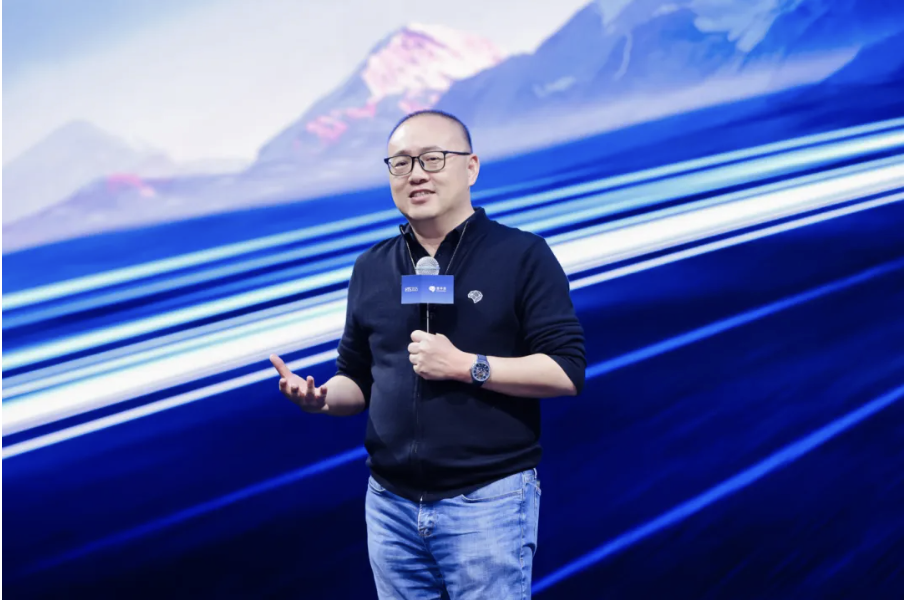
Horizon Robotics, a leading Chinese AI chipmaker, is pivoting its focus toward embodied intelligence and robotics, viewing the sector as an open field of opportunities as the autonomous driving race approaches maturity. The company unveiled new open-source models and development platforms at its 2025 Technology Ecosystem Conference, signaling its ambition to become the infrastructure provider for the next wave of robotics innovation.
Founder and CEO Yu Kai described autonomous driving as an exam nearing completion, with players consolidating, while the robotics sector has just begun with "countless opportunities." The Beijing-based company, which maintains a platform strategy of "making weapons, not fighting wars," is positioning itself to enable thousands of potential robotics applications rather than competing in specific end-markets.
Horizon's robotics subsidiary, DiGua Robotics, has shipped products growing 180% year-on-year, partnering with over 100 companies and 100,000 developers globally. The ecosystem has produced more than 5,000 open-source projects and reached 20 countries, demonstrating early traction in a fragmented market.
The strategic shift comes as Yu revised his timeline for household service robots, now projecting that tasks like laundry folding, cleaning, and table clearing could be commercialized within three to five years, accelerated by advances in large models and end-to-end technologies.
Open-Source Models Target Core Robotics Challenges
Horizon formally released two foundational open-source models for embodied intelligence: HoloMotion for full-body motion control and HoloBrain for general manipulation tasks. The models address what Su Zhizhong, head of Horizon's robotics lab, describes as fundamental technical bottlenecks in an industry still in its infancy.
HoloMotion functions as a "human cerebellum," enabling real-time full-body control with trajectory tracking capabilities. Su outlined plans to expand the model within a year to execute arbitrary commands, control any robot body, and navigate any terrain. The model can replicate human movements by observing video, demonstrating human-like learning capabilities.
HoloBrain tackles more complex manipulation tasks requiring understanding of general instructions, environmental context, and precise object interaction. The model incorporates spatial perception enhancement and unified action space technologies, integrating real and simulated data to enable human-level spatial awareness and dexterous manipulation.
Supporting these models, Horizon developed EmbodiedGen, a simulation data engine that constructs digital twins through interactive reconstruction or AI-generated environments. The engine enables one-click import, significantly reducing data acquisition costs for training perception-decision-execution loops.
All technologies integrate into RoboOrchard, an open-source framework built on Horizon's autonomous driving experience. Unlike traditional ROS systems, RoboOrchard emphasizes data quality, flexibility, and multi-platform compatibility.
Hardware-Software Integration Accelerates Development
DiGua Robotics' platform strategy centers on three pillars: integrated computing infrastructure, cloud-edge development tools, and comprehensive ecosystem support. The computing foundation uses Horizon's BPU architecture through its Rising Sun chip series and RDK developer kits, offering compute power ranging from 5 TOPS to 560 TOPS across applications from educational robots to embodied intelligence.
Hu Chunxu, vice president of DiGua Robotics' developer ecosystem, highlighted the newly released RDK S600 kit, which provides 560 TOPS computing power for both cognitive and control functions, claiming double the performance of mainstream platforms.
The software stack encompasses operating systems, application code, and development platforms. DiGua's Model Zoo contains over 300 pre-trained algorithms with more than 500 open-source code projects. The cloud-edge integrated development platform features data loops, embodied intelligence training grounds, and Agent services, allowing developers to complete algorithm verification and deployment through drag-and-drop operations.
Hu stated the platform compresses product cycles from concept to mass production to as little as one year. The "Earth Gravity Plan" launched in 2025 supports innovation by providing capital, supply chain access, and marketing resources, currently covering over 500 enterprises.
Industry Challenges Amid Fragmented Market
Despite clear positioning, the robotics industry faces multiple challenges in achieving scale. Panelists at the conference discussed tensions between technical standardization and scenario fragmentation, with consensus around "general base plus functional modules" but ongoing debates about balancing universality with customization.
Platform companies must navigate between enablement and control—excessive openness risks ecosystem chaos, while over-convergence may stifle innovation. Horizon's commitment to open-source models, toolchains, and community operations aims to build trust, though validation through landmark cases remains critical.
The competitive landscape is evolving rapidly, with Nvidia, Huawei and others deploying computing platforms, while startups like Black Sesame Technologies pursue niche applications. The market's dispersed nature suggests oligopolies are unlikely to emerge soon.
Horizon's transition from autonomous driving to robotics represents a continuation of its technology foundation and ecosystem logic, leveraging hardware-software integration capabilities, mass production experience, and a maturing developer base. Whether embodied intelligence can achieve the breakthrough from technical demonstration to household penetration within three to five years will depend on model generalization, cost control, and ecosystem coordination efficiency.