
China’s AgiPhant Raises Nearly RMB 10M to Build the Neural Interface Layer for Embodied AI
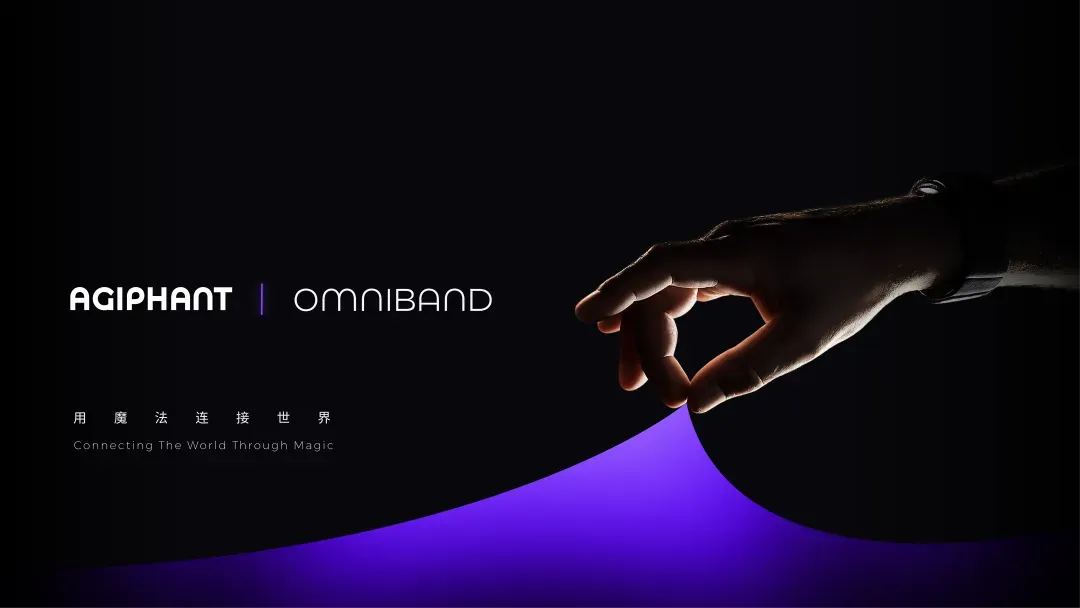
Shanghai startup AgiPhant has closed an angel round of nearly RMB 10 million (approximately US$1.39 million), betting that the wrist — not the skull — is the most commercially viable entry point into human-machine interaction for the next generation of AI hardware.
The June 2026 round was led by Yongjun Xingmang, with participation from Pudong Ventures and Yicun Capital. The fundraise arrives as Chinese AI hardware developers — from AI glasses manufacturers to humanoid robotics teams — face a shared bottleneck: a reliable, low-friction method of capturing human motor intent in real time. AgiPhant's pitch is that surface electromyography (sEMG) at the wrist solves precisely that problem, while simultaneously generating the proprietary training data that embodied AI models increasingly demand.
The company was founded in late 2025, making this angel close less than a year after incorporation — a timeline that reflects both investor urgency in China's embodied intelligence sector and the founding team's pre-existing technical credibility.
Founding Team Brings Three-Generation Product Lineage to the Table
AgiPhant's founder, Wang Yi, holds a doctorate in brain-computer interface (BCI) research from the University of Auckland and currently serves as Vice Chairman of the National Brain-Computer Interface Industry Alliance. He is also a recipient of Shanghai's Magnolia Talent Program.
Critically, Wang's track record is not theoretical. Prior to founding AgiPhant, he served as R&D lead at two predecessors: Yingmai Medical, where a 16-channel neural wristband debuted at the 5th China International Import Expo (CIIE), and AGIBOT, where the second-generation device was applied to humanoid robot and robotic dog control. Omniband, the third-generation product, made its public debut at the China Home Appliances and Consumer Electronics Expo (AWE) in 2026, repositioned explicitly as an "input and data gateway connecting carbon-based biology with silicon-based intelligence."
This three-generation arc — from medical device to robotics controller to consumer-grade neural interface — is not incidental. It represents a deliberate compression of the technology stack into a wearable form factor that can scale beyond laboratory settings.
Omniband Targets the Input Layer That AI Glasses and Spatial Computing Are Missing
AgiPhant's core product, Omniband, is a wrist-worn sEMG device that reads neuromuscular electrical signals at the wrist to decode hand movement intent, continuous dynamic gestures, and muscle force variations. The practical output: mid-air control, aerial handwriting, and invisible keyboard-and-mouse-style interaction — all without physical contact.
The strategic logic here is pointed. AI glasses and spatial computing headsets have a well-documented input problem: voice commands are socially intrusive, touchpads are cumbersome, and camera-based hand tracking drains compute and battery. A wrist-worn sEMG band that offloads gesture decoding to the peripheral nervous system addresses all three constraints simultaneously.
Wang Yi articulated the technical rationale directly: "Neuromuscular signals at the wrist have been amplified by muscle tissue, yielding a higher signal-to-noise ratio than direct cortical signals — and are far more compatible with a consumer product form factor."
Omniband is currently at the engineering prototype and productization stage. The company reports mature performance in gaming and short-video control scenarios, which function as high-frequency consumer validation environments before broader deployment.
"Data Moat" Strategy Differentiates AgiPhant from Pure Hardware Plays
Beyond the device itself, AgiPhant is constructing what it describes as a large-scale, China-localized sEMG dataset covering hand posture, muscle force, and object interaction — annotated with multi-dimensional labels and paired with first-person perspective video data. This dataset is intended to serve as a training substrate for embodied intelligence systems, Physical AI models, and world model development.
This dual-track approach — hardware device plus proprietary data infrastructure — is significant for investors assessing long-term defensibility. Pure sEMG hardware is replicable; a large-scale, culturally and physiologically localized hand-motion dataset built on real-world Chinese user behavior is substantially harder to replicate on a compressed timeline.
Yicun Capital's post-investment statement made this calculus explicit, citing AgiPhant's "continuous accumulation in domestic sEMG datasets, product engineering, and developer ecosystem" as core investment rationale alongside the hardware itself.
B2B-First Commercialization Reduces Consumer Market Execution Risk
AgiPhant has adopted a sequenced go-to-market strategy that prioritizes institutional customers before consumer launch. In the first phase, the company will target universities, enterprise laboratories, embodied intelligence teams, and developers — offering interaction customization, data collection services, and SDK licensing. Consumer-facing products targeting enthusiast and mainstream users are designated for a subsequent phase.
This "B2B before B2C" sequencing is a pragmatic risk management decision for a sub-RMB 10 million seed-stage company. SDK licensing and data collection contracts generate recurring revenue with lower customer acquisition costs, while simultaneously expanding the sEMG dataset that underpins the company's long-term data moat. The developer ecosystem also functions as a distribution channel: if Omniband becomes the default sEMG SDK for Chinese embodied AI developers, consumer adoption follows the installed base.
Yongjun Xingmang's investment rationale captured the broader platform thesis: "Wrist sEMG neural interfaces have the potential to become not only the next generation of consumer input devices, but also to accumulate the high-quality human manipulation data required for embodied intelligence training."
Sector Context: China's Embodied AI Pipeline Creates Structural Demand for Human Motion Data
AgiPhant's fundraise occurs against a backdrop of accelerating Chinese investment in embodied intelligence and humanoid robotics. The demand for high-fidelity human motion data — to train manipulation policies, fine-tune world models, and calibrate physical AI systems — has outpaced the supply of structured, labeled datasets derived from real-world human behavior. Existing motion capture solutions are expensive, lab-bound, and poorly suited to capturing the nuanced force and intent signals that next-generation robotic manipulation requires.
AgiPhant's wrist-worn form factor, if it achieves the cross-user generalization and micro-gesture recognition that investors cite as early indicators of progress, could position the company as a critical data infrastructure provider to a robotics and AI hardware sector that is currently spending heavily on training data acquisition.
At a nearly RMB 10 million (US$1.39 million) angel valuation entry point, the capital efficiency implied by three hardware generations and a credentialed founding team suggests investors are pricing in execution risk — but also a relatively uncontested window in a market where the input layer for spatial computing and embodied AI remains genuinely open.
Related Coverage: