
China’s AI Video Boom Shifts From Viral Hobby to Commercial Industry
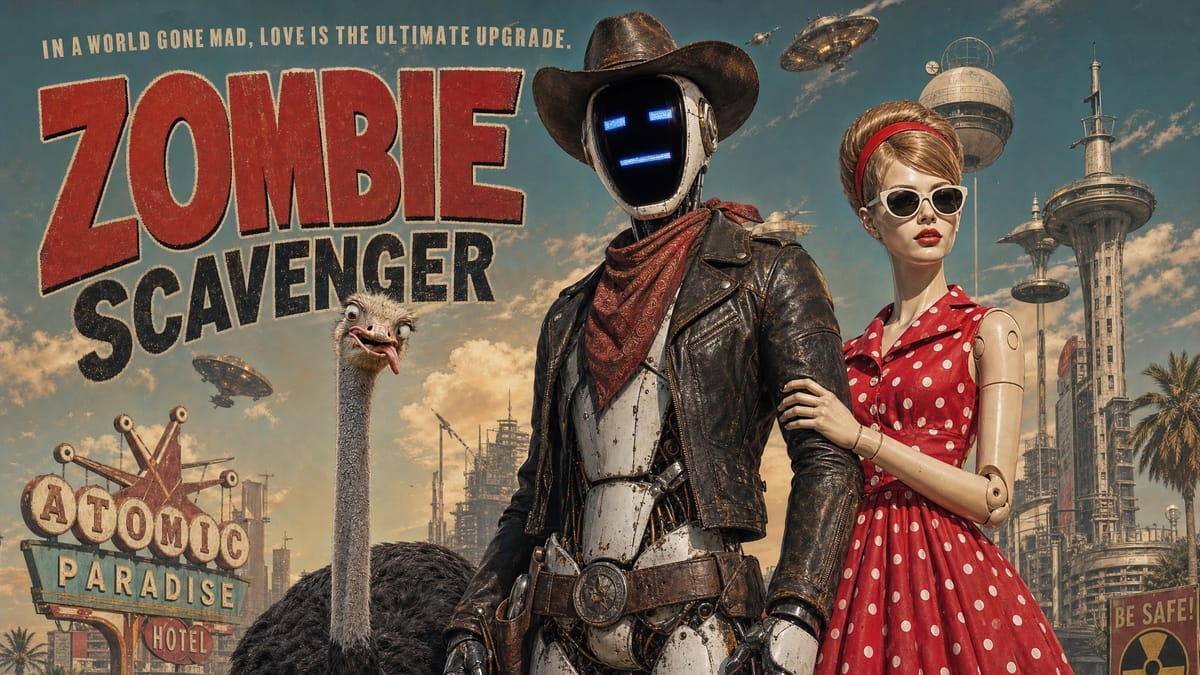
The viral success of a zero-budget, AI-generated sci-fi short in China is catalyzing a rapid commercialization wave across the country's video-generation sector, with top creators now commanding million-yuan commercial contracts and securing early-stage venture capital.
What began as an experimental hobby for independent creators has morphed into a structured industry in 2026. Startups are institutionalizing artificial intelligence video production pipelines to bypass inherent model limitations, transitioning from algorithmic novelty to reliable B2B service providers for the advertising, gaming, and traditional film sectors.
Early market feedback indicates a widening divergence between casual users and professional studios. While independent creators leverage platform subsidies to eliminate production costs, specialized agencies report their commercial order volumes tripling. Institutional players are now projecting 2026 annual profits to exceed RMB 10 million (US$1.39 million), signaling that the generative AI video market is shifting from a period of wild growth into an era of industrialized production.
Institutionalizing Workflows Bypasses Technical Limitations
Despite the democratization of video-generation capabilities, current AI models struggle with character consistency, spatial logic, and long-take continuity. The production of the viral hit Zombie Scavenger, generated primarily via the Seedance 2.0 model, exposed these technical bottlenecks, requiring extensive manual prompting to render a 15-second sequence accurately.
To circumvent these algorithmic shortcomings, emerging AI film startups are abandoning pure text-to-video reliance. Companies are establishing standardized workflows that integrate proprietary digital asset libraries and traditional post-production tools like Adobe After Effects to manually correct AI-generated distortions. This hybrid approach—using AI for macro-efficiency and traditional tools for micro-precision—has become the prerequisite for delivering commercial-grade content. Startups scaling to 30-person teams are dividing labor across prompt engineering, storyboard deconstruction, and manual frame-by-frame refinement, effectively creating a new industrial standard for AI video production.
Securing Funding Validates New Monetization Models
The capitalization of AI-generated content (AIGC) is accelerating as clear monetization pathways emerge. Premium commercial orders, spanning brand advertisements and government promotional campaigns, currently command pricing from tens of thousands up to RMB 1 million (US$138,889) per video, depending on duration and technical complexity.
Beyond direct B2B services, intellectual property (IP) derivatives represent the sector's highest revenue ceiling. Creators gaining traction on platforms like Douyin and receiving nominations at the Beijing International Film Festival are pivoting toward long-term IP development. Instead of merely selling video production services, top-tier creators are negotiating IP licensing deals with gaming studios and traditional film production companies, monetizing original world-building and narrative frameworks. This shift has attracted venture capital, with early-stage funding rounds closing for startups capable of sustaining high-quality, high-volume output.
Democratizing Tools Forces Industry Consolidation
The lowering of technical barriers has achieved tool parity, but it is amplifying the premium on narrative capability and resource integration. As AI models homogenize baseline visual outputs—often resulting in uniform "AI faces" and identical aesthetic styles—the competitive moat for 2026 and beyond lies in scriptwriting and cinematic storytelling.
Industry analysts project that the dividend for individual, zero-cost creators will rapidly dissipate over the next 12 to 24 months. The market is consolidating around corporate entities that can manage complex, multi-disciplinary workflows. Rather than replacing the traditional film industry, AIGC is positioning itself as a complementary infrastructure. Traditional studios are expected to absorb these AI workflows to manage large-scale CGI and environmental rendering, while AI-native startups will increasingly recruit traditional film talent to inject narrative depth, cementing a hybrid future for China's visual media supply chain.
Related Coverage:
Explainer: How Seedance 2.0 Shifts the AI Video Generation Landscape