
China's Arcgine Technology Captures Global Lead in Drone Identification Systems, Eyes Trillion-Dollar Low-Altitude Economy
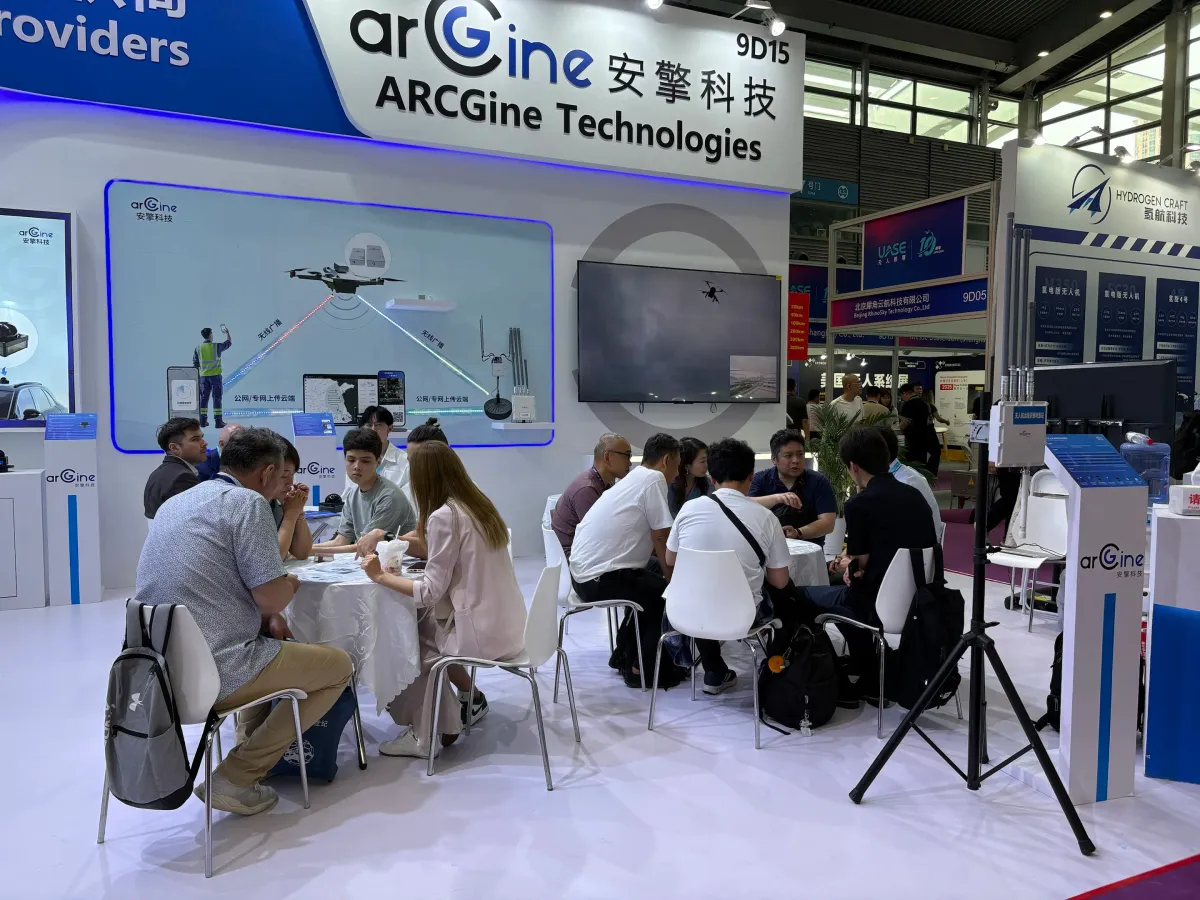
A 3-gram identification tag for drones has become the "invisible key" for China to unlock the trillion-dollar global low-altitude economy market. The manufacturer behind this technology, Zhuhai-based Arcgine Technology, has outpaced European and American competitors to achieve the world's highest shipment volume for its DroneID® remote identification tags, while establishing itself as a critical infrastructure provider for the emerging unmanned traffic management sector.
The company, led by former Boeing engineer Liu Ying, showcased its end-to-end low-altitude surveillance solution at the World Airspace Congress in Lisbon, Portugal, in May 2025, securing multiple collaboration agreements with international aviation authorities and UTM service providers. The solution integrates the DroneID® tags, RGS remote identification ground stations, and SafeSky® unmanned aircraft traffic management software.
Within three years of its founding, Arcgine Technology has positioned itself at the intersection of mandatory regulatory compliance and autonomous flight technology. The company's products address the critical gap in unmanned traffic management (UTM) systems as governments worldwide tighten regulations for beyond-visual-line-of-sight (BVLOS) operations.
The development comes as regulatory frameworks in the United States, European Union, Canada, and China mandate broadcast of flight parameters for drones, with non-compliance resulting in fines or flight bans.
From Boeing to Startup: Betting on Low-Altitude Infrastructure
Liu Ying, born in 1980 in Wuhan, built a career spanning Huawei Technologies, Ericsson, and ANSYS before joining Boeing China in 2015. Her decade-plus experience in antenna and radio frequency engineering, combined with expertise in artificial intelligence algorithms and aviation systems, positioned her to identify market gaps in low-altitude traffic management.
At Boeing, Liu served as R&D manager for the Research and Technology division in China, leading collaborations with the Civil Aviation Administration of China's Air Traffic Management Bureau and Commercial Aircraft Corporation of China. Her exposure to urban air mobility (UAM) projects revealed fundamental challenges in safety oversight for autonomous drone operations.
Liu departed Boeing in June 2022 to establish Arcgine Technology, betting that China lacked competitive positioning in autonomous flight technology despite growing global interest. International players like Percepto and IRIS Automation were already advancing self-piloting capabilities in Western markets. Liu noted that autonomous flight remains one of few areas without industry consensus, with most technologies achieving Technology Readiness Levels below 5 on a scale where 9 represents full commercial maturity.
The company's early financing reflected Liu's preference for investors with sector expertise and decisiveness. Her most efficient fundraising negotiation occurred with Zhang Zhengxi, founding partner of Yuanhe Capital, who finalized terms over a 40-minute lunch meeting. Yuanhe Capital participated in Arcgine Technology's angel-plus round of several million yuan in 2023 and continued investment in subsequent rounds.
Compliance Products Capture Global Market Share
Arcgine Technology's core team includes veterans from Boeing, Honeywell, Aviation Industry Corporation of China, Didi Chuxing, and Baidu Apollo, bringing deep expertise in aviation, wireless communications, and autonomous driving systems.
The company's DroneID® remote identification tags, weighing as little as 3 grams, broadcast essential flight parameters including real-time position, velocity, altitude, and unique identifiers. This enables air traffic control systems and other aircraft to detect low-altitude drone presence, preventing conflicts with manned aircraft, helicopters, or other drones while improving regulatory oversight and incident response.
The product line addresses mandatory compliance requirements across multiple jurisdictions. According to Liu, DroneID® functions as a "multi-country identity card" enabling drones to operate legally across borders. Since its 2023 market launch, DroneID® has achieved the highest global sales volume and earned recognition from domestic and international regulatory bodies.
The ecosystem includes RGS remote identification ground stations capable of detecting cooperative drones broadcasting identification data, integrating with active phased array radar to identify non-cooperative aircraft, and receiving ADS-B data from manned aircraft. The SafeSky® UTM software operates as a ground-based traffic control center, providing airspace databases compliant with Chinese regulations covering 200 cities, enabling users to verify airspace status and conduct legal BVLOS operations above 120 meters altitude or beyond 500 meters distance.
Autonomous Flight Systems Target BVLOS Operations
Arcgine Technology's autonomous flight architecture comprises three integrated components: the ARCGine autonomous drone system, drone airport infrastructure, and DAA onboard detect-and-avoid equipment suites.
The ARCGine system delivers closed-loop "perception-decision-execution" capabilities analogous to automotive advanced driver assistance systems, enabling mission planning, path navigation, and status monitoring without human remote control. The airport system provides automated takeoff, landing, charging, storage, and mission deployment, achieving true unmanned operations with autonomous return-to-base functionality.
The DAA suite represents a technological departure from consumer-grade visual obstacle avoidance systems. Arcgine Technology's solution employs 360-degree spherical sensing technology for all-weather, full-spectrum detection across multiple sensor types. This enables real-time detection and avoidance of airspace intrusions, surpassing consumer drones' limitations to static obstacle detection while reducing weight, size, and power consumption.
In February 2025, Arcgine Technology participated in a stress test at Yongchuan Da'an Airport in Chongqing involving over 100 drones. The deployment of RGS ground stations and both networked and broadcast versions of DroneID® achieved zero collisions while demonstrating coverage of 120 square kilometers around Da'an Airport at altitudes exceeding 500 meters and ADS-B reception within a 200-kilometer radius at 12,000 meters altitude. The system successfully detected and identified non-cooperative drones, with surveillance data integrated into the "Jiutian Hangyu" platform to match SafeSky® monitoring performance.
Standards Participation Builds Competitive Moat
Liu disclosed that product development required substantial engineering effort to accommodate varying national standards and meet global customer requirements for weight, volume, endurance, positioning accuracy, thermal management, and electromagnetic compatibility. Testing and compliance certification consumed significant development time but enhanced product reliability.
Remote identification and operational identification requirements differ across Chinese, American, and European regulatory frameworks. Arcgine Technology's DroneID® tags and RGS ground stations are the only products satisfying all three jurisdictions' compliance standards. The company achieved commercial deployment of its UTM system in 2024.
The end-to-end surveillance solution launched at the 2025 World Airspace Congress offers turnkey functionality from raw data acquisition to monitoring and decision-making, eliminating customer integration requirements for multiple independent hardware, software, or service components.
Liu indicated that 2025 priorities include overseas expansion and multi-country regulatory certification for UTM systems. The company plans to invest heavily in R&D over five years to build a "safe, certifiable, BVLOS-oriented" flight service ecosystem.
She identified technical resources as more scarce than commercial resources in the current low-altitude economy sector, prioritizing recruitment of top-tier talent. "Our strategy is to first become a valuable company through technology, then profitability will follow naturally," Liu stated.
As a member of the Global UTM Association (GUTMA) and participant in International Civil Aviation Organization working groups, Arcgine Technology aims to integrate Chinese technology into global standards. Liu views standards development as a mechanism to prevent destructive competition and enable customer selection of optimal products. The company envisions extending its technology to larger aircraft and urban air mobility applications, though Liu emphasized the need to first mature capabilities for low-speed, small-scale aircraft.
Liu expressed optimism about market opportunities, noting that 2023 marked the first year for UTM systems and regulatory frameworks have tightened globally. She anticipates widespread adoption of low-altitude rapid transit, with Arcgine Technology providing essential safety infrastructure for the sector's operational effectiveness.