
China’s Auto Margins Shrink to Historic Lows Despite Revenue Surge, CPCA Says
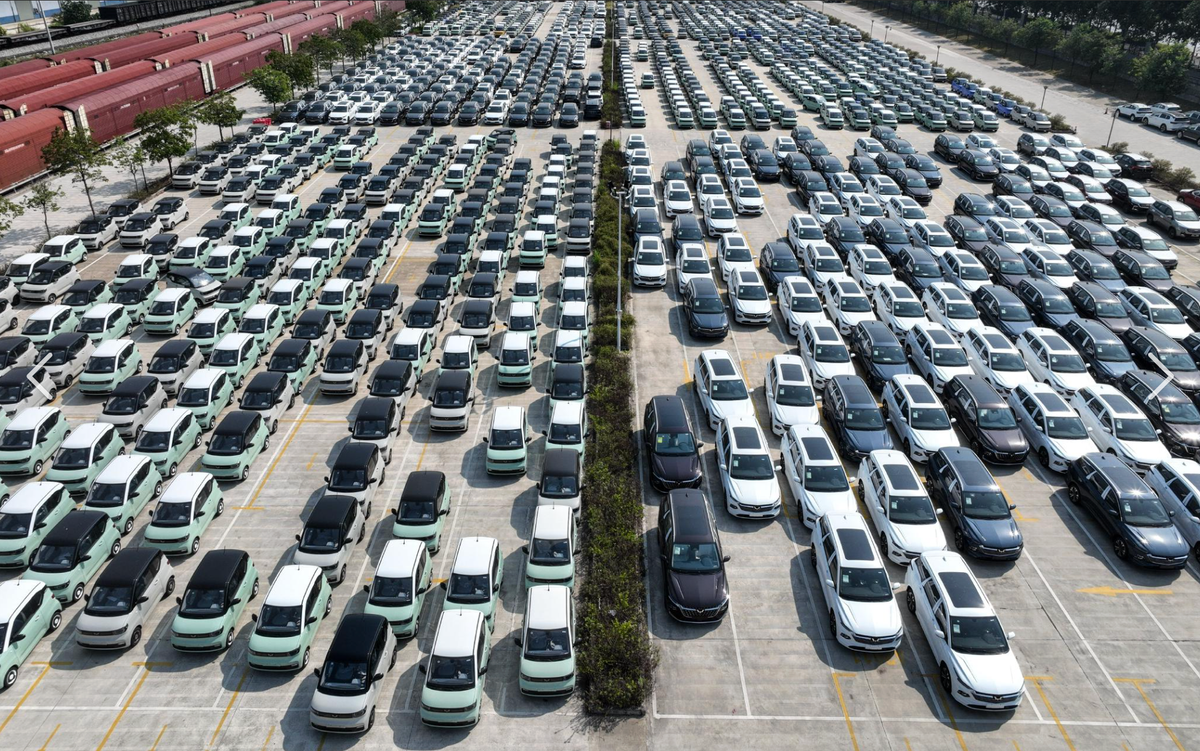
China’s automobile industry is grappling with a deepening disparity between surging revenue and shrinking profitability, as aggressive pricing strategies and rising production costs compress margins to near-historic lows. Despite a robust 11% increase in production output during the first ten months of 2025, the sector’s profit margins have failed to keep pace, trailing significantly behind broader industrial benchmarks.
The industry generated total revenue of 8.88 trillion yuan (US$1.22 trillion) from January to October, a 7.9% increase from the previous year, according to Cui Dongshu, Secretary General of the China Passenger Car Association (CPCA). However, profit growth was limited to 4.4%, with the sector’s aggregate profit margin standing at just 4.4%. This figure remains well below the 6% average margin observed in downstream industrial enterprises, highlighting the financial strain on automakers amidst a fierce battle for market share.
Profitability challenges intensified in October, with the monthly profit margin dipping to 3.9%, a sharp decline from September and lower than the 4.1% recorded in October 2024. While government-led "trade-in" policies have successfully stimulated volume and released domestic demand, the cost of goods sold rose by 9.4% in October, outpacing the 8.6% revenue growth. This indicates that the efficiency of converting sales volume into corporate earnings is deteriorating as the year draws to a close.
The data underscores the critical nature of Beijing’s push against "involution"—destructive internal competition—as the industry attempts to stabilize. While the auto sector significantly contributed to stabilizing the broader industrial supply chain, effectively subsidizing upstream recovery, its own financial health remains under pressure. Cui noted that while the industry is managing inventory and receivables better than the industrial average, the trend of rising costs and thinning margins suggests that mainstream automakers face acute earnings pressure moving forward.
Margins Squeezed by Rising Costs
The primary driver of the profit squeeze is a misalignment between revenue growth and cost accumulation. For the January to October 2025 period, total operating costs for the auto sector rose by 8.7% to 7.82 trillion yuan, outpacing the 7.9% growth in revenue. This structural imbalance has suppressed the sales profit margin to 4.4%, a figure Cui describes as being at a "historical secondary low," only slightly better than the performance in 2024.
While the "Two New" policies—emphasizing equipment renewal and consumer trade-ins—have bolstered production to 27.33 million units, the financial benefits have been uneven. October alone saw profits rise 13.7% year-on-year to 41.2 billion yuan, but this was achieved on a revenue base exceeding 1 trillion yuan, reinforcing the trend of high turnover with low returns. The divergence is particularly notable when compared to other downstream sectors; industries such as tobacco, alcohol, and pharmaceuticals continue to maintain significantly higher profit margins than the automotive manufacturing sector.
Supply Chain Imbalances
A detailed breakdown of industrial profits reveals a redistribution of wealth across the supply chain that currently disadvantages vehicle manufacturers. Upstream sectors, particularly in mining and raw materials, have seen robust profit recovery. Non-ferrous metal mining margins have exceeded 30%, and the steel industry has swung from massive losses in 2024 to a profit of over 100 billion yuan in 2025.
In contrast, automakers are acting as a "wealth scattering" mechanism, absorbing higher input costs while keeping end-consumer prices low. Cui pointed out that rising costs for upstream resources, such as lithium carbonate, combined with the fact that many automakers do not manufacture their own batteries, have exacerbated the profit decline. The profit transfer from manufacturing to upstream commodities and energy sectors—where electricity industry profits are at historical highs—has left carmakers with limited room to maneuver.
Electrification and Volume Divergence
The transition to new energy vehicles (NEVs) continues to drive volume growth but has yet to stabilize industry profitability. In the first ten months of 2025, NEV production surged 28% to 12.67 million units, achieving a penetration rate of 46%. By October, the monthly NEV penetration rate climbed to 52%, with production up 19%.
However, this volume shift has not translated into improved margins due to the persistent price advantages of NEVs over internal combustion engine (ICE) vehicles, which places immense pressure on pricing structures. ICE vehicle production remained flat year-to-date at 14.65 million units. Cui expressed hope that future policies promoting "oil-electricity parity" will help balance the market, allowing the industry to move from a state of "involution" to a more sustainable growth model where volume expansion aligns with profit recovery.