
China's Auto Market Starts 2026 With Sharp Decline as Electric Vehicle Sales Plunge 20%
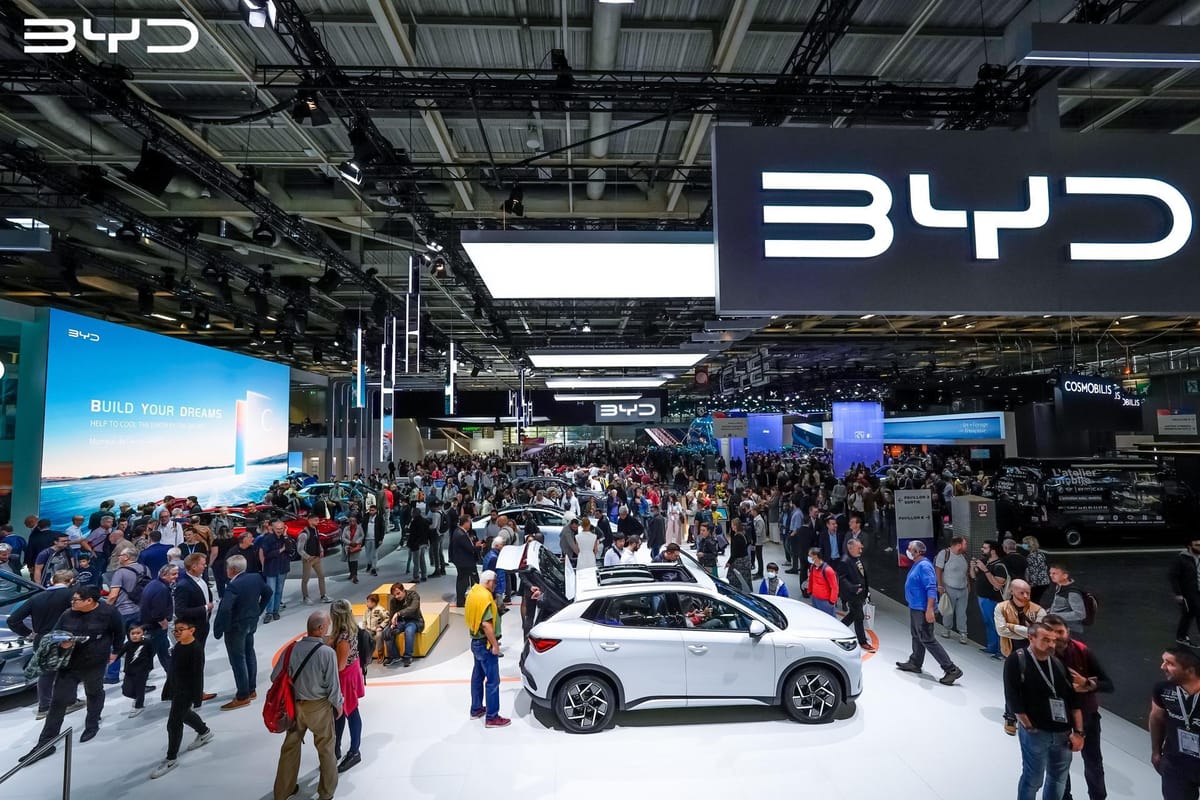
China's passenger vehicle market stumbled in January 2026, with terminal sales dropping 15% year-on-year to 1.55 million units, as new energy vehicles suffered a steeper 20% decline amid weakening demand for electric cars. The setback marks a challenging start to the year for the world's largest auto market, with even dominant players facing significant headwinds.
New energy vehicle penetration fell to 36.3% in January from 38.5% a year earlier, according to data from Zhinen Auto, signaling a rare retreat in electrification momentum. Total NEV sales reached 563,000 units, with pure electric vehicles accounting for 344,000 units, down 11% year-on-year, while plug-in hybrids plunged 35% to 152,000 units.
The decline hit market leader BYD particularly hard, with its January sales tumbling 48.7% to 104,500 units. The downturn reflects broader pressure on affordable electric vehicles, as budget models that previously drove market growth lost traction.
The slump poses challenges for automakers banking on China's electric transition and raises questions about the sustainability of recent growth rates as government subsidies fade and competition intensifies.
Emerging Players Buck Downward Trend
A handful of manufacturers defied the market decline, led by premium and technology-focused brands. Xiaomi delivered 39,100 vehicles in January, up 70.3% year-on-year, as its YU7 model recorded 37,900 units to become the month's best-selling NEV.
Seres Group posted 79% growth to 38,800 units, driven by its Aito M7 model which sold 25,100 units. NIO surged 82.5% to 29,800 units, with the ES8 contributing 18,400 sales.
BAIC Group grew 69.1% to 25,100 units, while JAC Motors jumped 90.6%, albeit from a small base of 3,400 units.
Several established NEV makers maintained stability despite market headwinds. Li Auto declined 10.4% to 27,500 units, while Leapmotor Technology fell 12.2% to 21,500 units. Great Wall dropped 11.7% to 49,700 units.
Major Automakers Face Steep Losses
Beyond BYD, several major Chinese manufacturers experienced sharp declines. Chery fell 30.7% to 90,300 units, while Changan Automobile declined 33.6% to 78,400 units.
SAIC-GM-Wuling Automobile dropped 31.2% to 32,300 units, reflecting the collapse of entry-level EV demand. XPeng plunged 50.7% to 15,900 units, barely maintaining five-figure sales.
Geely Automobile recorded 159,200 units, down 14.4%, while its Galaxy Xingyuan model managed 14,900 sales to remain among the few NEVs exceeding 10,000 units.
The segment breakdown revealed pure EVs fell 56% month-on-month, plug-in hybrids dropped 63%, and extended-range EVs declined 52%, indicating broad-based weakness across powertrain technologies.
Foreign Brands Show Mixed Performance
Joint venture manufacturers delivered divergent results, with Japanese brands outperforming European and American competitors. Toyota Motor Corp.'s ventures showed resilience, as FAW Toyota Motor rose 6.4% to 67,100 units and GAC Toyota Motor climbed 18.2% to 61,500 units.
Dongfeng Nissan Passenger Vehicle surged 25.8% to 49,900 units, demonstrating renewed competitiveness.
German luxury brands struggled significantly. Mercedes-Benz recorded 46,200 combined units including imports, down 29.66% from 65,659 units a year earlier. BMW's reported figures showed just 10,600 units, an 80.35% decline from 54,096 units in January 2025, though data discrepancies suggest possible reporting issues.
Volkswagen Group faced continued pressure, with FAW-Volkswagen Automotive down 4.9% to 136,600 units and SAIC Volkswagen Automotive falling 20.6% to 90,500 units.
Honda's joint ventures showed divergence, with Dongfeng Honda Automobile flat at 31,000 units while GAC Honda Automobile plummeted 37.7% to 22,500 units. SAIC General Motors edged down 1.4% to 48,500 units.
Budget EV Segment Collapses
The January data revealed a dramatic collapse in affordable electric vehicles, with former volume leaders disappearing from top-seller rankings. Models like the Wuling Hongguang Mini EV, previously China's best-selling EV, failed to crack the top-selling list.
Only seven NEV models exceeded 10,000 units in January: Xiaomi YU7 with 37,900 units, Aito M7 at 25,100, NIO ES8 at 18,400, Fangchengbao Leopard 7 at 17,600, Tesla Inc.'s Model Y at 17,100, Li Auto L6 at 16,900, and Geely Galaxy Xingyuan at 14,900.
The shift toward premium models reflects changing market dynamics as subsidy reductions disproportionately impact lower-priced vehicles, while wealthier buyers continue purchasing higher-margin EVs. This trend benefits premium brands but undermines broader electrification goals dependent on mass-market adoption.