
China's Autonomous Delivery Vehicle Market Surges as New Players Challenge Established Leaders
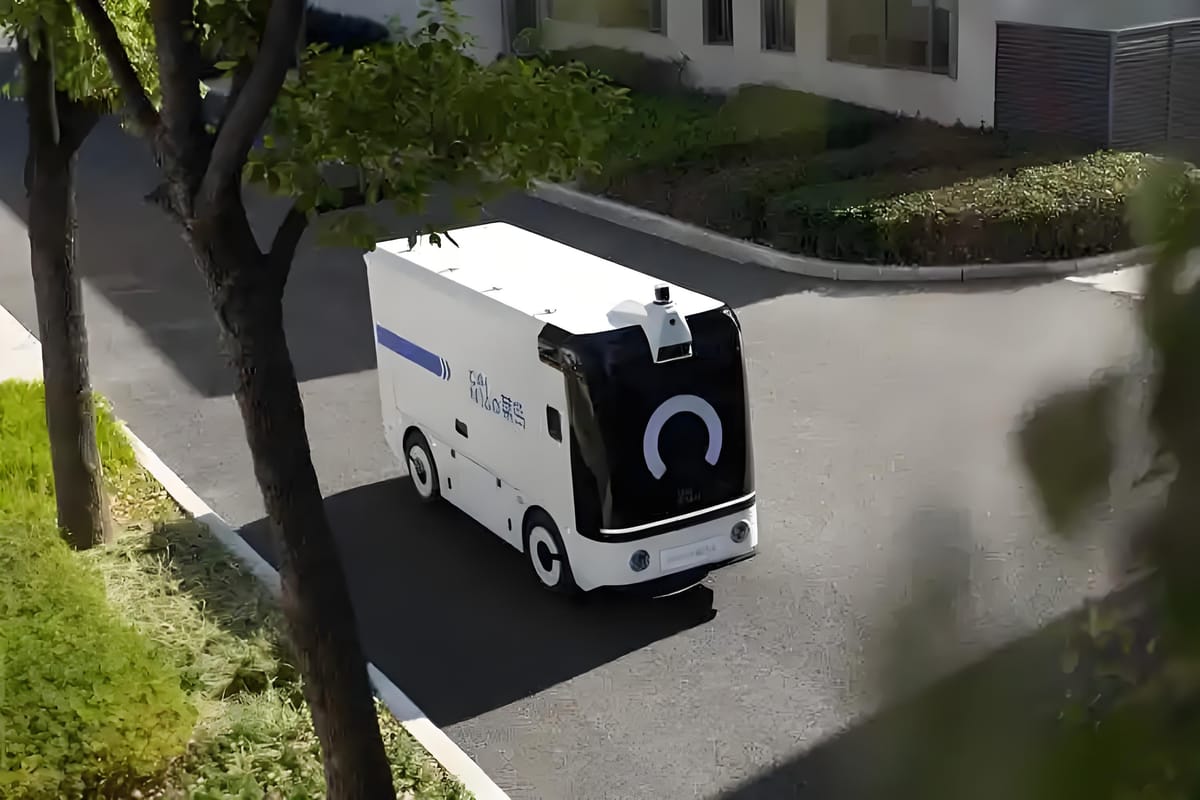
The autonomous delivery vehicle sector is experiencing unprecedented growth in 2025, with market deliveries expected to exceed 30,000 units as both established players accelerate shipments and new entrants intensify competition. Traditional automotive supplier Desay SV Automotive has launched its "Chuanxing Zhiyuan" brand, while newcomer Minieye has introduced its "Xiaozhu" unmanned vehicle, adding new variables to an already competitive landscape.
Industry data shows China's autonomous delivery vehicle shipments reached approximately 6,600 units in 2024, with first-half 2025 deliveries already surpassing 12,000 units. The acceleration reflects growing demand for last-mile logistics automation amid rising labor costs and regulatory improvements including expanded road access permissions in key cities.
Market leaders Neolix and Zelos have maintained their early-mover advantages, with Neolix delivering over 8,000 units through August and monthly shipments exceeding 1,000 units since the second quarter. However, well-funded competitors including Cainiao and Rino Auto, backed by major e-commerce ecosystems, pose potential threats to the current hierarchy.
The influx of new players comes as the industry transitions from technology validation to commercial-scale deployment, raising questions about whether first-mover advantages can withstand intensified competition from companies with stronger manufacturing capabilities and established automotive expertise.
Delivery Volumes Signal Market Maturation
The autonomous delivery vehicle market's 2025 surge reflects both demand-side pressures and policy support. Rising labor costs and efficiency requirements in urban last-mile delivery, environmental services, and logistics have created urgent needs for intelligent automation solutions.
According to the Low-Speed Autonomous Driving Industry Alliance, China's autonomous delivery vehicle shipments jumped from 6,600 units in 2024 to over 12,000 units in the first half of 2025 alone. Soochow Securities projects full-year 2025 sales will exceed 30,000 units, driven by both increased output from established players and new market entrants.
Market leader Neolix has delivered over 8,000 units through August, with monthly deliveries consistently above 1,000 units since Q2, suggesting full-year deliveries around 15,000 units. Competitor Zelos reported over 7,000 deployed vehicles by August, up from 5,000 units in May, indicating annual deliveries approaching 10,000 units.
Technology Giants Eye Market Entry
Beyond current new entrants Desay SV and Minieye, several major technology and automotive companies are positioned to enter the autonomous delivery vehicle market, potentially reshaping competitive dynamics.
Momenta, which holds a 60.1% market share among third-party suppliers for China's urban navigation on autopilot (NOA) systems, is reportedly assembling teams to enter autonomous delivery vehicles. The company's software algorithm expertise and passenger vehicle autonomous driving technology could transfer rapidly to delivery vehicle applications.
Huawei, while not directly offering branded autonomous delivery vehicles, has extensive smart automotive investments with close delivery vehicle connections. In 2021, partner Matrix Data Technology launched the "Pathfinder" L4-level express delivery logistics vehicle based on Huawei's MDC intelligent driving computing platform.
BYD has demonstrated autonomous delivery vehicle manufacturing capabilities through its partnership with U.S. technology company Nuro on third-generation electric unmanned delivery vehicles. BYD handled vehicle development, testing, and manufacturing while providing blade batteries, motors, electronic controls, and human-machine interaction components. The company's battery technology advantages could provide more reliable range assurance for delivery vehicles, while mature manufacturing capabilities could enable large-scale production and cost reduction.
Market Entry Barriers Remain Substantial
New players face multidimensional challenges spanning market trust-building, regulatory compliance, operational complexity, and technology adaptation costs that could limit their ability to disrupt established market positions.
Building market trust and partnerships represents a 2-3 year process, as autonomous delivery vehicles directly impact logistics efficiency, cargo security, and public transportation safety. New entrants must establish deep trust relationships with local governments, major logistics companies, and e-commerce platforms. Established players like Neolix and Zelos have secured long-term partnerships with leading enterprises including SF Express, JD.com, and China Post, creating stable supply chains and service systems.
Road access permissions constitute another significant barrier, with only cities like Shenzhen and Suzhou achieving large-scale autonomous delivery vehicle road rights. Different cities maintain varying technical standards, registration processes, and safety supervision requirements, forcing new players to adapt to local policies individually while risking investment losses from policy changes.
Operational challenges extend beyond simple hardware sales to encompass fleet dispatching systems, real-time maintenance services, and data iteration systems. New players must build comprehensive operational infrastructures from scratch, requiring substantial capital investment and operational experience accumulation that cannot be achieved short-term.
Cost control and technology adaptation present additional pressures, as autonomous delivery vehicles must serve diverse scenarios including express urban distribution, industrial logistics, and campus delivery with varying requirements for vehicle load capacity, range, and autonomous driving precision. New players face pricing disadvantages due to insufficient production scale, creating a dilemma between maintaining competitiveness and preserving profit margins.