
China’s Autonomous Driving Market Bifurcates as Regulatory Frameworks Redefine Liability in 2026
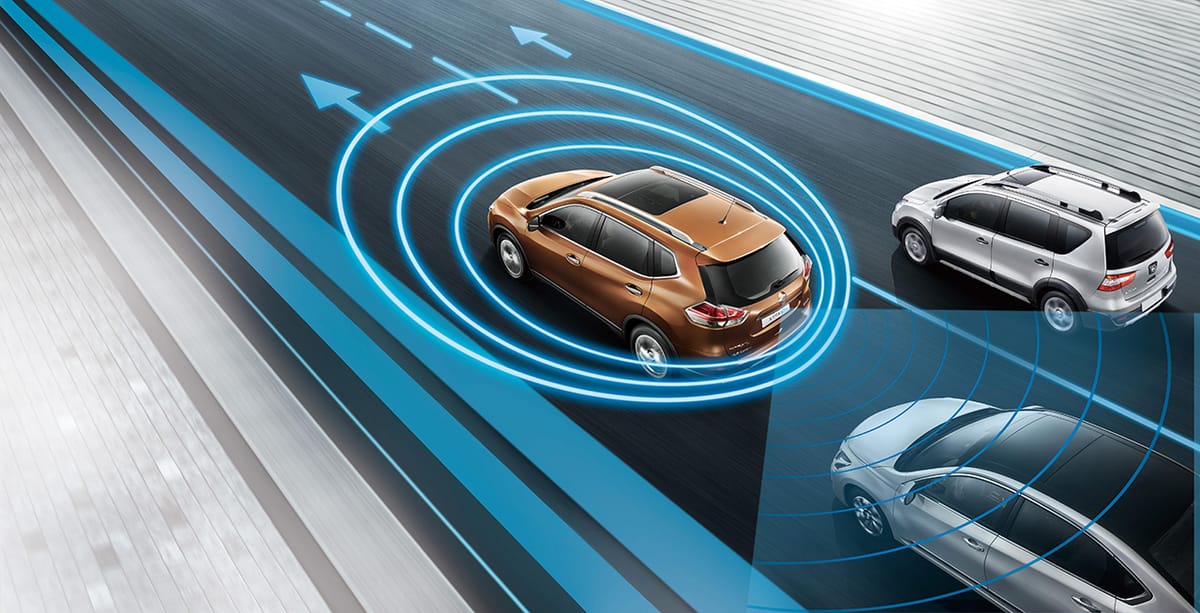
In 2026, China's autonomous driving sector is moving away from a uniform development trajectory into three distinct strategic pathways defined by Levels 2, 3, and 4. Following a period of regulatory calibration in 2025—which saw the commoditization of driver-assistance systems—the market is shifting focus from general technological accumulation to specific operational models differentiated by liability frameworks and commercial applications.
The most significant immediate development is the issuance of specific license plates for Level 3 (L3) autonomous vehicles, which commenced at the end of 2025. Major municipalities seeking to pioneer smart mobility solutions, notably Chongqing and Beijing, have taken the lead in granting these approvals, effectively allowing consumers to experience conditional automated driving in ride-hailing scenarios. This marks a critical pivot in the regulatory landscape, formally introducing a legal acknowledgment of system liability on public roads.
This regulatory progression signifies a departure from the "equal rights" phase of 2025, where Level 2 (L2) systems saw rapid market penetration but hit a ceiling in product differentiation due to regulatory interventions. The new framework clarifies the commercial logic for automakers and investors in 2026: L2 systems are solidified as standard safety configurations, L3 serves as a controlled testing ground for liability transfer, and Level 4 (L4) focuses on verifying the economic efficiency of fleet operations.
As the industry enters this divergent phase, the core differentiation among market players will no longer be solely about technical specifications such as "end-to-end" models. Instead, the competitive landscape is now defined by strictly demarcated responsibility structures—specifically, determining who bears the financial burden and legal responsibility in the event of an incident—and distinct payment models tailored to each automation level.
Level 2: Standardization and Responsibility Boundaries
By 2026, the L2 segment will be characterized by strict national standards that prioritize system stability and clear responsibility boundaries. In previous years, manufacturers inflated expectations with terms like "L2++" and complex urban navigation features, leading to consumer confusion regarding the extent of system capabilities versus driver responsibility.
With the implementation of mandatory national standards, these ambiguities are being eliminated. Features such as failure alerts, degradation strategies, and driver monitoring systems are now codified as hard requirements to ensure safe system exit during extreme weather, road construction, or congestion. Regulatory oversight has consciously suppressed marketing hype to align consumer expectations with reality; phrases implying "hands-off" or "eyes-off" driving are disappearing from promotional materials.
Consequently, L2 technology is transitioning from a premium selling point to a hygiene factor in vehicle manufacturing. It is viewed as a reliable auxiliary tool to reduce driver fatigue rather than a semi-autonomous feature commanding a price premium. Liability remains unequivocally with the driver, putting an end to the willingness of users to pay extra for systems where they bear full risk.
Level 2: The Realization of Conditional Automation
The path for automakers aiming to advance intelligence lies in Level 3, which fundamentally alters the subject of liability. The issuance of L3 plates is pivotal because it allows the system to be legally recognized as a "driver" under specific conditions. According to the national standard GB/T 40429-2021, L3 allows the system to handle dynamic driving tasks within a specific operational design domain (ODD), though drivers must remain receptive to takeover requests.
While L3 allows drivers to briefly take their hands off the wheel and look away, they must remain alert and intervene within seconds of a system warning. Sleeping or prolonged distraction remains prohibited. This shift necessitates a new legal framework to adjudicate liability between the driver, the automaker, and the software provider.
The regulatory groundwork was laid by the November 2023 policy from the Ministry of Industry and Information Technology, which mandated that L3/L4 pilot vehicles carry liability insurance of no less than RMB 5 million yuan (US$690,000) and establish mechanisms for event data recording (EDR). In this phase, automakers begin to assume responsibility for algorithmic performance, and accident data enters the regulatory domain for the first time as legal evidence.
Level 4: The Pursuit of Robotaxi Economics
As L3 enters the consumer space, Level 4 is solidifying its position within the niche of robotaxis and specific operational fleets. The development logic for L4 in 2026 is strictly confined to verifying whether autonomous fleets can operate stably at low costs over long periods within geofenced areas.
Private L3 features may eventually evolve toward an L4 endpoint, mirroring the strategy of Tesla Inc. (特斯拉), where consumer vehicles could theoretically double as robotaxis to justify the economic model. However, dedicated L4 players are currently prioritizing metrics such as fleet scale, operational mileage, takeover rates, and accident frequency.
Following substantial investments in the U.S. market in 2025 and Tesla’s subsequent expansion, domestic players like Apollo Go (萝卜快跑) are steadily expanding their fleets. The policy direction for 2026 remains supportive, encouraging the separation of ownership and usage to improve the efficiency of ride-hailing services. Market segmentation is now clear: L2 penetrates the mass market of vehicles priced under RMB 100,000, L3 targets high-speed scenarios to advance OEM technology, and L4 serves the operational efficiency of mobility platforms.