
China's Battery-Swap Race Intensifies as Huawei-CATL Challenge NIO
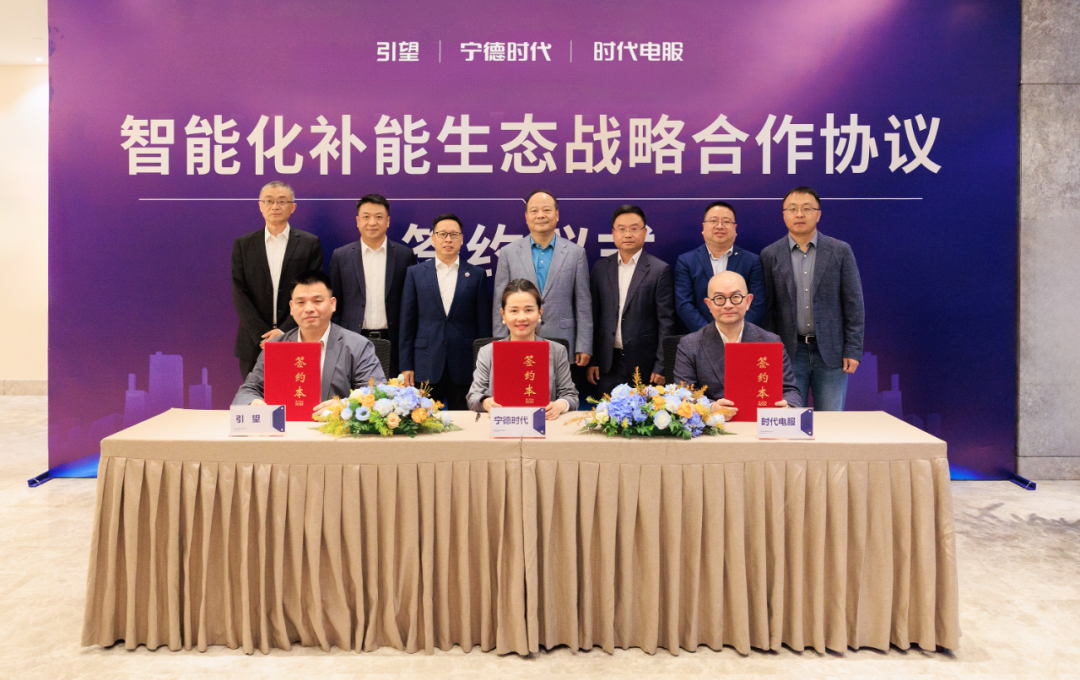
A three-way partnership between Huawei's smart-driving unit, CATL's swap network, and its operating subsidiary threatens to commoditize the infrastructure moat that NIO spent nearly a decade building — but the dynamics are more nuanced than a simple zero-sum contest.
The alliance, announced October 19, links Huawei Intelligent Automotive Solution with Contemporary Amperex Technology and its battery-swap subsidiary Shidai Dianfu to deliver a fully autonomous swap cycle — vehicle self-navigation, automated bay entry, 99-second swap, and autonomous departure — without driver intervention. The announcement crystallizes a structural shift in China's battery-swap segment from a vertically integrated, single-brand proposition to a multi-OEM, standardized-infrastructure model.
Market observers note that the timing is pointed: NIO and CATL signed a five-year deepened cooperation agreement in January 2026, just months before CATL's swap network formally recruited a competitor-adjacent technology partner. For investors tracking China's new-energy vehicle supply chain, the question is no longer whether battery-swap scales — it is which standard wins, and who captures the utilization economics.
NIO's Network Depth Meets CATL's Standardization Ambition
NIO commissioned its first swap station in 2018. By October 13, 2026, the network stood at 4,178 stations — more than 1,000 of them on expressways — and had processed over 127 million cumulative swaps. During the Golden Week holiday alone, NIO's network completed approximately 1.19 million swaps, peaking at 183,700 on October 5. Spread across roughly 4,165 operational stations at that moment, that implies a system-wide average of approximately 44 swaps per station per day, with high-traffic highway nodes reportedly exceeding 150.
The utilization figure matters because it anchors unit economics. A swap station carrying RMB 1 million (US$138,900) in annual fixed costs — covering equipment amortization, site leases, and operations, before electricity, battery depreciation, or capital costs — breaks down to roughly RMB 137 per swap at 20 daily cycles, falling to approximately RMB 34 at 80 cycles. NIO's high-frequency highway nodes are already well inside the lower range; the long tail of lower-traffic urban stations is where the model remains under pressure.
CATL's Chocolate Swap network pursued a different trajectory. Launched more recently, it reached 2,520 stations across 200 cities by September 29, 2026, with nearly 20,000 new battery packs connected. CATL has disclosed an expansion target of 30,000 stations — more than seven times NIO's current footprint. Critically, the Chocolate platform is engineered around standardized battery modules (Size 20, Size 25, and related variants) with unified mechanical connectors and electrical interfaces, explicitly designed for cross-brand compatibility rather than a proprietary vehicle ecosystem.
The strategic logic is straightforward: the more OEMs adopt CATL's battery standard, the higher the network utilization per station, and the lower the per-swap fixed cost. NIO optimizes within a closed user base; CATL optimizes by expanding the denominator.
Huawei's Entry Fills the Final Gap in CATL's Swap Chain
The 99-second mechanical swap time is not new — CATL's station hardware was already capable of it. What Huawei's Qiankun intelligent driving system contributes is the vehicle-side and cloud-side intelligence that closes the remaining automation loop.
A fully autonomous swap requires three coordinated layers. First, the vehicle's battery management system must read state-of-charge, temperature, and health data, integrate with navigation and projected energy consumption, and autonomously determine when and where to swap — this is the vehicle control layer. Second, the station must know the incoming vehicle's battery specification, confirm inventory availability and bay status, and orchestrate mechanical locking, high-voltage disconnection, and connector verification — handled by Shidai Dianfu's station equipment. Third, low-speed precision maneuvering must place the vehicle within the mechanical tolerance of the swap apparatus — a task that demands tighter positional accuracy than standard automated parking, which Huawei's Qiankun system addresses.
With CATL supplying the battery standard and station network, Shidai Dianfu supplying station-side control, and Huawei supplying vehicle intelligence and system integration, the three-party stack has no structural gap.
The more consequential implication is Huawei's existing OEM relationships. Qiankun intelligent driving is already deployed across multiple brands spanning sedans, SUVs, MPVs, and multiple price tiers. Historically, an automaker pursuing a swap-capable model had to independently source a battery supplier, a swap-equipment vendor, and a network operator. The CATL-Huawei arrangement consolidates those decisions: CATL provides the cell standard and station infrastructure, Huawei handles vehicle-side integration and system adaptation, and the development burden is distributed.
For brands that want a swap option but have neither the capital nor the strategic appetite to build a national station network — a category that describes most of China's mid-tier EV makers — this alliance offers a credible off-the-shelf path.
Structural Battery Design Remains the Hard Constraint on Adoption Speed
The alliance's expansion timeline faces a significant engineering friction: the proliferation of cell-to-body (CTB) and cell-to-chassis (CTC) architectures across the Chinese EV market. In these designs, the battery pack is structurally load-bearing, contributing to side-impact resistance, torsional stiffness, and underbody protection. Converting such a platform to a removable, standardized battery requires redesigning mechanical attachment points, chassis protection geometry, high-voltage connectors, and thermal management pathways — and then revalidating the entire vehicle against crash standards.
This is not an insurmountable engineering problem, but it is a platform-generation problem. OEMs that have already committed their current architectures to structural integration will not retrofit. The realistic adoption window is the next vehicle platform cycle, which for most Chinese brands means 2027–2029 at the earliest for volume models.
The pace at which Huawei's automotive clients elect to design swap compatibility into their next-generation platforms will therefore determine whether the CATL-Huawei network achieves the utilization density needed to validate its 30,000-station ambition on a commercially sustainable timeline.
NIO Faces Real Competitive Pressure — and Potential Market Expansion
NIO's competitive position is not simply threatened. Its January 2026 five-year agreement with CATL — which encompasses swap standard coordination, battery asset management, and network resource sharing — means that NIO and CATL remain collaborators even as CATL courts additional OEM partners through Huawei.
The strategic tension is real: CATL has both the motive and the capability to accelerate other automakers into the swap segment, and a larger swap market will dilute the exclusivity of NIO's network. At the same time, broader adoption of swap as a charging modality — and the infrastructure investment that comes with it — expands the total pool of swap-compatible vehicles, which benefits any operator with existing network scale.
NIO's durable advantages are harder to replicate than raw station count. Eight years of operating a multi-brand swap ecosystem across NIO, Letao, and Firefly vehicles has generated proprietary data on battery degradation patterns, station placement optimization, and demand forecasting that cannot be acquired by building stations alone. The fifth-generation swap station, deployed from August 2026, supports axle-to-axle wheelbases up to 3.5 meters and accommodates varying chassis geometries — an engineering capability developed iteratively, not purchased.
Whether NIO's operational depth compounds into a durable moat or is gradually eroded by CATL's standardization drive will depend on a single variable: how many OEMs adopt the Chocolate battery format in their next platform cycle, and how quickly those vehicles reach the road.
Related Coverage:
CATL Targets China’s Heavy-Truck Battery-Swap Market
CATL Shares Hit Record High on Solid-State Battery Push and Storage Boom