
China's CHJ Jewellery Seeks Hong Kong IPO to Tap Gen Z Gold Rush
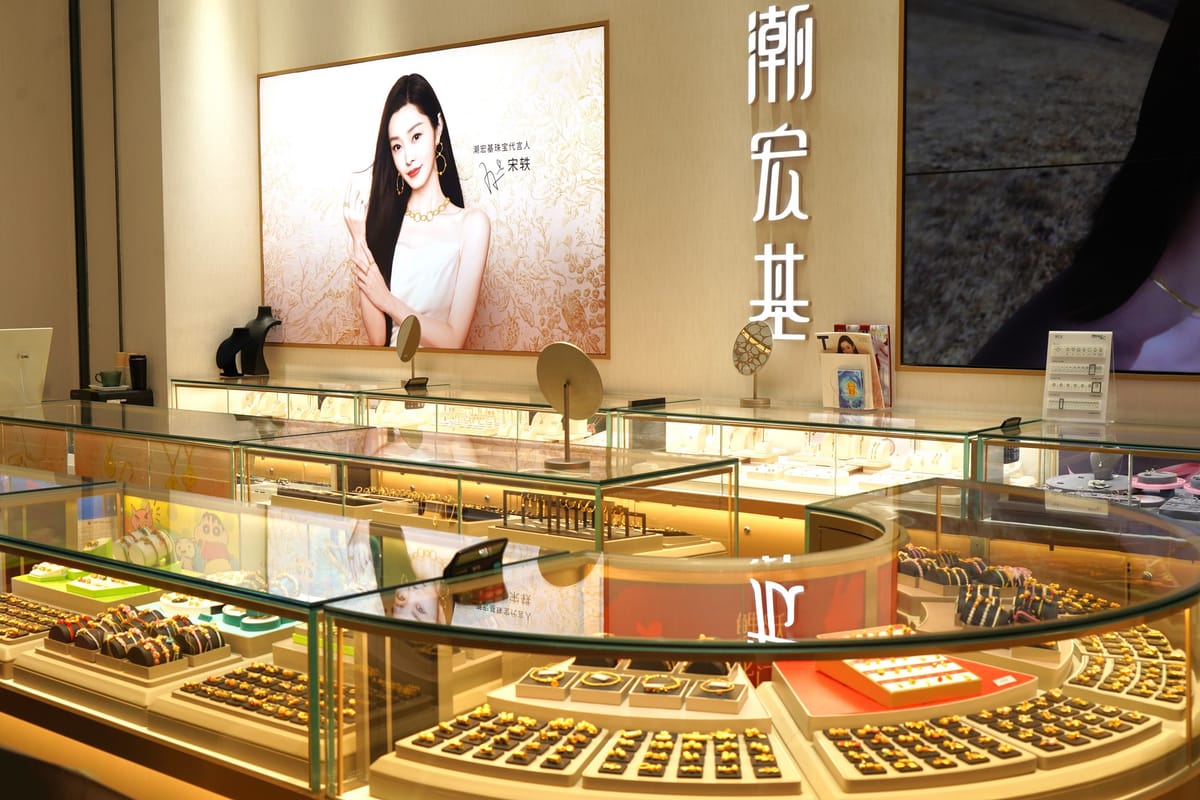
Chinese fashion jeweler CHJ Jewellery is pursuing a Hong Kong initial public offering to fund a major expansion, aiming to capitalize on a cultural shift that has transformed gold from a traditional safe-haven asset into a must-have fashion statement for the nation’s younger consumers.
The Shenzhen-listed company, known as CHJ Jewellery, submitted its application for the listing in September 2025. The move, which follows its 2010 debut on the Shenzhen Stock Exchange, would establish an "A+H" dual-listing structure, giving the company access to both mainland and international capital markets.
If successful, the offering would create Hong Kong’s first publicly traded firm focused specifically on fashion jewelry. The listing comes as Chinese jewelers race to attract Gen Z buyers who increasingly view gold accessories as a form of self-expression and social currency, driving demand for innovative designs and brand collaborations beyond traditional bullion.
The IPO proceeds are intended to fuel an aggressive retail and research ramp-up as CHJ contends with intensifying competition from larger rivals and shifting consumer preferences in China's highly fragmented, over 800 billion yuan jewelry market.
A Pivot to Expansion
CHJ’s Hong Kong listing is primarily aimed at securing capital for growth. According to its plans, 40% of the funds raised will be used to expand its retail network, with a target of adding 300 new stores over the next three years, half of which will be located in China's tier-two and tier-three cities. Another 20% is earmarked for upgrading its research, development, and supply chain, with a focus on strengthening its core competency in K-gold manufacturing processes.
Beyond financing, the listing serves a broader strategic purpose. A presence on the Hong Kong Stock Exchange is expected to boost the company’s international profile, facilitating its initial overseas expansion into Southeast Asian markets. The move would also align the company with stricter international corporate governance standards, potentially attracting global investors and improving its long-term management structure.
The 'King of K-Gold's' Missteps
Founded in 1996 by the Liao family, CHJ built its reputation by carving out a niche in K-gold, a harder and more versatile gold alloy ideal for intricate designs. This focus on "fashion jewelry" differentiated it from competitors selling traditional gold items. At the time of its 2010 Shenzhen IPO, CHJ was the dominant player in the K-gold segment, holding a market share three times larger than its nearest competitor. The company invested heavily in design, pioneering 3D/5D hard gold technology and even reviving traditional filigree inlay techniques for modern IP collaborations with brands like Doraemon and Pikachu.
However, its specialization later became a liability. Between 2013 and 2019, as gold prices surged, consumers flocked to traditional gold, fueling a boom that CHJ largely missed. Competitors like Chow Tai Fook and Lao Feng Xiang rapidly expanded their footprint through franchise models and aggressive promotions, while CHJ’s revenue stagnated. An ill-fated diversification attempt in 2014, with the acquisition of women's bag brand FION, led to significant goodwill impairments and weighed on its performance. Compounding its problems was a conservative, capital-intensive retail strategy focused on directly-operated stores, which resulted in a much smaller footprint—1,542 stores by June 2025, compared to over 7,000 for Chow Tai Fook and 5,000 for Lao Feng Xiang.
A Strategic Comeback
Facing these challenges, CHJ initiated a strategic turnaround in 2018. It pivoted toward a franchise-led model to accelerate expansion, with franchised locations now accounting for 85% of its total stores. The strategy paid off in top-line growth, with revenue projected to exceed 5.8 billion yuan in 2023. The company also refocused its M&A strategy, divesting a skincare asset to concentrate on its core "jewelry + leather goods" businesses. In a nod to its innovative roots, it also entered the nascent lab-grown diamond market through a joint venture.
This expansion came at a cost. The shift to the lower-margin franchise channel caused the company's gross margin to decline from 27% to 23.1%. While its 2024 revenue reached RMB 6.518 billion yuan (US$905 million) with a net profit of 194 million yuan, the company continues to navigate the trade-off between scale and profitability. Its international efforts have seen it open stores in Malaysia, Thailand, and Cambodia, with operations reported to be performing well.
Navigating New Headwinds
Despite its recovery, CHJ faces an evolving market. The "Guochao" trend, which favors culturally infused designs, has been a boon—sales of its "Filigree Candy" series doubled in 2024. However, traditional gold behemoths are now encroaching on its K-gold territory with their own fashion-oriented lines. Furthermore, a recent surge in popularity for "ancient gold" styles and a renewed consumer focus on gold as an investment threaten to weaken the appeal of design-led, lower-purity K-gold.
The company also lags in digital transformation, with its online channel penetration below the industry average for a product category that is still heavily reliant on in-person sales. For CHJ Jewellery, the Hong Kong IPO is not a finish line but the start of a second chapter. Success will depend on its ability to balance its K-gold heritage with the demand for traditional gold, synchronize its physical expansion with a robust digital strategy, and navigate both domestic and international markets in an industry where only the most adaptable survive.