
China's Commercial Satellite Firm Tianyi Research Files for IPO Amid Space Sector Listing Wave
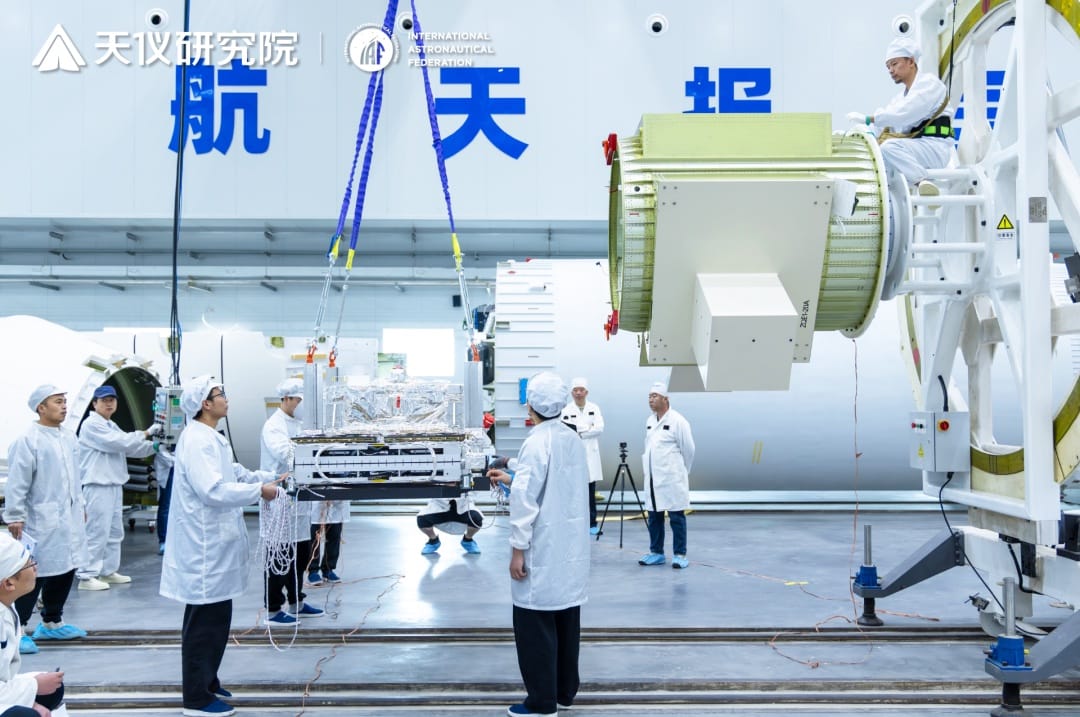
Tianyi Research Institute, a commercial satellite company once dubbed the "Pinduoduo of aerospace" for its cost-cutting approach, has filed for an initial public offering with Hunan securities regulators, according to people familiar with the matter. The move positions the SAR satellite specialist to potentially complete its filing process and submit a prospectus in the first half of 2026, though the timeline remains unconfirmed by the company.
The filing comes as China's commercial space sector experiences a surge in capital market activity. At least six space companies have initiated IPO preparations since mid-2025, following regulatory reforms that streamlined listing requirements for the industry. The wave includes both rocket manufacturers and satellite operators seeking to raise capital for technology development and production scale-up.
Tianyi's reported progress reflects growing investor appetite for commercial space ventures, which attracted 18.6 billion yuan ($2.6 billion) in financing during 2025, up 32% year-over-year, according to the China Commercial Space Industry Development Report. However, the company has not publicly confirmed its listing plans or disclosed financial details.
The reported IPO filing marks a potential milestone for China's first generation of private satellite operators, as they transition from venture-backed startups to publicly traded entities amid intensifying competition in the commercial space market.
SAR Satellite Focus
Founded in May 2015 by CEO Yang Feng, Tianyi Research Institute operates as China's first commercial company to run synthetic aperture radar (SAR) remote sensing satellites. The Changsha-based firm has reportedly completed approximately 21 space missions, launching 37 satellites including the Haisi-1, Chaohu-1, and Fucheng-1 SAR satellites, according to company information.
SAR satellites differ from optical satellites by actively emitting radar waves rather than relying on sunlight, enabling all-weather, day-and-night Earth observation capabilities. The technology can penetrate clouds and vegetation, making it valuable for disaster monitoring, resource exploration, and maritime surveillance. Tianyi reportedly operates interferometric SAR (InSAR) imaging capabilities that can detect millimeter-level ground surface deformation.
The company has earned its "Pinduoduo of aerospace" nickname through its focus on lightweight SAR satellites, reportedly reducing satellite weight from traditional levels of several tons to hundreds of pounds. Yang has stated that substituting industrial-grade materials for aerospace-grade components represents a key cost-reduction strategy, though the reliability implications of such choices remain subject to industry debate.
Founder's Vision
Yang Feng, an alumnus of Beihang University, controls 30.15% of Tianyi's equity directly and indirectly, according to the reported filing information. The 1980s-born Hunan native launched the company following China's 2014 State Council guidance encouraging private capital participation in commercial remote sensing satellite development.
The company selected Changsha as its headquarters after evaluating multiple cities, citing the city's manufacturing base and alignment with local government priorities for industrial upgrading. Tianyi has completed multiple financing rounds attracting investors including Northern Light Venture Capital, Matrix Partners China, Legend Capital, and state-backed funds such as Hefei Industrial Investment and Mianyang Science Development Fund, though specific investment amounts have not been disclosed.
Yang's strategy of leveraging industrial supply chains and lower-cost components represents a departure from traditional aerospace practices, potentially offering cost advantages while raising questions about long-term reliability and performance standards in the demanding space environment.
Regulatory Tailwinds
China's securities regulator opened pathways for commercial space companies in June 2025 by including the sector in the fifth listing criteria set under STAR Market reforms. The Shanghai Stock Exchange subsequently issued specific guidance for commercial rocket companies in December 2025, providing clearer frameworks for valuations and disclosure requirements.
At least six commercial space firms have reportedly initiated IPO processes since mid-2025. LandSpace leads the pack with its STAR Market application accepted in December 2025 and entering the inquiry phase in January 2026, seeking to raise 7.5 billion yuan ($1.04 billion) for liquid oxygen-methane engine and launch vehicle development. CAS Space has completed IPO counseling, while Space Pioneer, Galactic Energy, and iSpace have all updated their listing preparation progress.
In the satellite segment, MicroMultiCopter completed IPO counseling registration in September 2025 for satellite and ground station products, while Yixin Aerospace initiated counseling in August 2025 for satellite IoT payload development. The clustering of filings suggests companies are racing to access public markets while investor enthusiasm remains elevated.
An investor in the commercial space sector told the Science and Technology Innovation Board Daily that IPO fundraising will help alleviate capital pressures from high investment requirements and long development cycles, predicting a wave of listings in 2026-2027. However, the investor noted that market reception will depend heavily on companies demonstrating clear paths to commercialization and sustainable revenue generation beyond government contracts.