
China’s Domestic Auto Brands Are Overtaking Foreign Luxury Carmakers
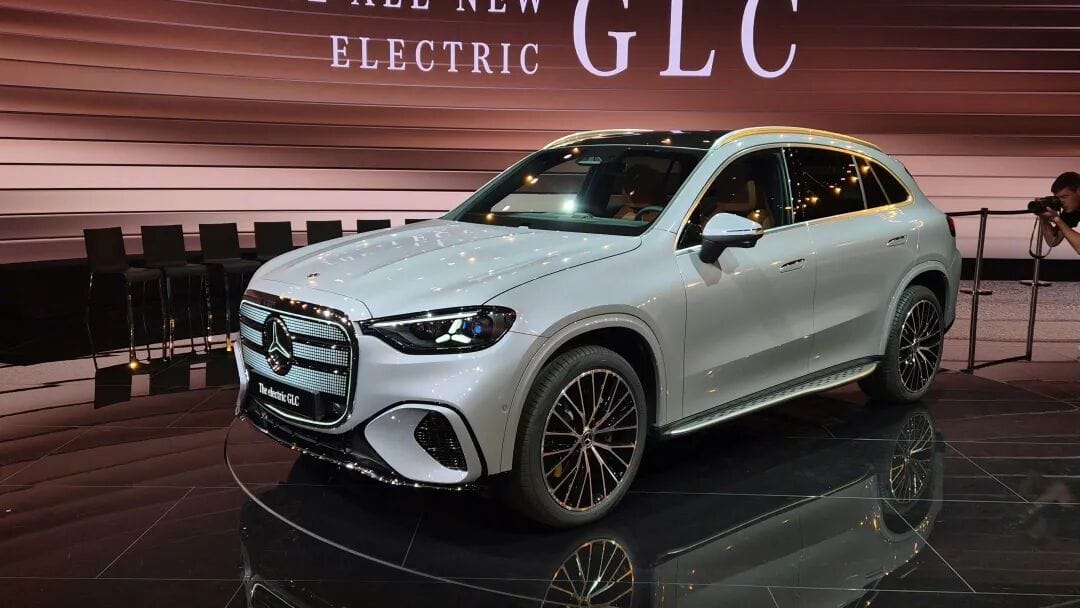
Chinese automakers have successfully dismantled the stronghold of traditional European luxury brands in the premium vehicle segment, fundamentally altering the competitive landscape of the world’s largest auto market. Domestic manufacturers have eroded the market share of legacy giants, forcing a structural shift in pricing power and consumer preference.
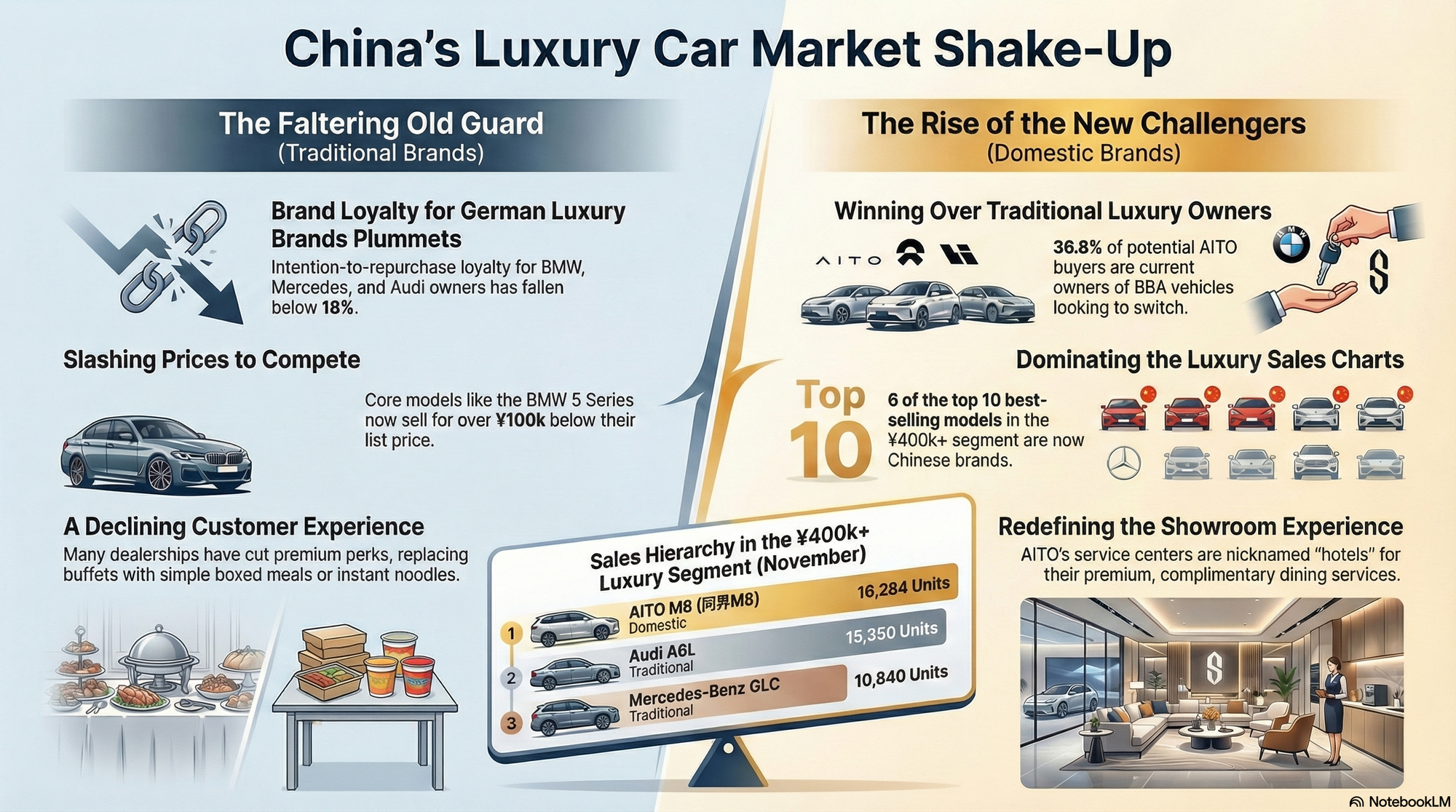
In November 2025, six Chinese models secured positions in the top 10 sales chart for vehicles priced above RMB 400,000 (US$55,200), a tier historically monopolized by German engineering. Domestic entries, including models from NIO and the Huawei-backed Maextro, are effectively displacing established leaders in sales volume and transaction prices.
The shift has forced incumbents like BMW AG and Mercedes-Benz Group AG into aggressive discounting to maintain volume, driving actual transaction prices for their core models below the premium benchmark. Simultaneously, legacy dealer networks are contracting under financial strain, highlighted by the sudden closure of a major Porsche center in Zhengzhou.
This trend reflects plummeting loyalty among Chinese premium car owners, with retention rates for traditional luxury brands dropping below 18%. Investors face a new reality where technological integration and user experience significantly outweigh mechanical heritage, threatening the long-term margins of global automakers in China.
The Collapse of the Premium Price Floor
The most significant development in the fourth quarter of 2025 is the loss of pricing integrity for traditional luxury marques. While models from BMW, Mercedes-Benz, and Audi still appear on sales charts, their transaction prices have largely fallen below the critical RMB 400,000 threshold.
Entry-level versions of the BMW 5 Series, for instance, are now transacting near RMB 350,000 (US$48,300), representing a discount of over RMB 100,000 from the manufacturer's suggested retail price. Similar price erosion is evident in the Mercedes-Benz E-Class and Audi A6L, effectively removing them from the "RMB 400,000-plus" competition.
Conversely, domestic brands are commanding higher price points with increasing volume. In November, NIO’s ES8 recorded sales of nearly 11,000 units, a year-on-year increase of 1,768%. Similarly, the Zeekr 7X outperformed the BMW X5 by approximately 2,000 units in monthly sales.
The ultra-luxury segment is also showing fractures. The Maextro S800, priced between RMB 708,000 (US$97,700) and RMB 1.01 million, exceeded 2,000 units in November sales. This figure roughly equals the combined sales volume of the Mercedes-Benz S-Class, BMW 7 Series, and Audi A8 for the same period.
Diverging Retail Fortunes
The transfer of market share is reshaping the retail experience. Traditional dealerships are facing an existential crisis, exemplified by the abrupt closure of the largest Porsche dealership in Zhengzhou, leaving customers with unfulfilled orders. Across the network, cost-cutting measures have degraded service standards, with premium catering often replaced by basic fluctuating food supplies.
In stark contrast, newer entrants are elevating service standards to capture customers. Experience centers for Harmony Intelligent Mobility (drawing technology from Huawei) have become popular destinations, offering dining services comparable to star-rated hotels. High foot traffic has necessitated reservation systems for dining at these locations.
Data suggests this service disparity is driving conversion. In 2025, nearly 37% of prospective buyers for the AITO brand—developed by Seres and Huawei—and 27% of buyers for Li Auto are former owners of German luxury vehicles. Porsche’s market share in China has consequently fell from 24% to 19% through the third quarter.
Legacy Brands Struggle to Counterattack
Traditional automakers are attempting to regain ground through electrification, but current efforts have yielded limited results. Audi’s E5 Sportback, built on the new PPE platform, sold fewer than 1,400 units in October, lagging significantly behind domestic competitors that routinely surpass 10,000 monthly deliveries.
Mercedes-Benz’s launch of the electric CLA in November, priced aggressively at RMB 249,000, failed to generate significant momentum, moving only 1,369 units in its first month. The market response indicates that lower pricing alone is insufficient to overcome the technology deficit perceived by Chinese consumers.
Future strategies rely heavily on upcoming product cycles. Audi plans to release the E7X, co-developed with SAIC Motor Corp., while BMW prepares its "Neue Klasse" iX3 for 2026. This model aims to integrate advanced driving assistance systems developed with local supplier Momenta.
However, timing remains a critical risk. With Chinese manufacturers launching updated models and new flagship vehicles like the NIO ES9 and various luxury MPVs continuously, the technological gap may widen before legacy brands can bring their next-generation platforms to market in 2026. The window for a successful counteroffensive is rapidly closing.