
“China's SpaceX” LandSpace Targets STAR Market IPO With US$2.8 Billion Valuation
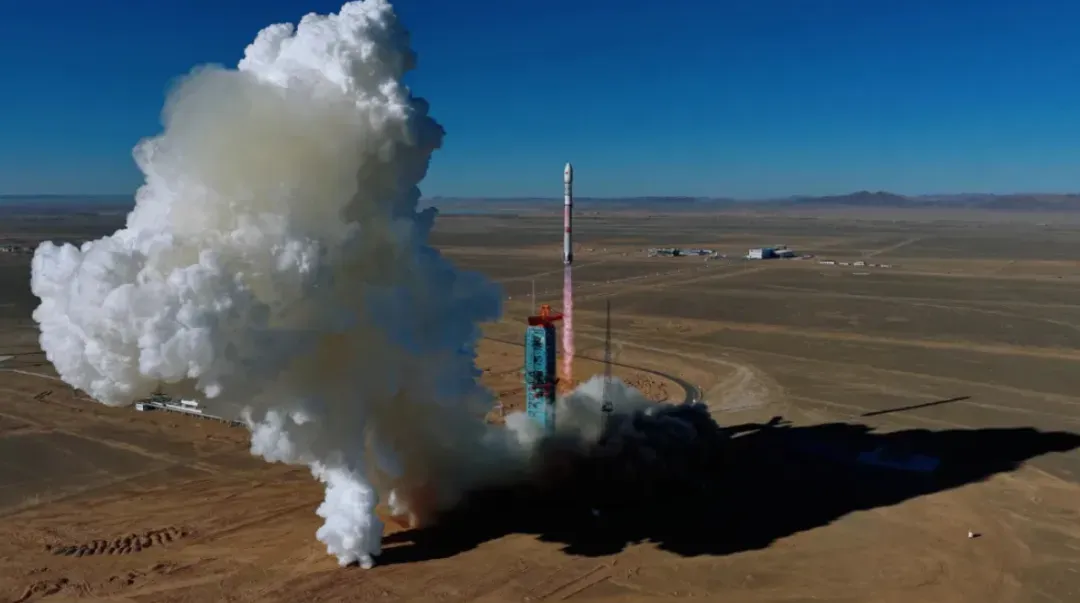
LandSpace has completed its pre-listing tutoring, marking a decisive step toward an initial public offering on Shanghai’s STAR Market. The Beijing-based rocket manufacturer, valued at approximately RMB 20 billion (US$2.76 billion), is poised to become the first commercial spaceflight firm to list on China’s technology-focused board.
China International Capital, the tutoring institution, confirmed that LandSpace now meets the corporate governance and internal control standards required for a public listing. This development places the unicorn just one step away from testing investor appetite for China’s burgeoning private space sector.
The IPO bid follows a significant regulatory shift in June 2025, when the China Securities Regulatory Commission expanded the scope of the STAR Market’s "fifth set of listing standards." This policy adjustment allows qualifying high-tech enterprises in sectors like commercial aerospace to list even if they have yet to achieve profitability.
Founded by former banker Zhang Changwu, LandSpace is leveraging these policy tailwinds to secure capital despite substantial financial losses. The listing represents a critical test for the viability of the "Chinese SpaceX" narrative as the country accelerates its satellite internet infrastructure capabilities.
Policy Support and Market Demand
The timing of LandSpace’s move aligns with Beijing's strategic push to foster a private space industry capable of competing globally. The expanded listing criteria introduced in June lowered profitability barriers specifically to support strategic sectors, making LandSpace the first beneficiary in the commercial space arena to initiate an IPO under the new rules.
Market demand for launch services is projected to surge in tandem with national infrastructure goals. Yuanxin Satellite, the operator of the Qianfan Constellation, recently released tenders for rockets with payload capacities exceeding 2.8 tons to support its network. Third-party analysts estimate the domestic rocket industry market size will reach tens of billions of RMB by 2027.
LandSpace aims to capture a significant share of this growth. CEO Zhang Changwu has projected a rapid scaling of operations, with plans to deliver six launches of the Zhuque-2 rocket and three missions for the Zhuque-3 in 2025. By 2026, the company targets an annual transport capacity of 244 tons to support China’s satellite internet construction.
Financial Realities and Capital Shifts
Despite its ambitious roadmap, commercial spaceflight remains a capital-intensive pursuit with high cash burn rates. In December 2024, the National Manufacturing Transformation and Upgrade Fund invested RMB 900 million in LandSpace, the largest single injection in the company's history.
However, financial disclosures reveal ongoing pressure. Detailed in a filing by Country Garden, a former investor, LandSpace recorded net losses of RMB 1.015 billion in 2024 and RMB 1.177 billion in 2023. Country Garden sold its entire stake of approximately 11% in LandSpace for RMB 1.305 billion in April 2025, exiting the investment prior to the IPO launch.
The company’s ownership structure also highlights potential risks regarding control. Zhang Changwu and his controlled entity hold a 14.68% stake, raising questions about the founding team's ability to maintain strategic direction following the dilution expected from a public offering.
Unconventional Path and Technical Milestones
LandSpace has distinguished itself through an unconventional technical strategy. Unlike many domestic peers that prioritized solid-fuel rockets, Zhang led the company to focus immediately on liquid oxygen-methane technology. This bet paid off in July 2023 when the Zhuque-2 became the world’s first rocket powered by this fuel to reach orbit, outpacing global competitors.
The company continues to push technical boundaries to achieve reusability—key to commercial profitability. On December 3, 2025, the Zhuque-3 rocket successfully attempted a vertical recovery test for its first stage, marking a first for a domestic private rocket company.
Zhang, who holds a background in finance rather than aerospace engineering, argues that improving launch efficiency and reducing costs are the only paths to a sustainable business model. As the company approaches the capital markets, its ability to transition from technical verification to stable, low-cost commercial delivery will be under close scrutiny.