
Global Markets Become Main Battlefield for Chinese Automakers as Exports Surge
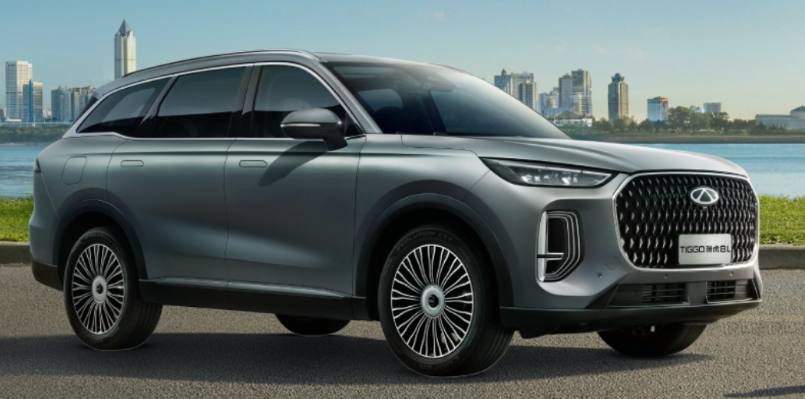
Chinese automakers are pivoting aggressively to international markets, with overseas sales becoming a primary driver of revenue amid saturating domestic demand. This strategic migration is reshaping the global automotive landscape as major players accelerate local production capabilities to bypass trade barriers and capture higher margins.
In the first 11 months of 2025, China's total goods trade surplus hit a record US$1.08 trillion. A significant portion of this growth stems from the automotive sector, where exports rose 17.2% year-on-year, significantly outpacing the overall market’s 6.1% growth. The Nikkei predicts China will surpass Japan in internal combustion engine vehicle exports this year, solidifying its position as the world's top auto exporter.
Leading manufacturers including BYD and Great Wall Motor reported record high overseas sales in November. Financial institutions are bullish on this shift; Goldman Sachs projects that international operations will drive a 30% compound annual growth rate in earnings for industry leaders over the next three years.
To sustain this momentum, companies are rapidly transitioning from immense export volumes to localized manufacturing. With plans announced in 2025 to build over 1.2 million units of overseas production capacity, Chinese automakers are moving to mitigate rising tariffs in regions like North America and Europe by embedding themselves deeply into local supply chains.
Accelerating Global Production Footprint
The pace of overseas factory construction has reached a "frenzied" level in 2025. On December 15, XPeng announced the launch of a local production project in Malaysia, its third such initiative globally this year following projects in Indonesia and Austria.
Unlike early expansion efforts that relied on "knock-down" kit assembly, automakers are now establishing full-process manufacturing bases. This shift allows companies to better utilize local resources and navigate protectionist policies. Investment strategies vary by region: wholly-owned subsidiaries are favored in core markets to maintain control, while joint ventures are used to reduce risk in emerging economies.
In mature markets with high entry barriers, technical partnerships are becoming common. For instance, Chery established a joint venture with Ebro-EV Motors in Spain, leveraging technical authorization to revive the local brand. Similarly, Zhejiang Geely continues to deepen its cooperation with Renault in South Korea and Brazil to share production capacity and market networks.
Higher Margins Drive Focus Abroad
The primary catalyst for this global push is profitability. While price wars compress margins within China, overseas markets offer a "high price, low competition" environment. BYD’s third-quarter financial report revealed a gross margin of 27.3% in overseas markets, significantly higher than the 17.7% recorded domestically.
Pricing discrepancies illustrate this advantage. The BYD Seagull, priced between RMB 69,800 yuan (US9,650) and RMB 85,800 yuan (US11,860) in China, sells for the equivalent of over RMB 160,000 yuan (US$22,130) in Thailand. Similarly, models from Chery command prices in Australia that are nearly double their domestic rates, yet remain competitive against global rivals.
Consequently, foreign markets are contributing a larger share of total sales. Chery’s overseas volume has stabilized above 50% in 2025. Great Wall Motor saw international sales surpass 40% of its total in November, with expectations to breach 50% next year. Morgan Stanley forecasts that BYD’s overseas revenue could account for half of its total turnover possibly as early as 2026.
Navigating Rising Trade Barriers
Despite the optimism, regulatory headwinds are intensifying. Following tariff increases by the European Union and the United States, Mexico recently announced it would impose tariffs of up to 50% on Chinese vehicles and parts starting January 1, 2026. The move poses a significant challenge, as Mexico surpassed Russia in 2025 to become the top destination for Chinese auto exports.
Industry analysts draw parallels between China's current position and Japanese automakers in the 1980s. Faced with similar trade friction, companies like Toyota and Honda pivoted from an export-led model to a global production strategy. For Chinese firms, the escalating tariff war serves as a catalyst to accelerate localization, transforming challenges into an impetus for becoming truly global enterprises.