
China’s DRAM Threat Re-Emerges, But HSBC Says It’s "Too Early For Concern" Amid AI Supercycle
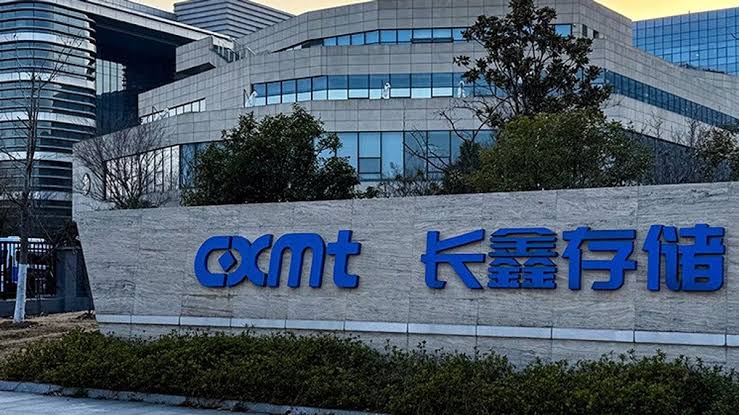
Memory semiconductor stocks have taken a noticeable beating over the past 48 hours, driven by a familiar bogeyman: the imminent rise of China's domestic chipmakers. The narrative making the rounds is that Chinese manufacturers are rapidly catching up, threatening to permanently break the lucrative DRAM oligopoly currently enjoyed by South Korean and US giants.
The market is understandably jittery. With Beijing pouring massive capital into domestic fabs—highlighted by state-backed semiconductor fund injections totaling RMB 195 billion yuan (US$27 billion)—investors fear a structural supply glut. However, in a sweeping research note published on October 14, 2026, HSBC’s Global Research team stepped in to talk the market off the ledge.
According to the report, while the geopolitical and competitive landscape is shifting, the panic is severely premature. For professional investors navigating the semiconductor space, the structural realities of chip manufacturing and the relentless demand of the artificial intelligence supercycle present a highly favorable risk-reward setup.
The Chinese Catch-Up Narrative (and the Reality Check)
The recent sell-off was triggered by local media reports suggesting that China’s ChangXin Memory Technologies (CXMT) will complete the development of its 4F2 cell structure-based server DRAM by late this year. If true, this would place CXMT two to three years ahead of its Korean rivals, who are not planning to adopt the 4F2 vertical channel transistor (VCT) structure until 2028.
But before hitting the panic button, HSBC’s Head of Korea Semiconductor Research, Ricky Seo, offers a heavy dose of manufacturing reality.
"Although long-term negative, the near-term impact on industry dynamics should be limited," the report notes. HSBC points out that the relevant JEDEC standards for this next-generation memory have not even been established yet, and a lengthy validation process with central processing unit (CPU) makers is still required.
Here is the real rub: cost efficiency and manufacturability. Because of ongoing US export controls, CXMT is forced to rely on conventional 14-15nm Deep Ultraviolet (DUV) lithography to manufacture 12-13nm technology.
"Additional multiple patterning steps will be needed, resulting in longer processing steps (theoretically 30-50% longer)," HSBC explains. Achieving acceptable yields for mass production under these conditions is a monumental hurdle. In a highly cyclical industry, lower yields translate to a catastrophic disadvantage, ensuring that China's near-term threat to global pricing dynamics remains largely theoretical. Furthermore, capacity market share for both CXMT in DRAM and Yangtze Memory Technologies Corp (YMTC) in NAND is expected to remain largely flat through 2028.
The 3D DRAM Evolution
As traditional process migration becomes exponentially more difficult and yields diminish, the industry is racing toward 3D DRAM technology. HSBC highlights three major developments driving this shift: the transition from horizontal 6F2 to vertical 4F2 gates, wafer stacking to separate transistors from peripheral circuits, and the adoption of FinFET at peripheral circuits to improve channel control at sub-10nm nodes.
This 4F2 structure could slash chip size by roughly 30%. Ultimately, this evolution paves the way for capacitor-less DRAM architectures—a Holy Grail for memory density—expected to materialize in the next five to ten years.
AI, HBM4, and The Q4 Price Squeeze
While the market obsesses over Chinese supply, it is severely underestimating the demand side of the equation. The AI machine needs to be fed, and DRAM capacity is being aggressively reallocated to High Bandwidth Memory (HBM) to support robust demand from Nvidia’s Vera Rubin platform and customized ASIC accelerators.
This reallocation is creating a severe supply squeeze in legacy memory. HSBC projects that this supply tightness will lift commodity DRAM prices by high single digits in the fourth quarter of this year. Furthermore, the ramp-up of SO-CAMM2 supply and stronger high-end smartphone sales (driven by the latest foldables and iPhones) are providing a hard floor for memory pricing.
Looking ahead, the transition to HBM4 and a projected 40% year-over-year rise in cloud service provider (CSP) CapEx for AI data centers in 2027 will supercharge the sector. HSBC expects the HBM market to grow at a staggering compound annual growth rate (CAGR) of 120% through 2028, with blended average selling prices (ASP) surging 65% year-over-year in 2027.